 how-to
How to Fix Noisy Garage Opener: Troubleshooting Guide
Table of Contents
- Diagnose Where the Noise Is Coming From
- Noisy Garage Door Opener Troubleshooting: Tighten Loose Hardware
- How to Lubricate Garage Door Rollers and Hinges
- Garage Door Opener Making Grinding Noise: Identify and Fix
- Garage Door Opener Making Clicking Noise: Common Causes
- Inspect and Adjust Door Alignment and Springs
- When to Call a Professional
- Frequently Asked Questions
Last Updated: October 10, 2026
Diagnose Where the Noise Is Coming From
A noisy garage opener can be alarming, but the first step is figuring out where the sound originates. Is it the motor, the door itself, or the mechanical parts? At Lone Star Garage Solutions, we help homeowners pinpoint the issue so you know whether it's a quick fix or something that needs professional attention.
Opener Motor Noise vs. Door Noise
The opener motor and the garage door are separate systems, and they make very different sounds when something goes wrong.
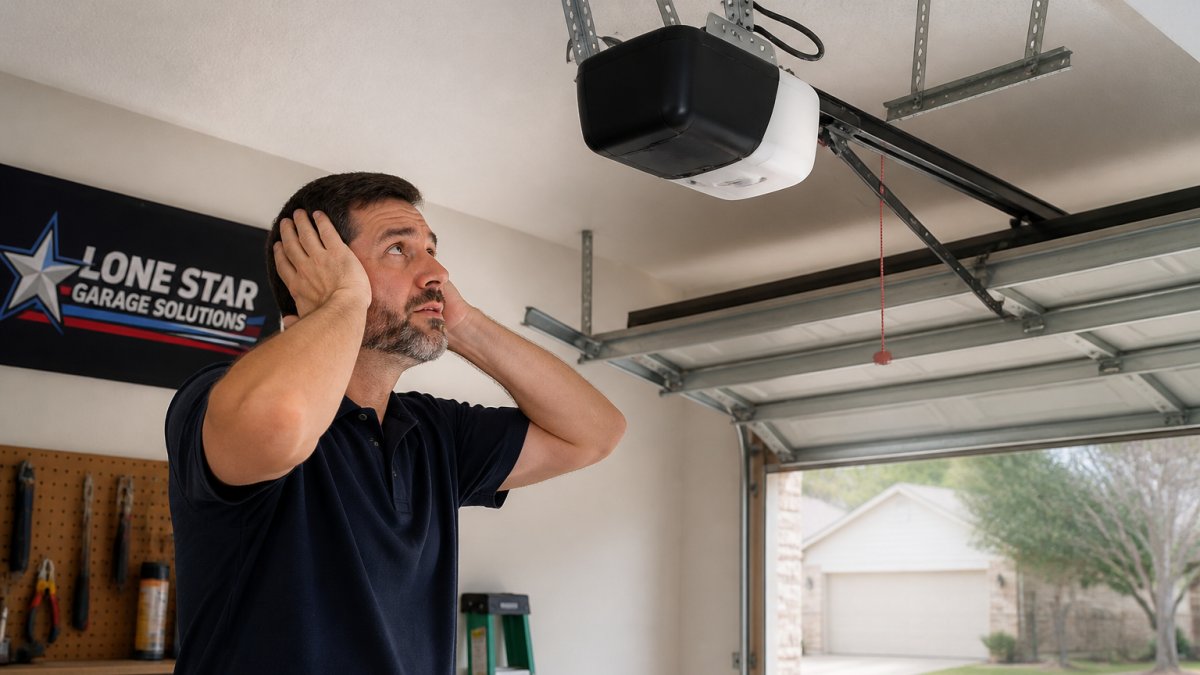
Opener motor noise comes from the unit mounted to your ceiling or wall. You'll hear it when the motor runs, typically a humming, grinding, or clicking sound.
Door noise originates from the door panels, rollers, hinges, and tracks. These sounds happen as the door moves up and down.
Understanding the difference saves you time and money. A noisy motor might need a professional, but a noisy door is often something you can fix yourself with basic maintenance.
Common Sounds and What They Mean
Different noises tell different stories. Here's what to listen for:
- Squeaking or squealing: Usually worn rollers, hinges, or lack of lubrication on moving parts
- Rattling or clanking: Loose nuts, bolts, or hardware that needs tightening
- Grinding: Often worn rollers, misaligned tracks, or a struggling opener motor
- Clicking: Commonly a worn sprocket, chain issues, or a problem with the opener's limit switches
- Humming without movement: The opener motor is trying to work but something is blocking it
- Loud, rough operation: Worn springs, damaged rollers, or metal-on-metal friction
Keep these descriptions in mind as you troubleshoot. They'll help you communicate the problem clearly if you need to call a professional.
Noisy Garage Door Opener Troubleshooting: Tighten Loose Hardware
Loose nuts, bolts, and fasteners are one of the most common causes of a noisy garage door opener. The vibration from the motor and movement of the door can shake components loose over time. The good news: this is usually the easiest fix.
Inspect Nuts, Bolts, and Fasteners
Before you grab tools, unplug the opener from the outlet. Safety first, you don't want the door moving unexpectedly while you're working.
Locate the mounting bolts that attach the opener to the ceiling or wall. Use a wrench or socket set to check each bolt. Turn clockwise to tighten.
Check the bolts that hold the rail or track to the mounting brackets. These vibrate loose frequently. Tighten each one firmly but carefully.
Look at the chain or belt drive attachment points. If your opener uses a chain drive, the chain sprocket bolts should be tight.
Inspect the hinges where the opener rail connects to brackets. Vibration often loosens these over time.
What you'll need:
- Adjustable wrench or socket set
- 5-10 minutes per inspection
- No special skills required
Check the Mounting Brackets
Mounting brackets hold the opener securely in place. When they're loose, the entire unit vibrates and rattles.
Examine where each bracket connects to the ceiling or wall. Look for gaps between the bracket and the surface. Gaps mean the bolts have loosened.
Tighten the bolts connecting brackets to the structure. Work methodically, tighten one bolt, then move to the next, rather than fully tightening one bracket before moving on.
Check for bent or damaged brackets. If a bracket is bent, tightening won't solve the problem permanently. Bent brackets should be replaced.
After tightening, test the opener. Open and close the door a few times. Does the noise improve? If yes, you've found your culprit.
How to Lubricate Garage Door Rollers and Hinges
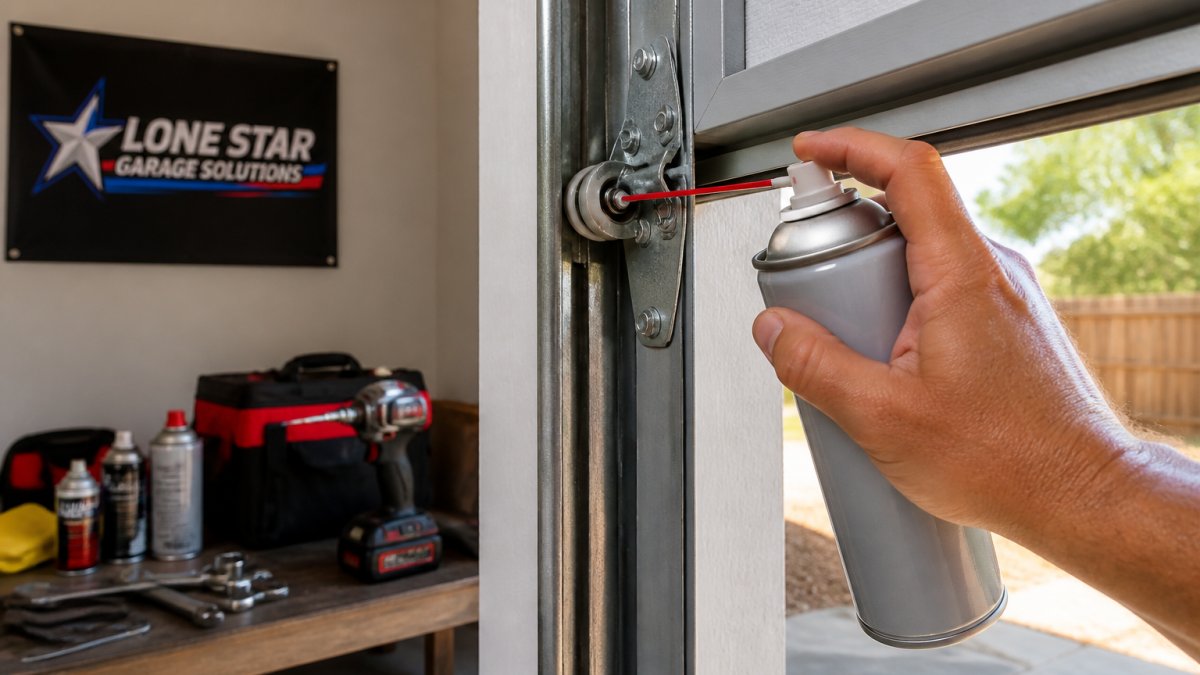
Friction is the enemy of smooth, quiet garage door operation. When rollers, hinges, and tracks dry out, they squeak and squeal. Proper lubrication reduces friction, quiets the system, and extends the life of your moving parts.
Choose the Right Lubricant
Not all lubricants are created equal. The wrong product can attract dirt, gum up over time, or damage plastic components.
Silicone spray is the best choice for garage doors. It lubricates effectively, doesn't attract dust, and works in temperature swings common in Texas.
Lithium grease works well for hinges and pivot points, but it's thicker and can collect debris.
Avoid WD-40 and similar penetrating oils. They're thin and evaporate quickly. They don't provide lasting lubrication for garage door systems.
Never use household oils. Olive oil, motor oil, and similar products attract dirt and gum up over time.
Buy lubricants designed for garage doors at hardware stores.
Application Steps for Rollers, Hinges, and Tracks
Start with the rollers. These small wheels run along the track and carry most of the door's weight.
- Locate each roller where the door panels meet the track
- Spray silicone lubricant directly onto the roller wheel
- Spray the hinge pin where the roller connects to the door panel
- Wipe away excess with a clean cloth
- Repeat for all rollers (typically 8-12 per door)
Move to the hinges. These connect the door panels to each other.
- Spray silicone lubricant on each hinge pin
- Work the hinge gently back and forth to distribute the lubricant
- Wipe excess away
- Don't miss hinges hidden behind the door panels
Apply lubricant to the track itself, but sparingly.
- Spray a light coating along the full length of the track
- Wipe away excess
- A clean, lightly lubricated track reduces friction and noise
Finally, lubricate the spring hardware if accessible. Springs are under extreme tension, so only lubricate the bolts and brackets, never the spring itself.
Time required: 10-15 minutes for a standard two-car garage door
Open and close the door several times. The squeaking should be gone or significantly reduced. Repeat this maintenance every 6-12 months or when you notice squeaking returning.
Garage Door Opener Making Grinding Noise: Identify and Fix
Grinding is different from squeaking. It's a harsh, mechanical sound that suggests metal-on-metal friction or worn components. The cause depends on your opener's drive type.
Grinding Sounds by Drive Type
Chain drive openers grind when the chain is worn, misaligned, or too loose. The chain teeth slip on the sprocket, creating a grinding sound.
Check the chain tension. Most chains should have about 1/2 inch of play when you press down on the middle.
Inspect the chain for rust or debris. A dirty chain grinds as it moves.
Belt drive openers grind less often than chain drives, but a worn belt can produce a grinding sound.
Screw drive openers grind when the lead screw is worn or dirty. These are less common but operate on a threaded rod. Grinding here usually means professional replacement is needed.
When Grinding Means Professional Help
If tightening hardware and lubrication don't stop the grinding, the problem is likely inside the opener unit itself.
Worn gears, damaged sprockets, or internal motor issues require professional diagnosis and repair. Continuing to operate a grinding opener can cause more damage and lead to complete failure.
Contact Lone Star Garage Solutions for an inspection. We can determine whether the opener can be repaired or needs replacement. Attempting repairs on the internal opener mechanism yourself risks injury and further damage.
Garage Door Opener Making Clicking Noise: Common Causes
Clicking is often less urgent than grinding, but it still signals a problem.
Worn sprockets in chain drive systems click as the chain slips. Inspect the sprocket teeth for wear. Damaged teeth look sharp or irregular.
Limit switch problems cause rapid clicking. These switches tell the opener when to stop.
Loose chain in chain drive systems clicks as it moves. Adjust the tension as described in the grinding section above.
Worn drive components in belt or screw drive systems can produce clicking. This is typically a signal that replacement is near.
If clicking persists after tightening hardware and lubricating moving parts, have the opener inspected. Most clicking problems require professional service.
Inspect and Adjust Door Alignment and Springs
A misaligned door creates noise and stress on the opener. Springs that are worn or unbalanced do the same. Both issues need attention.
Check Track Alignment
The garage door tracks must be perfectly vertical and parallel to each other. Misalignment causes the door to bind, creating noise and uneven wear.
Look at the tracks from the side. They should be perfectly straight. If you see bends or dents, the track needs replacement, another job for a professional.
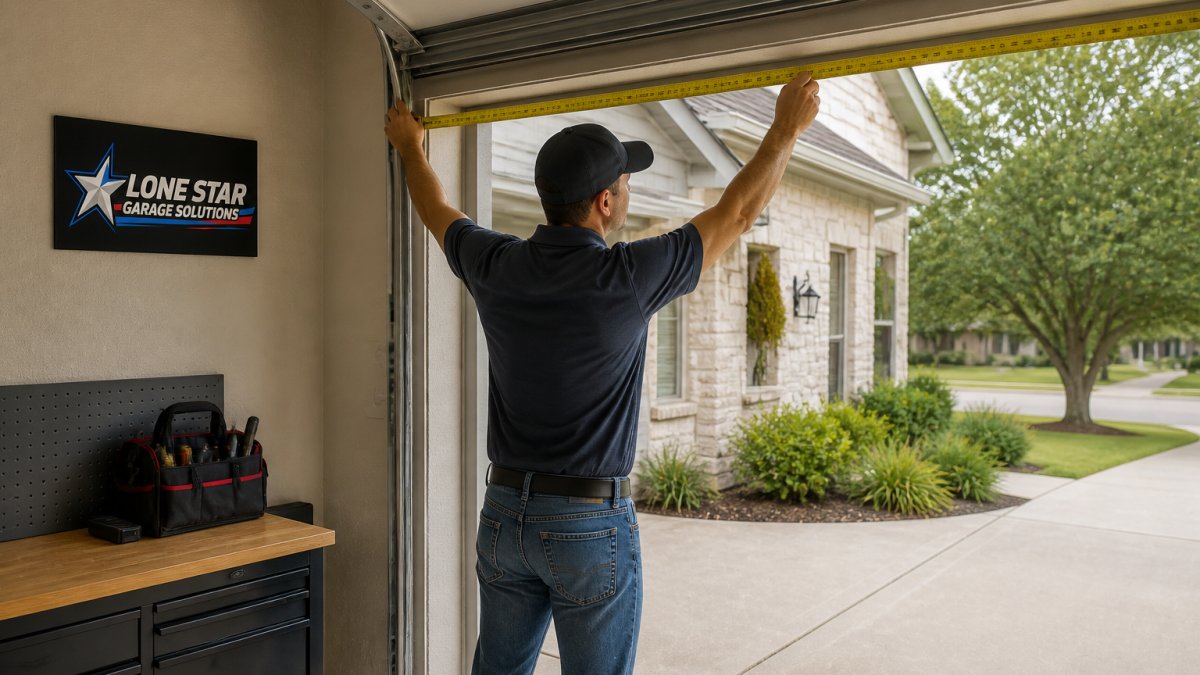
Check that both tracks are the same distance from the wall. Use a tape measure to compare.
Ensure the door hangs evenly when closed. If one side is higher than the other, the door is misaligned. Adjust the track bolts until the door is level.
A properly aligned door moves smoothly and quietly. Misalignment causes squeaking, grinding, and premature wear on rollers and springs.
Spring Tension and Worn Springs
Garage door springs carry most of the door's weight. Worn or unbalanced springs force the opener to work harder, creating noise and strain.
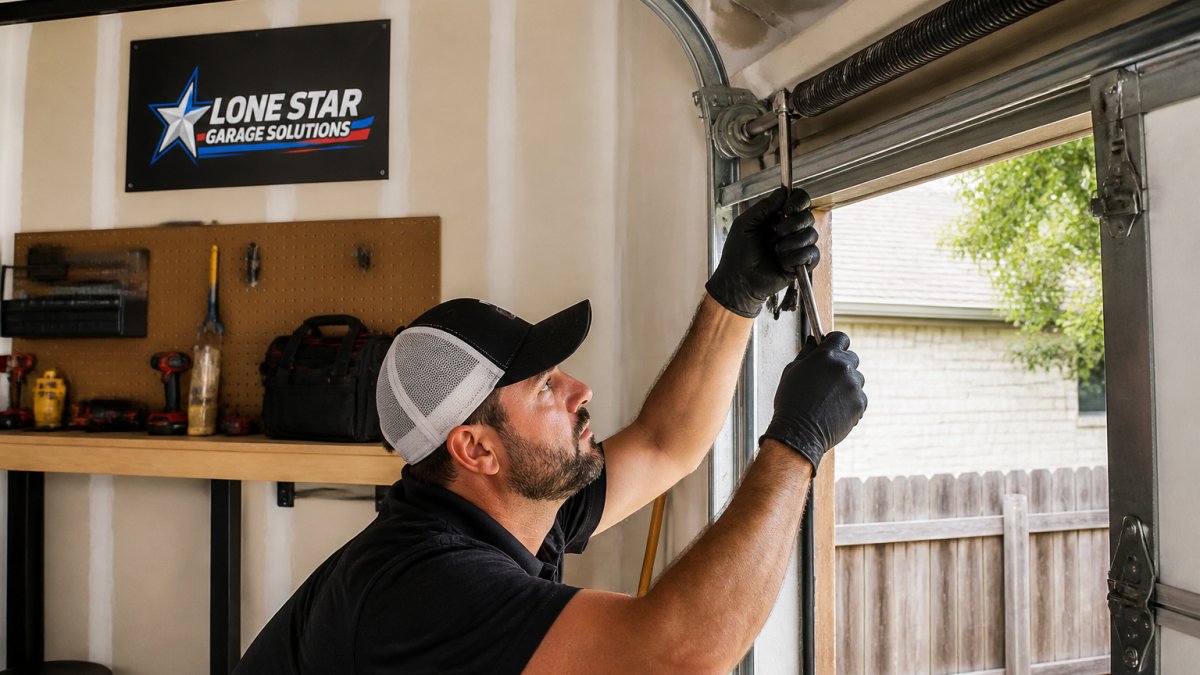
Never attempt to adjust or replace garage door springs yourself. Springs are under extreme tension and can cause serious injury or death if mishandled. This is always a professional job.
Signs of worn springs:
- The door feels heavier than normal
- The opener struggles to lift the door
- The door closes unevenly or jerks
- You hear a loud snap or bang (a spring has broken)
If you notice any of these signs, contact a professional immediately. Operating a garage door with broken or worn springs is unsafe and damages the opener.
Lone Star Garage Solutions can inspect your springs and replace them if needed. Spring replacement extends the life of your opener and restores smooth, quiet operation.
When to Call a Professional
You've tightened hardware, lubricated moving parts, and checked alignment. The noise persists. It's time to call a professional.
Call a professional if:
- The opener grinds loudly despite lubrication and hardware tightening
- You hear a loud snap or bang (broken spring)
- The door feels heavy or the opener struggles to lift it
- Clicking continues after basic troubleshooting
- You see visible damage to springs, rollers, or tracks
- The door is visibly misaligned and won't adjust
- You're uncertain about any repair step
Garage door systems involve heavy components and high-tension springs. Professional technicians have the tools, training, and insurance to work safely.
Lone Star Garage Solutions serves New Braunfels and the surrounding Central Texas area. We diagnose noisy garage openers quickly and recommend repairs that solve the problem. Contact us for a quote and professional inspection.
A noisy garage opener often signals a simple maintenance issue: loose hardware, dried-out moving parts, or misalignment. Start with tightening and lubrication. These fixes resolve most noise complaints and cost little.
Frequently Asked Questions
How do I know if the noise is coming from the garage door opener or the door itself?
Operate the door without the opener by disconnecting the safety release cord and manually opening it. If it's quiet, the noise comes from the opener. If it still makes noise, the problem is the door, hinges, rollers, or tracks. This distinction helps you target the right fix and avoid unnecessary repairs.
What's the best way to lubricate a noisy garage door opener?
Use silicone spray or lithium grease on moving parts like rollers, hinges, and the rail. Apply lubricant sparingly to avoid attracting dust. For the opener itself, check your manual, many don't need lubrication. Avoid WD-40 or general-purpose oils, which attract dirt and can gum up the mechanism over time.
Why is my garage door opener making a grinding noise?
Grinding usually indicates worn gears, a damaged drive sprocket, or metal-on-metal contact inside the opener housing. Chain-drive openers grind when the chain wears; screw-drive models grind when the drive screw is damaged. This noise typically signals internal wear that requires professional inspection to prevent opener failure.
When should I call a professional about a noisy garage door?
Contact a professional if you hear grinding, clicking that prevents operation, loud rattling from the springs, or noise that doesn't improve after tightening hardware and lubricating parts. Also call immediately if springs appear damaged or stretched, as spring repair requires specialized tools and carries safety risks.