
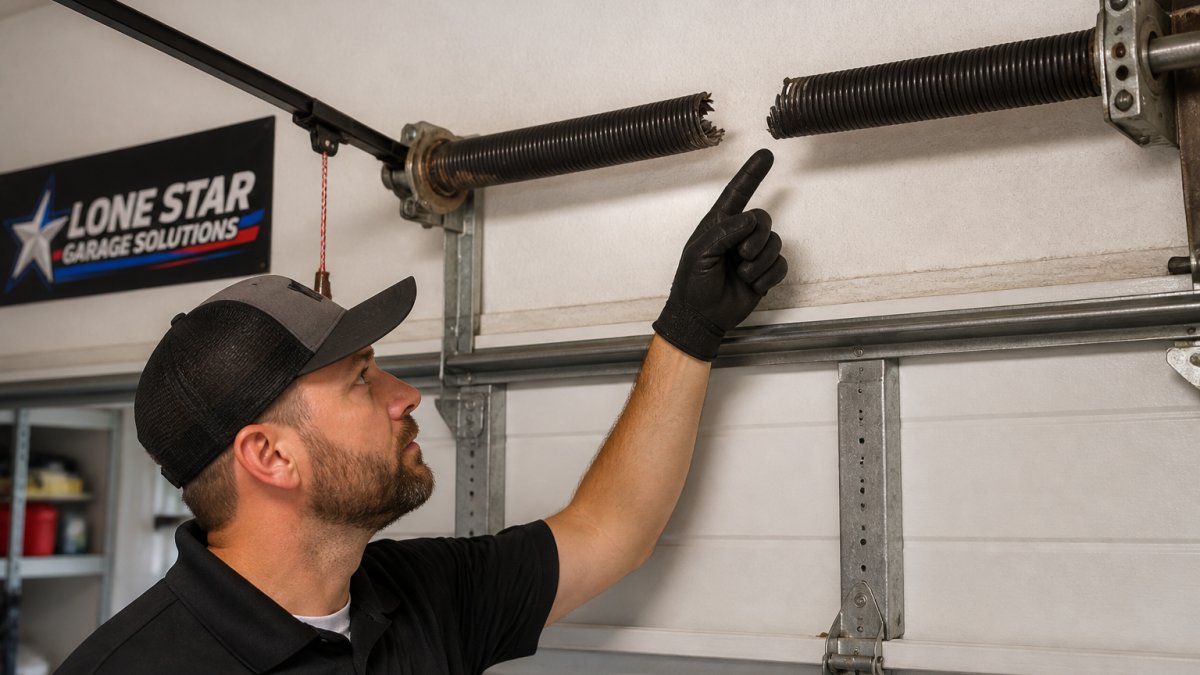
 how-to
Why Garage Door Springs Break Often: Prevention Guide
Table of Contents
- Why Garage Door Springs Break Often
- Signs of a Broken Garage Door Spring
- Garage Door Spring Maintenance Tips to Extend Life
- How to Perform a Garage Door Balance Test
- Professional Garage Door Spring Replacement
- Why DIY Spring Replacement Is Unsafe
- Frequently Asked Questions
Last Updated: October 2, 2026
Why Garage Door Springs Break Often
Garage door springs break often because they handle enormous mechanical stress every single day. A typical garage door spring completes thousands of open-and-close cycles over its lifetime. Each cycle puts tremendous tension on the metal coils. Eventually, metal fatigue takes over and the spring fails.
Understanding why this happens helps you protect your door and avoid costly repairs. At Lone Star Garage Solutions, we've seen countless homeowners surprised by sudden spring failure. The good news: you can extend spring life with proper maintenance and early warning signs.
Understanding Cycle Life and Metal Fatigue
Cycle life is the number of times a spring can open and close before it wears out. Most residential garage door springs are rated for 10,000 to 15,000 cycles.
A typical family opens and closes their garage door 4 to 8 times per day.
Metal fatigue is the real culprit. Every time the spring stretches and compresses, tiny stress points form inside the metal. The coils don't break all at once.
High-cycle springs exist for doors that get heavy use. These springs are made from stronger steel and can handle 25,000 or more cycles.
How Temperature Swings Affect Spring Integrity
Texas weather is hard on garage door springs. Temperature swings from scorching heat to cold nights create constant stress on the metal.
When metal heats up, it expands. When it cools, it contracts. This expansion and contraction happens repeatedly throughout the year. Over time, these tiny movements weaken the spring's structural integrity.
Humidity adds another problem. Moisture in the air causes corrosion on the spring's surface. Rust eats into the metal, weakening it from the outside in.
Proper lubrication helps fight corrosion. A light coat of garage door lubricant seals out moisture and keeps the spring moving smoothly.
Signs of a Broken Garage Door Spring
A broken spring usually announces itself clearly. Your garage door will either refuse to open or feel extremely heavy when you try to lift it manually.
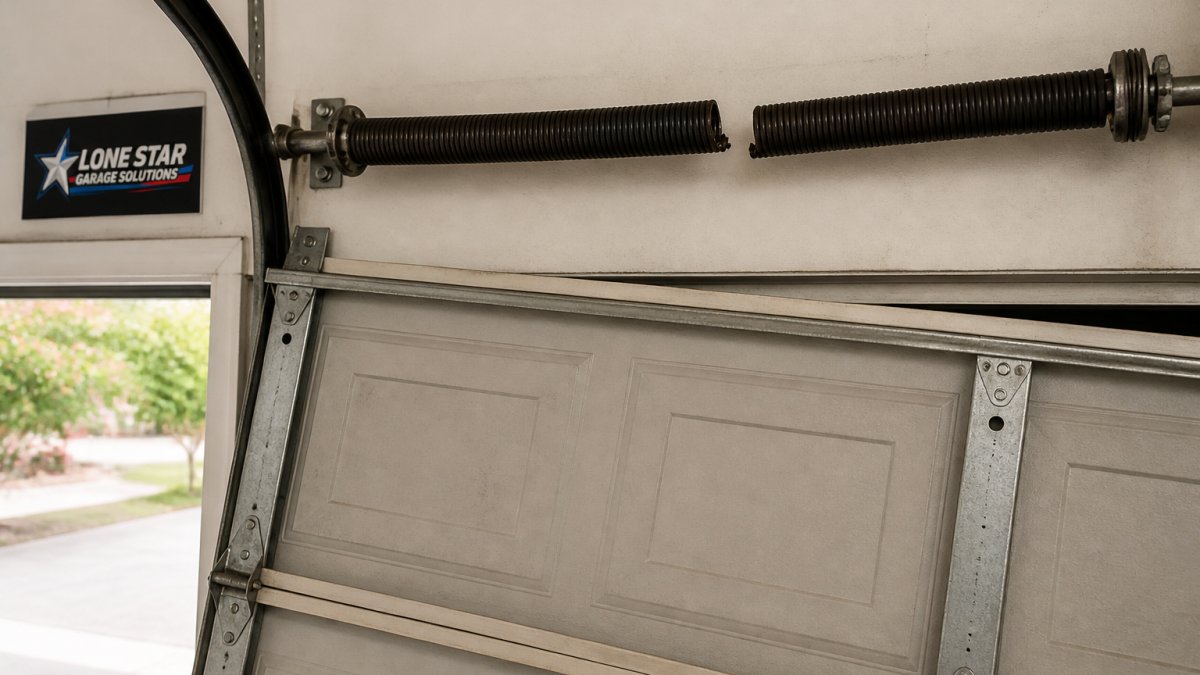
Watch for these specific warning signs:
- Loud bang or crack sound, A snapping torsion spring often makes a loud noise as it breaks under tension
- Door won't open at all, The opener can't lift a door without spring support
- Door opens partway then stops, The spring is weakening and can't hold the door's weight
- Door feels very heavy, Even if it opens, manual lifting becomes difficult
- Visible gap in the coil, You can see a clear break or separation in the spring
- Door sits unevenly, One side hangs lower than the other
Never try to open a door with a broken spring. The door is extremely heavy and dangerous. A broken spring can snap and cause serious injury.
Garage Door Spring Maintenance Tips to Extend Life
Regular maintenance doesn't prevent springs from aging, but it slows the process significantly. A well-maintained spring lasts longer than a neglected one.
Lubricate the spring every 3 months. Use a garage door lubricant spray designed for metal parts.
Keep the door balanced. An unbalanced door puts extra stress on the springs.
Avoid forcing the door. If the door sticks or hesitates, stop and investigate. Forcing it puts extra strain on the spring.
Inspect for rust and corrosion. Look at the spring monthly for orange or brown discoloration.
Check the cable alongside the spring. Garage door cables work in tandem with springs.
How to Perform a Garage Door Balance Test
A balance test is one of the most valuable diagnostic tools a homeowner can use.
Why balance matters to spring life:
Your garage door weighs 300 to 500 pounds. The springs are designed to support exactly half that weight on each side.
A balance test reveals this imbalance before it becomes dangerous. It's a 2-minute check that gives you concrete information about your spring's condition.
Here's how to test your door's balance:
-
Close the garage door completely. Make sure nothing is in the way and the door is fully seated.
-
Disconnect the opener. Unplug the garage door opener from the electrical outlet or press the disconnect button on the opener unit itself. This is critical, you want to test the springs alone, not the opener's assistance.
-
Lift the door manually. Grip the bottom of the door on both sides and lift it smoothly using only your hands. Use steady, even pressure. Do not jerk or force it.
-
Check how it feels. A balanced door should feel light and move smoothly with minimal effort. You should be able to lift it with one hand per side without straining. If the door feels heavy or requires significant force, the springs are weakening.
-
Release the door halfway up. Let go carefully and observe what happens. A balanced door stays in place where you release it. An unbalanced door will either fall back down or rise on its own.
-
Reconnect the opener. Plug it back in and test the automatic operation to make sure everything works normally.
Interpreting your results:
- Light feel + stays in place when released = Springs are in good condition. Continue regular maintenance.
- Moderate effort to lift + slight drift when released = Springs are weakening. Plan for replacement within the next 6 to 12 months. Increase lubrication frequency to every 2 months.
- Heavy feel + door falls or rises significantly when released = Springs are near end of life. Schedule professional replacement soon. Do not delay, a failing spring can snap without warning.
- Door won't stay up at all = One or both springs may already be broken or severely compromised. Do not attempt to open the door with the opener. Contact a professional immediately.
Why this test matters more than you might think:
The balance test gives you actionable information about remaining spring life.
Perform this test monthly if your door gets heavy use (8+ cycles daily), or quarterly for typical household use. Track the results over time.
Professional Garage Door Spring Replacement
Spring replacement requires specialized tools and expertise. This is not a DIY job. Professional technicians have the equipment and training to do it safely.
During replacement, a technician will:
- Safely release the tension on the old spring
- Remove the broken spring and hardware
- Install a new spring matched to your door's weight
- Adjust the door balance for smooth operation
- Test the opener and safety sensors
The technician will also inspect the cable, pulleys, and other hardware. If these parts show wear, replacement now prevents future problems.
Lone Star Garage Solutions handles spring replacement for homeowners and contractors throughout the New Braunfels area. We install springs matched to your specific door weight and use high-quality hardware rated for the Texas climate.
Why DIY Spring Replacement Is Unsafe
Garage door springs are under extreme tension. A torsion spring can store as much energy as a loaded crossbow.
Real dangers of DIY spring replacement:
- Sudden spring release, If the tension isn't released correctly, the spring can snap with tremendous force
- Pinch hazard, Hands and fingers can get caught in moving parts
- Heavy door drop, Without proper support, the door can fall unexpectedly
- Improper installation, A wrongly installed spring puts stress on the opener and other components
Professional technicians use specialized equipment like spring compressors and safety cables. They understand the physics of spring tension and know how to work safely.
A professional replacement costs less than an emergency room visit or property damage from a DIY mistake.
Broken garage door springs are one of the most common garage door problems homeowners face.
When replacement time comes, Lone Star Garage Solutions provides professional spring installation with springs matched to your door's weight and rated for Central Texas weather conditions.
Frequently Asked Questions
What causes garage door springs to break?
Garage door springs break due to metal fatigue from repeated opening and closing cycles. Torsion springs typically handle 10,000 to 20,000 cycles before failure. Temperature fluctuations, humidity, corrosion, and lack of lubrication accelerate wear. Springs rated for lower cycle life fail faster with heavy daily use. Regular maintenance and professional inspection can catch weakening springs before they snap.
How often should garage door springs be inspected?
Inspect your garage door springs at least once per year, ideally before winter and summer when temperature extremes are most common. If you use your garage door 10+ times daily, inspect every six months. Look for visible signs like rust, uneven coil gaps, or squeaking sounds. A professional balance test reveals hidden tension loss before springs break completely. Early detection prevents sudden failure that leaves your door stuck and creates a safety hazard for your family.
Is it safe to operate a garage door with a broken spring?
No. Operating a garage door with a broken spring is unsafe and can damage your opener. The door becomes extremely heavy and may fall unexpectedly, risking injury or property damage. A single broken spring means the counterbalance system fails, your opener cannot safely lift the full door weight. Stop using the door immediately and contact a professional for spring replacement. Never attempt DIY replacement; the tension stored in springs can cause serious injury.
How can I tell if my garage door springs are failing?
Warning signs include a loud bang or snap sound, visible rust or corrosion on the springs, uneven door movement, difficulty opening the door, sagging door edges, and squeaking or grinding noises. The door may feel heavier than usual or stick partway up. A simple balance test (manually lifting the door halfway) reveals tension loss, a properly balanced door should stay in place. If you notice any of these signs, stop using the door and contact a professional immediately.