 ultimate-guide
How to Find Reliable Garage Repair: 2026 Guide
Table of Contents
- How to Find Reliable Garage Repair: Start With a Safety Check
- How to Choose a Garage Door Repair Company in Your Area
- Garage Door Repair Technician Qualifications to Verify
- Your Garage Door Repair Estimate Checklist
- Garage Door Opener Repair or Replacement: Which Makes Sense?
- Repair or Replace the Door? A Simple Decision Framework
- Conclusion: Booking With Confidence
- Frequently Asked Questions
Last Updated: October 7, 2026
How to Find Reliable Garage Repair: Start With a Safety Check
Learning how to find reliable garage repair starts with one question most guides skip: is your door safe to operate right now? A garage door is the largest moving object in most homes, and a failing spring or frayed cable can turn a routine open into a serious injury. At Lone Star Garage Solutions, we've helped New Braunfels homeowners with this exact decision, and the first step is always the same: stop, look, and listen before you call anyone.
Signs You Should Stop Using the Door Right Now
Stop using the door immediately if you notice any of these:
- A loud bang followed by a door that won't lift (usually a broken torsion spring)
- A door that hangs crooked, with one side higher than the other
- Frayed, kinked, or snapped cables
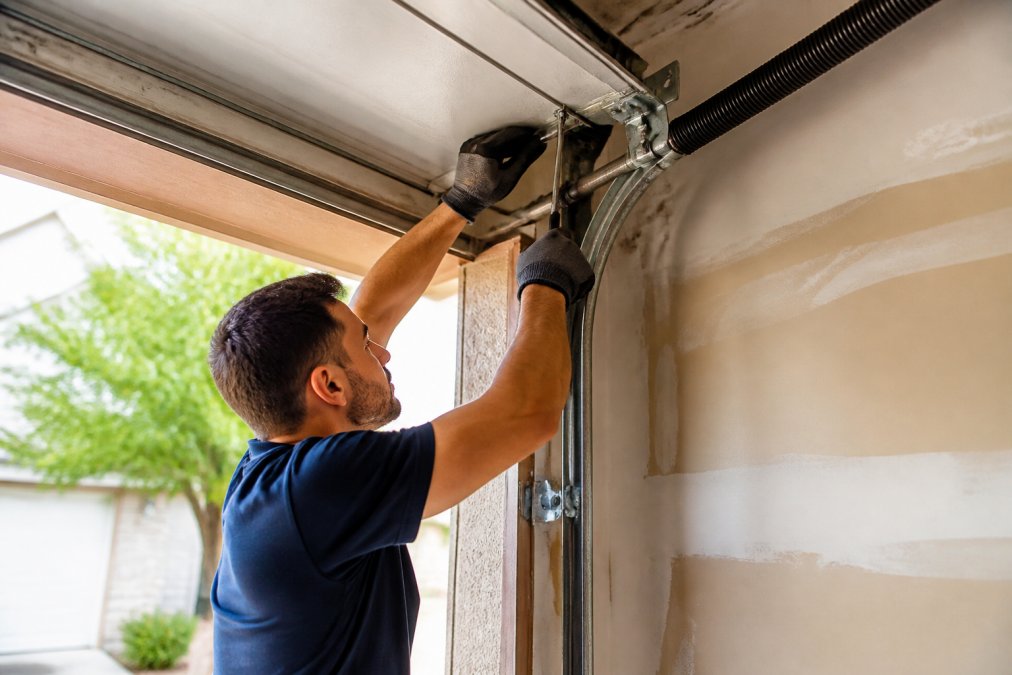
A broken spring or cable is not a "use it gently until Monday" problem. Those parts carry the door's full weight, and when one fails, the opener alone can't safely hold it. Disconnect the opener and open the door by hand only if it moves smoothly; otherwise, leave it closed until a technician inspects it.
What Homeowners Can Safely Check Themselves
Some troubleshooting is genuinely safe. Test the opener's auto-reverse by placing a roll of paper towels in the door's path, check that the photo-eye sensors on both sides of the track are aligned and clean, and look for obvious track dents or loose bolts. If the door still won't respond correctly after those checks, the issue is mechanical, and it's time for a professional diagnosis.
U.S. Consumer Product Safety Commission garage door safety guidance
How to Choose a Garage Door Repair Company in Your Area
The best way to choose a garage door repair company is to verify local reputation, credentials, and estimate transparency before you book, not after the truck arrives. Start with a local search, then compare providers on three things: reviews, qualifications, and how clearly they explain costs.
Reviews, Referrals, and Local Reputation
Customer reviews and community recommendations matter more than any advertisement. Read recent ratings on Google and check whether reviewers mention the same technician by name, which signals a stable, experienced team rather than rotating subcontractors. Ask neighbors and local realtor or property manager contacts who they use.
Watch for review patterns that hint at trouble: vague five-star reviews posted in clusters, or repeated complaints about surprise charges and no-shows.
Garage Door Repair Technician Qualifications to Verify
Credentials separate a professional shop from a truck that showed up unannounced. Before you book, confirm three things: the company carries general liability insurance and workers' compensation coverage, the technician who arrives is actually employed by the company (not a subcontractor), and the work is backed by a written warranty on both parts and labor. A legitimate provider answers all three without hesitation, and can produce documentation on request.
How to Actually Verify Credentials
- Insurance: Ask for a certificate of insurance (COI) and confirm the policy is current. If a technician is injured on your property and the company has no workers' compensation coverage, you can be exposed to liability.
- Licensing and registration: Requirements vary by state and municipality. Ask what licensing or registration applies in your area and whether the company holds it. A reputable provider will know the answer immediately.
- Manufacturer certifications and industry affiliations: These signal ongoing training on current opener and door systems. Ask which manufacturers the company is authorized to service and whether technicians hold any manufacturer-issued certifications.
Scam and High-Pressure Sales Warning Signs
Most garage door repair transactions are honest, but the category attracts a small number of bad actors. Watch for these patterns:
- Unsolicited inspections. A company that knocks on your door or calls out of the blue claiming your door "needs immediate attention" is almost always running a sales play, not a service call.
- Inflated damage claims. A technician who says the entire system must be replaced when you called about a single noisy opener or a stuck remote is overselling.
- Refusal to put anything in writing. No written estimate, no itemized quote, no warranty terms, walk away.
Questions to Ask Before You Book
Run through this checklist on the phone before you schedule:
- What is the company's full legal name and physical business address?
- Are you licensed and insured, and can you provide a certificate of insurance?
- Who exactly will come to my home, an employee or a subcontractor?
Your Garage Door Repair Estimate Checklist
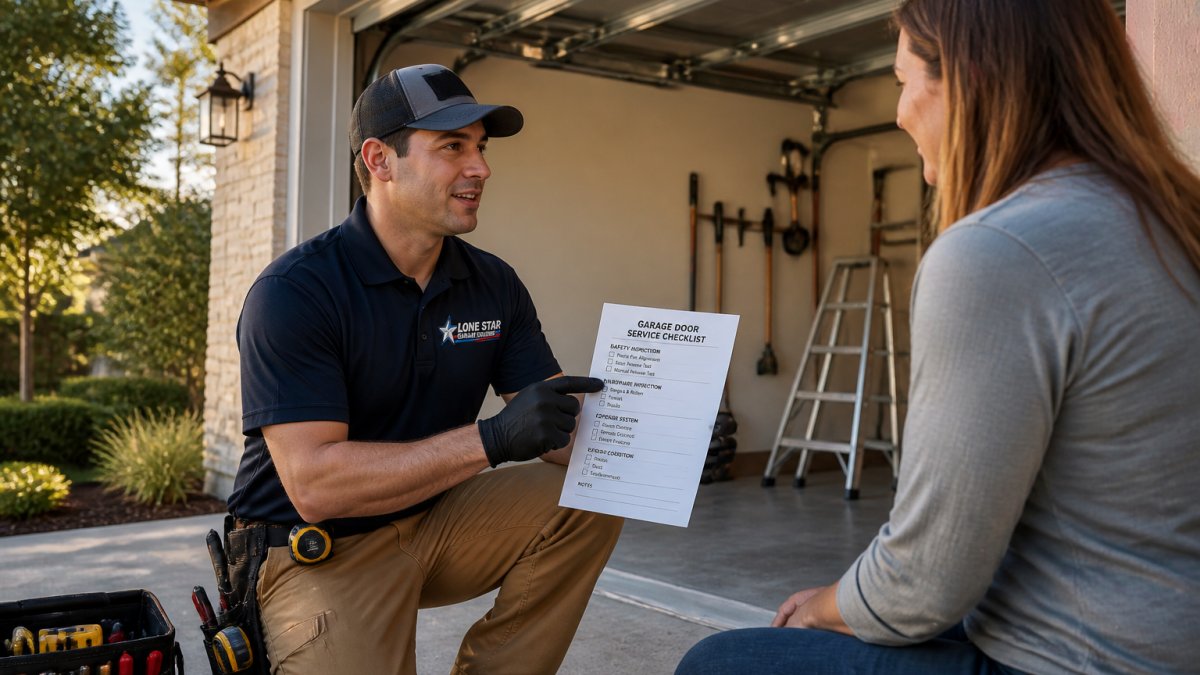
A trustworthy estimate is written, itemized, and explained before any work begins. Use this checklist to compare quotes:
- Written estimate with parts and labor listed separately
- Diagnosis explained in plain language, with the failed part shown to you
- Repair options presented, including a lower-cost fix if one exists
Red Flags in a Quote or Sales Pitch
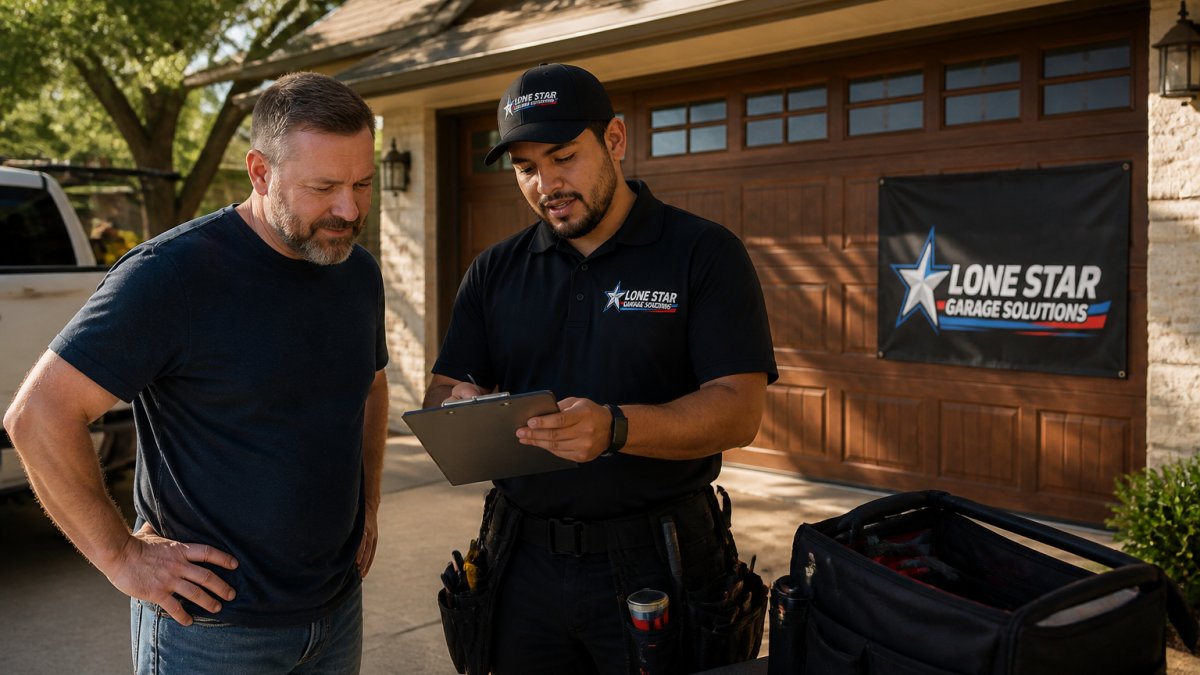
Walk away from high-pressure tactics. A technician who claims your entire system must be replaced when you called about a single noisy opener, refuses to put anything in writing, demands full payment upfront in cash, or quotes a price that changes once the door is apart is showing you exactly how the relationship will go.
Garage Door Opener Repair or Replacement: Which Makes Sense?
Most homeowners call about "the opener" when the real problem is the door, the spring, or a sensor, so the first job is figuring out which component actually failed. A technician typically isolates the opener by disconnecting it from the door (using the manual release cord) and running the unit on its own. If the trolley moves smoothly along the rail with no door attached, the opener is fine and the problem is mechanical.
Common Opener Failure Modes and What They Usually Mean
- Worn drive gear (chain or screw drive): A grinding or whining sound while the door barely moves. The gear is often replaceable on its own, which is far cheaper than a new unit.
- Failed logic board: The opener clicks but won't run, remotes stop working, or the unit behaves erratically. Board replacement is common on units still within their service life.
- Stripped or stretched drive belt: The motor runs but the door doesn't move, or the belt slips under load. Belt replacement is a straightforward repair.
When Replacement Actually Makes Sense
Repair the opener when the failure is isolated, a gear, a board, a belt, a capacitor, or a sensor, and the unit is still within its expected service life. Most residential openers are designed to last roughly 10 to 15 years, and a well-maintained unit can exceed that. Replace it when:
- The unit is well past that range and a second or third component is starting to fail.
- Replacement parts are no longer manufactured for your model, which is common on older units.
- You want modern safety and convenience features: battery backup (important during storm-season outages), smartphone control, quiet belt drive, or built-in LED lighting.
Chain Drive vs. Belt Drive: A Practical Trade-Off
If your opener is a chain drive and the noise is bad enough to hear through the wall, a belt-drive replacement is often worth considering, belt drives run significantly quieter and are a popular upgrade in homes with bedrooms above the garage. Screw-drive units sit in between on noise and are known for low maintenance. Jackshaft (wall-mount) openers free up ceiling space and suit garages with high ceilings or overhead storage, but they require a torsion-bar setup and aren't a fit for every door.
The Diagnosis-First Rule
A good technician diagnoses before recommending. If the opener is fine but the door is heavy, binding, or off-balance, replacing the opener won't fix anything, and it may burn out the new unit prematurely because it's straining against a door it can't lift. Ask any provider to show you what failed and explain why the recommended fix is the right one.
Repair or Replace the Door? A Simple Decision Framework
Use this framework to decide:
| Situation | Recommended Path | Why |
|---|---|---|
| One broken spring or cable, door in good shape | Repair | Isolated mechanical failure |
| Single dented panel, panels still available | Panel replacement | Cheaper than a full door |
| Repeated breakdowns, multiple worn parts | Replace | Repair costs add up |
| Door is 15+ years old with structural damage | Replace | Safety and efficiency |
| You want better insulation or curb appeal | Upgrade | Performance and value |
Age, structural damage, and how often you're calling for repairs are the deciding factors. A door that needs a third service call in a year is telling you something.
Conclusion: Booking With Confidence
Finding reliable garage repair comes down to verifying safety, credentials, and written estimates before you commit, and walking away from anyone who pressures you. Lone Star Garage Solutions is a locally owned provider serving New Braunfels and the surrounding Hill Country, offering same-day repair services, honest recommendations tailored to the Texas climate, and flexible financing on qualifying projects. Contact Lone Star Garage Solutions for a quote and get your garage door operating safely again.
Frequently Asked Questions
How do I find a reliable garage repair company?
Start with a local search, then verify before you book. Read recent customer reviews and community recommendations, confirm the company carries a license and insurance, and ask whether technicians have manufacturer certifications. Request a written repair estimate with parts, labor, and warranty terms spelled out. A provider that explains costs upfront and answers questions without pressure is usually the safer choice.
What should I look for when hiring a garage door repair technician?
Ask about experience with your door type, training, and industry affiliations. A qualified technician can diagnose the problem during an inspection, explain repair options in plain language, and show you the worn parts. Confirm the company is insured and that the person arriving is a direct employee or vetted subcontractor. Certifications from door and opener manufacturers are a good sign of current expertise.
Should I repair or replace my garage door opener?
It depends on age, repair history, and safety features. A single failed part, like a logic board or gear, is often worth repairing. If the opener is older, has needed repeated repairs, or lacks modern safety reversing and auto-reverse features, replacement is the more dependable long-term option. Ask the technician to explain both paths and what each includes.
Can I repair a broken garage door spring myself?
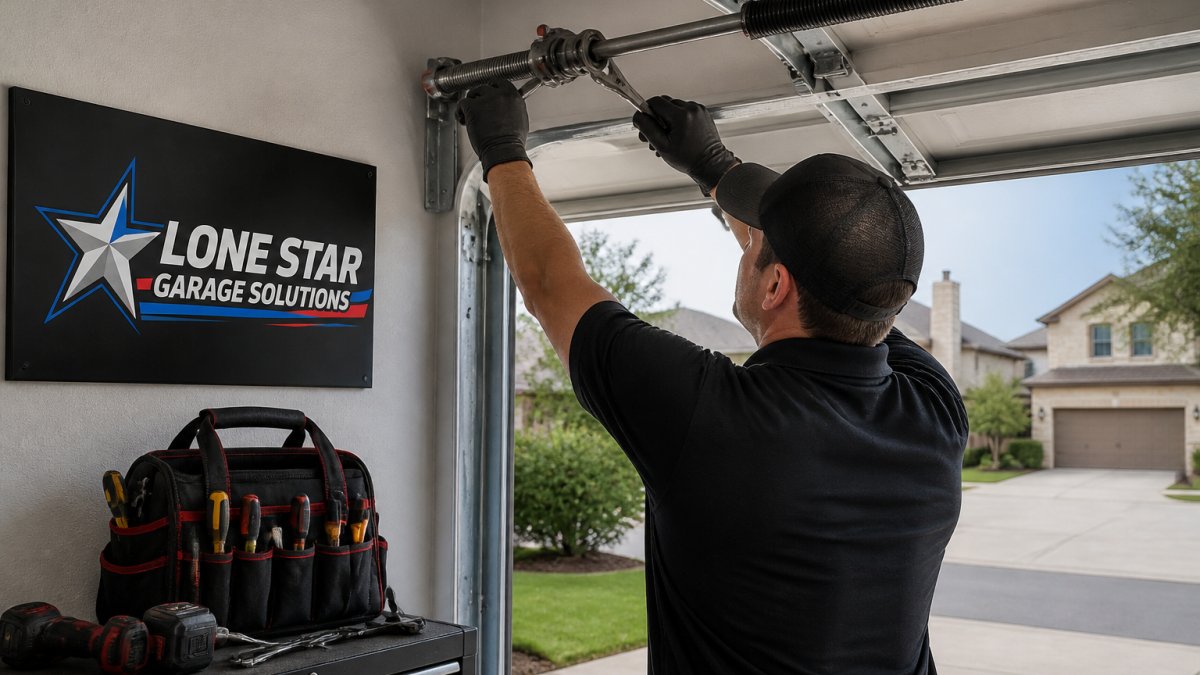
No. Torsion springs store enough energy to cause serious injury or death, and replacing them requires specialized tools and training. If you hear a loud bang from the garage or the door suddenly feels extremely heavy, stop using it and keep everyone clear. Call a repair specialist. DIY maintenance like lubricating rollers, tracks, and hinges is fine, but spring and cable work belongs to a professional.
What questions should I ask before approving garage door repairs?
Ask what failed and why, which repair options exist, and what each costs with parts and labor listed separately. Confirm the warranty length on parts and labor, whether the company stocks the needed parts, and how soon the work can be scheduled. Also ask what happens if the same problem returns. Clear answers to these questions separate a dependable local provider from a vague one.
How do I know whether my garage door needs repair or replacement?
Consider age, repair frequency, and structural condition. A door under 10 to 15 years old with an isolated problem is usually a repair candidate. If panels are rusted or cracked, the door has needed several repairs in a short period, or it no longer matches your home's insulation and safety needs, replacement often makes more financial sense over time. An on-site inspection gives you the clearest answer.
How can I tell if a garage door repair company is trustworthy?
Trustworthy companies provide written estimates before work begins, explain costs upfront, and never pressure you into same-day decisions on major replacements. They can show credentials, insurance, and warranty terms. Be cautious of unsolicited door-to-door offers, demands for full payment before work starts, and vague quotes that change once the technician arrives.