
 ultimate-guide
Signs You Need Garage Door Replacement: 2026 Guide
Table of Contents
- Why Garage Door Replacement Matters More Than You Think
- 8 Warning Signs You Need Garage Door Replacement
- Garage Door Repair vs Replacement: How to Decide
- Garage Door Lifespan: What to Expect from Your System
- Average Cost of Garage Door Replacement and What Affects It
- Safety Warnings Before You Attempt DIY Repairs
- Frequently Asked Questions
Last Updated: September 13, 2026
Why Garage Door Replacement Matters More Than You Think
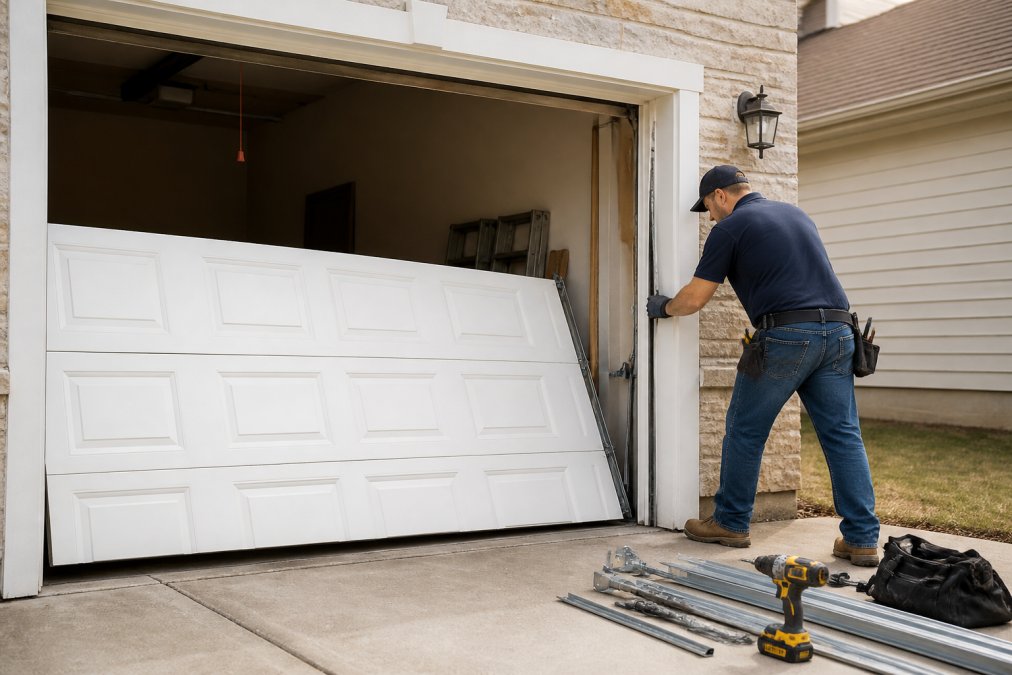
A garage door is the largest moving object in most homes, and when it fails, it takes your security, routine, and energy budget with it. Spotting the signs you need garage door replacement early saves you from emergency calls, higher repair bills, and safety risks. This guide from Lone Star Garage Solutions covers the warning signs, the repair-versus-replace decision, lifespan, costs, and safety rules.
Garage door replacement is the full removal and installation of a new door system, including panels, tracks, springs, and hardware, rather than repairing individual components on an aging door.
Most homeowners wait too long. The door still opens, so they assume it's fine, until a spring snaps or a panel drops. Doors rarely fail without warning; they telegraph the problem for months through noise, movement, and rising utility costs.
Below are eight signs that should push replacement onto your calendar, plus how to weigh repair against replacement honestly.
8 Warning Signs You Need Garage Door Replacement
These eight signs cover the most common failure points. If two or more apply, replacement usually costs less over the next few years than repeated repairs.
- Unusual noises like grinding, squeaking, or banging
- The door won't open or close properly
- Slow response time from the opener
- Visible wear and tear on panels
- Sagging or uneven door sections
- Safety sensor malfunctions
- Rising energy bills from poor insulation
- Frequent repair costs stacking up
Unusual Noises: Grinding, Squeaking, and Banging
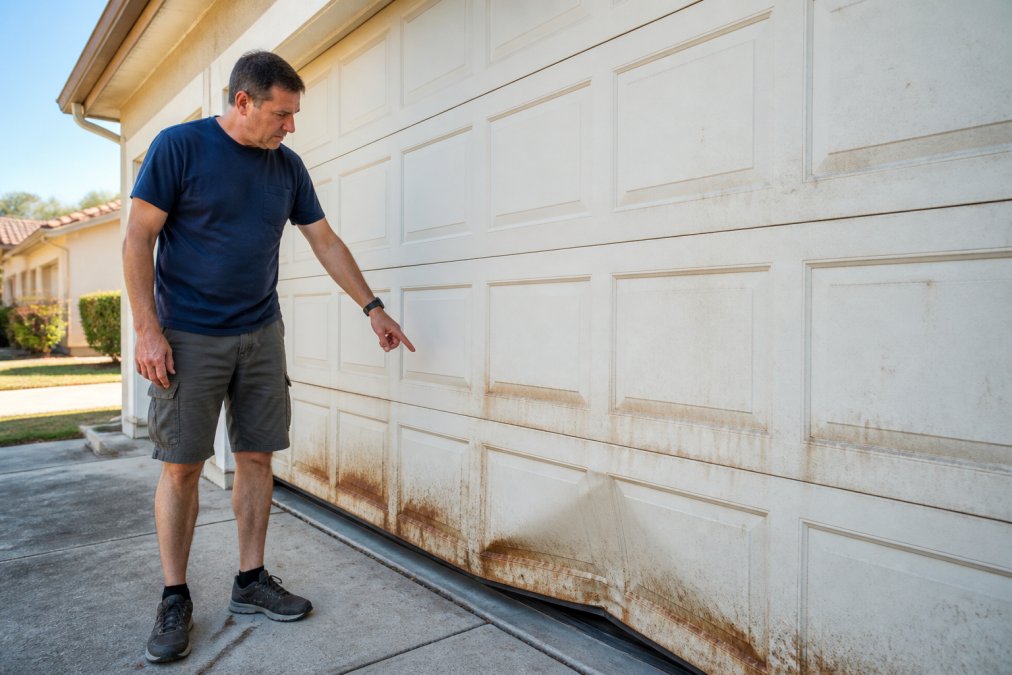
Noise is the earliest, most reliable signal. Grinding points to worn rollers or a dry track, squeaking to metal-on-metal contact in hinges and springs, and banging to something loose or torsion springs losing tension. Lubricating everything only quiets the symptom for a few weeks; if the grinding returns, the hardware is worn, and on an older door, replacing the whole system is often the smarter spend.
Door Won't Open or Close Properly
A door that stops halfway, reverses without warning, or refuses to close is a safety issue, not an inconvenience. Usual culprits: misaligned tracks, a failing opener, or snapped cables.
Check the manual release first. If the door moves freely by hand but not with the opener, the opener is the problem. If it binds by hand, the hardware or tracks are the issue, a strong replacement signal on a door past its prime.
Slow Response Time and Visible Wear on Panels
A sluggish opener that responds a second or two slower each month signals an aging motor. Pair that with dented, rusted, or cracked panels, and the door is failing structurally and cosmetically at once. Panels matter more than looks: dents and rust weaken the door's rigidity, straining the springs and tracks every time it moves.
Sagging Sections, Sensor Malfunctions, and Rising Energy Bills
A sagging section means lost structural integrity, usually from water damage, impact, or age. It won't track evenly and wears out every component it touches.
Safety sensors, the photo-eye pair near the floor, fail from misalignment, dirt, or sun glare. Realign them first; if they keep drifting, the mounting or the door's movement is the problem.
Rising energy bills are the quiet sign. Older doors often lack insulation, and a low R-value lets conditioned air escape. If your garage sits under a living space, that leak shows up on your utility statement.
Garage Door Repair vs Replacement: How to Decide
Repair makes sense when the door is under 10 to 12 years old, the damage is limited to one component, and the panels and structure are sound. Replacement wins when the door is near the end of its lifespan, the damage is structural, or repairs are piling up. Use this framework:
| Situation | Better Choice | Why |
|---|---|---|
| Single broken spring, door otherwise sound | Repair | One component, low cost |
| Door 15+ years old with multiple issues | Replacement | Repairs add up fast |
| Dented or rusted panels | Replacement | Structural integrity is compromised |
| Misaligned safety sensors only | Repair | Simple realignment or replacement |
| Rising energy bills, poor insulation | Replacement | Upgrade to an insulated door |
| Cables snapped, door off track | Replacement | Safety and structural damage |
The honest test: add up your last two years of repair spending. If it's climbing toward the cost of a new door, replacement is the better financial call.
Garage Door Lifespan: What to Expect from Your System
Age is the wrong way to think about garage door lifespan. Cycles, the number of times the door goes up and down, are what matter. Every component has a rated cycle life, and your household's daily cycle count estimates remaining life far more accurately than any "15 to 20 years" rule of thumb.
Cycle Life, Explained
Torsion springs are rated by the open-close cycles they survive before fatigue causes failure. Standard residential springs are commonly rated in the 10,000-cycle range, with higher-cycle options at a premium (How to Stretch a Spring’s Life). One cycle is a full open plus a full close. Do the math on your household:
- 2 cycles per day (leave and return once): roughly 10,000 cycles lasts about 13 to 14 years
- 4 cycles per day (two drivers): the same spring is done in about 7 years
- 8+ cycles per day (family with kids, deliveries, frequent errands): failure can arrive in 3 to 4 years
That's why two neighbors with identical doors have completely different experiences: usage, not the door, is the variable.
Component-by-Component Expectations
- Door panels: 15 to 20 years with proper care; steel panels outlast wood in humid climates
- Torsion springs: rated by cycle life, not years, see the math above
- Extension springs: generally shorter cycle life than torsion, and more prone to sudden failure without safety cables installed
- Garage door opener: 10 to 15 years for a chain-drive unit; belt-drive and newer DC-motor openers often run longer
- Rollers, hinges, cables, and bearings: 5 to 10 years, with nylon rollers outlasting steel
The Replacement Trigger Most Homeowners Miss
When a door hits 15 years and the springs have already been replaced once, you're on borrowed time, and not just on the springs. The second set now loads panels, tracks, and hinges aged alongside the first, so the next failure is more likely structural than mechanical. That's when replacement usually beats another round of repairs: you're not buying a door because it's old, but because the cost of keeping the current one running is about to accelerate.
If you don't know your door's cycle count, estimate it: count how many times the door opens and closes on a typical weekday, multiply by 5, add weekend use, and divide by 7. That daily average is the number that matters for spring life.
Maintenance That Actually Extends Life
Lubricating rollers, hinges, and the torsion bar twice a year, keeping tracks clean and aligned, and annual professional spring and cable inspections push every component toward the top of its range. Maintenance cannot reset a spring's cycle count, once rated cycles are used up, replacement is the only safe option.
Average Cost of Garage Door Replacement and What Affects It
Most articles wave at "it depends" and move on, not useful when deciding between a repair check and a replacement check. Here's the honest breakdown.
What a Replacement Typically Costs
Industry cost guides commonly place a full single-car garage door replacement in the low four figures, with double-car doors running meaningfully higher. Material is the biggest swing factor:
- Steel (non-insulated): the lowest entry point, common on builder-grade homes
- Steel (insulated, sandwich construction): mid-range, the most common upgrade choice
- Aluminum or composite: lighter and rust-resistant, priced above basic steel
- Wood and wood-composite: the premium tier, with the highest maintenance burden
Add-ons stack quickly: a new opener, torsion springs sized for the door's weight, tracks and rollers, haul-away, and framing repair. A quote listing only the door panel is a quote for a panel, not a replacement.
The Cost-Benefit Framework Most Guides Skip
The decision isn't what a new door costs, it's what the next five years cost if you keep this one. Run the math:
- Add up repair invoices from the last 24 months. Springs, cables, rollers, opener boards, sensor replacements, everything.
- Estimate the next 24 months. On a door past 15 years, assume at least one more significant repair; springs already replaced once will fail again on their own cycle schedule.
- Add the energy penalty. An uninsulated door on an attached garage under living space leaks conditioned air year-round, showing up on every utility bill.
- Compare that total to a replacement quote.
A common pattern: a homeowner spends a few hundred dollars a year on repairs for three or four years, then replaces the door anyway, having spent a meaningful fraction of a new door's cost on one already past its service life.
When Repair Still Wins
Repair is the right call when the door is under 10 to 12 years old, the failure is isolated to one component, and the panels, tracks, and framing are sound. A single broken spring on an otherwise healthy door is a repair; a snapped cable on a 20-year-old door with rusted panels is not.
The cheapest advertised price rarely reflects the final cost. Ask what's included: springs sized for the new door, tracks, hardware, opener compatibility, haul-away, and labor. A low headline number often hides the line items that make the job safe and complete.
Getting a Real Number
National ranges are a starting point, not a quote. Door size, material, insulation, opener condition, and framing all move the figure. Request a written quote itemizing the door, hardware, opener (if included), disposal, and labor separately, then compare line by line, not on the bottom number alone.
Safety Warnings Before You Attempt DIY Repairs
Some garage door repairs are safe for a careful homeowner; others are genuinely dangerous. Know the difference before you pick up a wrench.
Safe for most homeowners:
- Lubricating rollers, hinges, and tracks
- Cleaning and realigning safety sensors
- Tightening visible bolts and brackets
- Testing the manual release and emergency cord
Leave to a professional:
- Anything involving torsion springs or extension springs
- Cable replacement
- Track realignment on a loaded door
- Opener motor or circuit board work
Torsion springs store enormous energy (Recalls & Product Safety Warnings). A spring under tension can release suddenly and cause severe injury. The U.S. Consumer Product Safety Commission guidance on garage door safety treats these components as a leading cause of home injury, and no DIY tutorial makes them safe to handle without the right tools and training.
If your door is off track or a cable has snapped, stop using the opener. Call a professional before the door drops.
Frequently Asked Questions
How do I know if my garage door needs to be replaced?
Watch for sagging panels, grinding or banging noises, slow response times, and visible rust or dents. If your door needs frequent repairs or your energy bills keep climbing, replacement may be more cost-effective than continued fixes. A professional inspection can confirm whether the torsion springs, cables, or opener are failing beyond safe repair.
What's the average lifespan of a garage door?
Most residential garage doors last 15 to 30 years depending on material, usage, and maintenance.
Does homeowners insurance cover a damaged garage door?
Coverage depends on the cause. Most policies cover damage from storms, hail, or vandalism but not general wear and tear or lack of maintenance. If your door was damaged by a covered event, your insurer may pay for repair or replacement after your deductible. Review your policy or call your agent to confirm what applies.
What is the average cost to install a new garage door?
The average cost of garage door replacement varies based on door size, material, insulation R-value, and whether you need a new opener or track system. Single-car doors cost less than double-car doors, and custom or insulated models run higher. Get a written quote from a licensed installer to see exact pricing for your setup.
Can a garage door be repaired if it is sagging or misaligned?
Sometimes. Minor misalignment from worn rollers or loose hardware can often be corrected with a tune-up. However, if the panels themselves are warped, the tracks are bent, or the structural integrity is compromised, repair may only be a temporary fix. A technician can tell you whether repair vs replacement is the better long-term choice.
How often should I schedule preventative maintenance on my garage door?
Schedule professional preventative maintenance once a year. Lubricate rollers and hinges every few months, inspect cables and springs for wear, and test safety sensors monthly by placing an object in the door's path. Regular care extends cycle life, prevents sudden failures, and keeps your door operating safely.