
 ultimate-guide
Cost of Garage Door Installation 2026: Complete Guide
Table of Contents
- What Affects Garage Door Installation Costs
- Garage Door Material Types and Pricing Breakdown
- Labor Costs and Professional Installation
- Best Garage Door Opener 2026: Selection and Installation
- Garage Door Installation Timeline: What to Expect
- Lifestyle Garage Screens Installation Cost and Benefits
- Hidden Costs and Factors You Should Know
- Repair vs. Replacement: Cost Analysis
- Frequently Asked Questions
Last Updated: September 28, 2026
What Affects Garage Door Installation Costs
The cost of garage door installation 2026 depends on material, size, opener type, and site conditions. Understanding these factors helps you make decisions that match your budget and your home's needs.
Material choice is the biggest variable. Steel costs less than custom wood composite or insulated aluminum, but your choice affects long-term durability in Texas heat and humidity.
Door size matters significantly. A single-car door differs from a double-car door in springs, cables, opener, and labor. Custom or oversized doors push costs up because they require non-standard hardware and installation.
Insulated doors cost more upfront but reduce heating and cooling expenses. In Texas summers, they keep heat out and reduce HVAC load. R-value ratings indicate insulation effectiveness.
Structural condition matters. Misaligned tracks, damaged frames, or opening adjustments discovered during installation add to labor costs.
Door Material and Type
Steel doors dominate the market, balancing cost, durability, and low maintenance. They resist warping in humidity and come in single-layer and insulated versions. Insulated steel performs better in extreme Texas weather.
Aluminum and glass doors offer a modern look and natural light. They're lighter than steel, reducing opener and spring stress, but cost more, dent easily, and require regular glass and frame maintenance.
Wood and composite doors offer premium aesthetics for custom homes. Real wood requires staining, sealing, and repairs. Composite materials resist warping better but cost more upfront. Both boost curb appeal.
Single vs. Double Garage Doors
A single-car door (8 feet wide) is the baseline. It requires one torsion spring or pair of extension springs and a standard opener.
A double-car door (16 feet wide) needs heavier springs, a more powerful opener, and stronger hardware. Installation is more complex and labor costs increase. It's a significant cost jump but worth it if you need the space.
Insulation and Energy Efficiency
Insulated doors have foam cores that slow heat transfer. In Texas, uninsulated doors let summer heat in, making the space uncomfortable and increasing cooling costs if the garage is attached.
R-value ratings measure insulation effectiveness. Typical insulated doors range from R-6 to R-18. The investment pays back through lower energy bills, especially if your garage is attached.
Non-insulated doors cost less but offer no thermal protection. Insulation is worth the cost if your garage is attached; it's optional for detached garages.
Garage Door Material Types and Pricing Breakdown
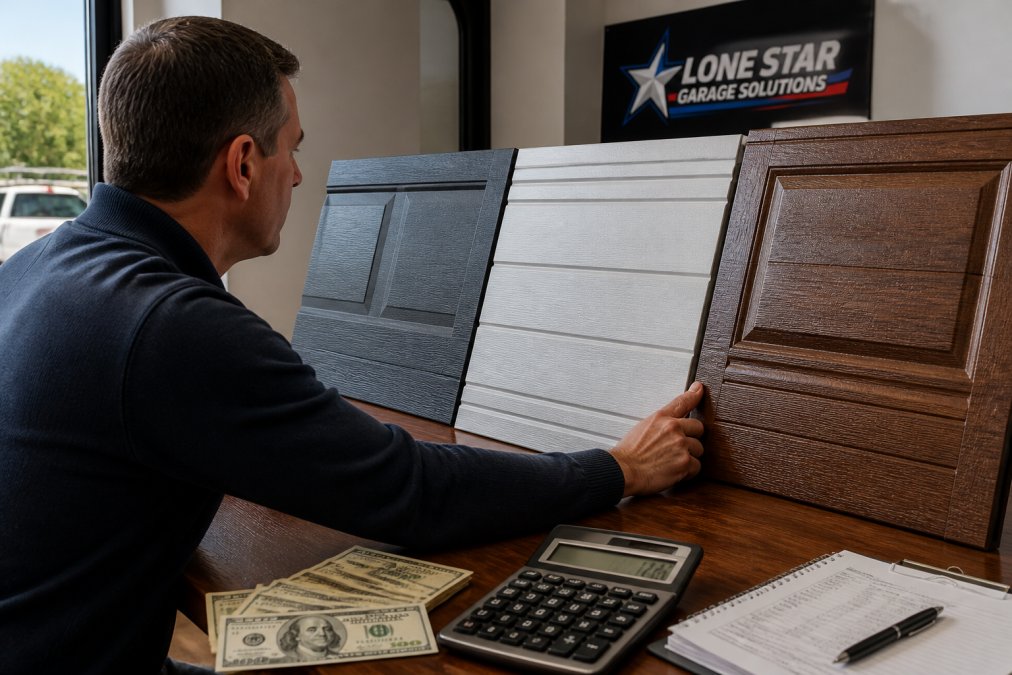
Selecting the right material shapes both the installation cost and how the door performs over years of Texas weather. Each material has trade-offs worth understanding before you commit.
Steel Garage Doors
Steel is the most common choice, delivering reliability at reasonable cost. Steel resists denting better than aluminum and requires less maintenance than wood. It comes in dozens of colors and styles.
Single-layer steel doors are affordable but offer no insulation. In Central Texas heat, they heat up quickly. Insulated steel doors perform much better if your garage is attached or you spend time in it.
Steel doors can rust if damaged, though quality doors have protective coatings. They typically last 15-20 years with normal maintenance.
Aluminum and Glass Doors
Aluminum and glass doors create a modern look and let natural light in. Glass can be frosted, tinted, or clear depending on your privacy preference.
Aluminum is lighter, reducing spring and opener wear, but dents easily. Glass requires regular cleaning and can fog in humidity. These doors cost more than steel, and repairs can be expensive.
In Texas, aluminum-and-glass doors are a premium choice for homeowners prioritizing aesthetics over durability.
Wood and Composite Options
Real wood doors offer unmatched curb appeal and boost home value. They suit traditional, craftsman, and carriage-house styles.
Real wood requires regular staining, sealing, and repairs from warping or rot. In Texas humidity, it needs vigilant care. Composite materials resist warping better and require less maintenance but still need periodic sealing.
Wood and composite doors are the most expensive option. Installation is often custom because these doors are built to your specifications. If curb appeal and architectural style are priorities, the cost is justified. If budget is tight, steel offers better value.
Labor Costs and Professional Installation
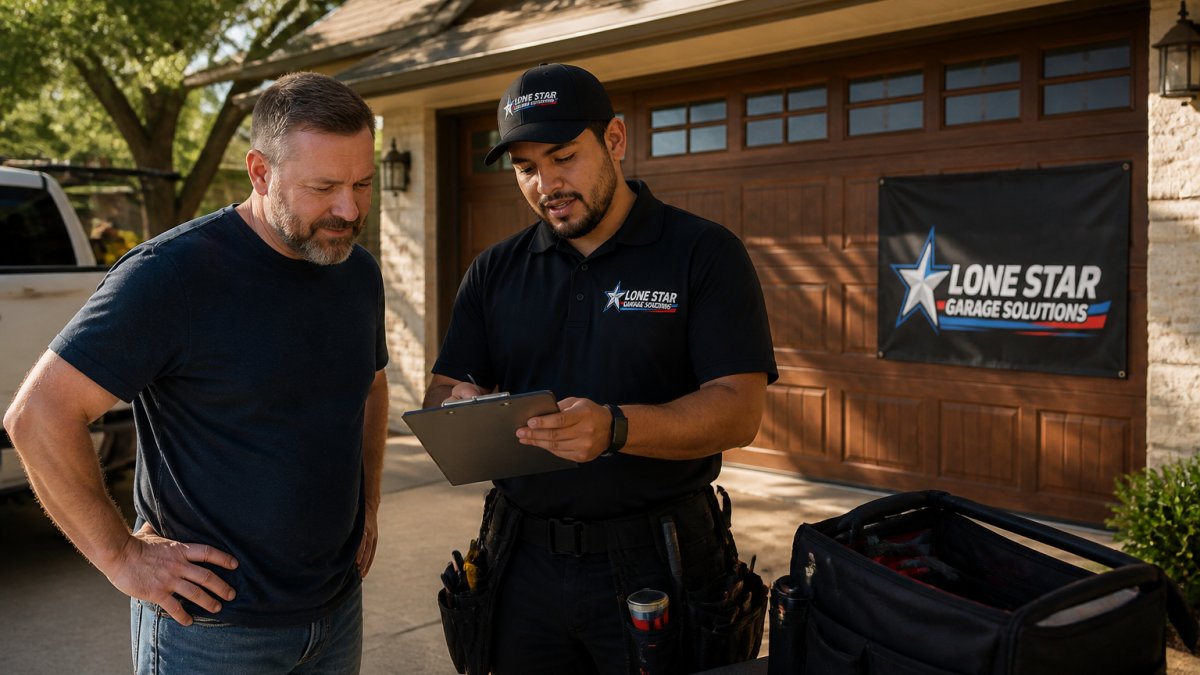
Installation labor typically accounts for 30-50% of the total cost of garage door installation 2026. A professional installer handles springs, cables, tracks, opener, and safety sensors, work requiring skill and experience.
Professional installation is essential. Springs are under extreme tension and can cause serious injury if mishandled. Improper installation creates safety hazards and voids warranties. Hire a licensed, insured professional.
A straightforward replacement typically takes 2-4 hours. Custom doors or structural repairs take longer. Lone Star Garage Solutions provides clear timelines upfront.
Labor costs depend on location, job complexity, and market rates. Get multiple quotes and avoid the cheapest option, quality installation is worth the investment.
Best Garage Door Opener 2026: Selection and Installation
The garage door opener is the motor that lifts and lowers your door. Choosing the right opener affects how smoothly your door operates and how long it lasts.
Opener Types and Horsepower Ratings
Chain-drive openers are the most common and affordable. They use a chain to pull the door up and down. They're reliable but noisier than other types, which matters if your garage is attached to your home.
Belt-drive openers use a rubber belt instead of a chain. They're quieter and smoother than chain-drive models, making them better for attached garages. They cost more upfront but offer a better user experience.
Screw-drive openers use a threaded rod to move the door.
Smart Home Integration Features
Modern openers can integrate with your smartphone, allowing you to open and close the door remotely. You can receive alerts when the door opens or closes, which adds security. Some systems let you set schedules or grant temporary access to contractors or delivery services.
Garage Door Installation Timeline: What to Expect
Understanding the timeline helps you plan around the installation and avoid surprises.
Lifestyle Garage Screens Installation Cost and Benefits
Lifestyle garage screens transform your garage into a screened-in living space. They retract when you want full access and extend to keep bugs and debris out.
Hidden Costs and Factors You Should Know
Several costs don't show up in the initial quote but affect your total project cost.
Permitting and HOA Requirements
Many jurisdictions require permits for garage door installation. Permits ensure the work meets building codes and safety standards. Permit costs vary but are typically modest. Your installer can handle the permit process, or you can check with your local building department.
Disposal and Haul-Away Fees
Your old garage door and hardware need to be removed and disposed of. Some installers include haul-away in their price; others charge separately. Ask whether disposal is included in the quote. If not, budget for this cost.
Site Conditions and Structural Issues
If your garage frame is damaged, tracks are severely misaligned, or the opening needs adjustment, repair costs add up. These issues are often discovered during installation. A professional installer will identify problems and provide an estimate for repairs.
Repair vs. Replacement: Cost Analysis
When your garage door is aging or damaged, deciding between repair and replacement is a practical question.
Frequently Asked Questions
What's the average cost to have a new garage door installed?
The total cost of garage door installation depends on the door material, size, opener type, and labor in your area. Steel single-car doors typically cost less than aluminum, glass, or wood composite options. Installation costs also vary based on your home's site conditions and whether upgrades like insulation or smart home features are included. Contact Lone Star Garage Solutions for a quote tailored to your specific needs and location.
How long does a professional garage door installation typically take?
Most professional garage door installations take between 2 to 4 hours for a standard single-car door, depending on the complexity of your project and site conditions. Removing an old door, preparing the frame, and ensuring proper track alignment all factor into the timeline. Double-car doors or custom installations may take longer. Lone Star Garage Solutions can provide a specific timeline estimate when you request a quote.
Does the material of the garage door significantly impact installation costs?
Yes, material choice is one of the largest cost factors in garage door installation. Steel doors are generally the most affordable option, while aluminum and glass doors cost more. Wood composite and carriage house style doors command premium pricing. Beyond the door itself, heavier materials may require upgraded hardware, stronger torsion springs, and more complex installation work, which increases labor costs and total project cost.
What factors should I consider when budgeting for a garage door replacement?
Budget for the door itself, the opener (if needed), professional labor, hardware upgrades, insulation R-value improvements, permitting fees, and disposal of your old door. Consider your climate, the Texas heat makes energy efficiency and weather stripping important. Smart home features, custom dimensions, and site-specific structural work also add to the total. Lone Star Garage Solutions can walk you through all these factors and help you avoid unexpected costs.
What's included in a professional garage door installation?
Professional installation typically includes removing the old door, inspecting and preparing the frame, installing new tracks and hardware, setting up torsion or extension springs safely, installing the opener, testing the safety sensors and emergency release, and programming any remote controls. The installer should also check track alignment and weather stripping to ensure smooth operation. Always confirm what's included before work begins.
Are there specific garage door features that increase the total project cost?
Yes. Insulation (measured by R-value) adds to the cost but improves energy efficiency and reduces noise. Smart home integration and remote programming features increase opener costs. Custom dimensions, carriage house styling, and upgraded hardware all raise the price. Templar motorized patio screens or Lifestyle garage screens are separate upgrades that transform your space. Discuss which features matter most for your home and budget with a professional installer.