
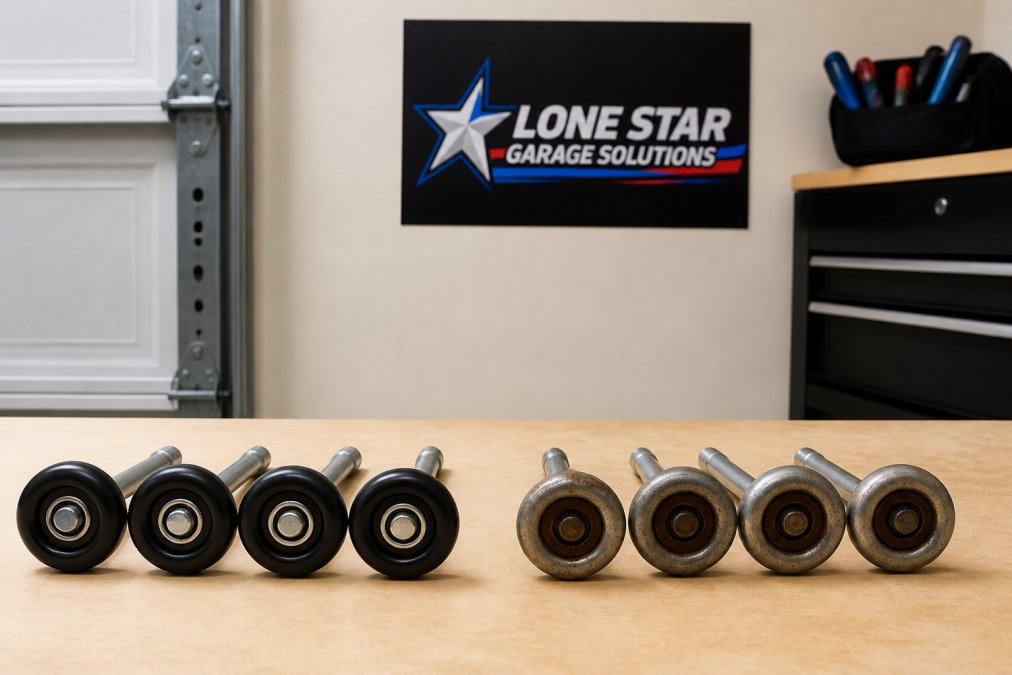
 comparison
Quiet Garage Door Rollers vs Standard: Full Comparison
Table of Contents
- Quiet Garage Door Rollers vs Standard Rollers: What's the Difference
- Comparison Table: Quiet vs Standard Rollers
- Nylon vs Steel Roller Comparison
- Signs of Worn Out Garage Door Rollers
- Garage Door Roller Replacement Cost Breakdown
- How to Lubricate Garage Door Rollers
- DIY vs Professional Installation: What You Need to Know
- Conclusion: Which Rollers Are Right for Your Garage
- Frequently Asked Questions
Last Updated: September 25, 2026
Quiet Garage Door Rollers vs Standard Rollers: What's the Difference
The difference between quiet garage door rollers and standard rollers comes down to materials, bearing design, and how smoothly your door moves. Standard steel rollers are loud and wear out faster. Quiet garage door rollers, typically made of nylon with sealed ball bearings, operate with significantly less noise while lasting longer and needing less maintenance.
A loud, grinding garage door isn't just annoying, it's often a sign that your rollers are wearing out and straining your opener and springs. Switching to quiet rollers can extend the life of your entire system while making your garage more pleasant.
Comparison Table: Quiet vs Standard Rollers
| Feature | Quiet Rollers (Nylon) | Standard Rollers (Steel) | Winner |
|---|---|---|---|
| Noise Level | Minimal (75% quieter) | Loud grinding sound | Quiet rollers |
| Material | Nylon with sealed bearings | All-metal construction | Quiet rollers |
| Lifespan | 10-15 years typical | 5-7 years typical | Quiet rollers |
| Maintenance | Minimal lubrication needed | Frequent lubrication required | Quiet rollers |
| Initial Cost | Higher per roller | Lower per roller | Standard rollers |
| Rust Resistance | Excellent in humid climates | Prone to rust without care | Quiet rollers |
| Load Capacity | High (rated for residential use) | Very high (all-metal durability) | Standard rollers |
| Best For | Homeowners prioritizing smooth, quiet operation | Budget-conscious repairs where noise isn't a concern | , |
Nylon vs Steel Roller Comparison
Nylon rollers with sealed ball bearings prioritize smooth, quiet operation, while steel rollers are cheaper and simpler. The choice depends on noise tolerance, load capacity, and environmental durability.
Material Differences and Friction
Nylon is softer than steel, creating less friction and reducing vibration and noise dramatically. Steel rollers create more friction, generating heat and wear that produces the characteristic grinding sound in older doors.
Sealed ball bearings in quiet rollers keep out dust, moisture, and debris, critical in Central Texas humidity. Standard steel rollers have exposed bearings that collect dirt and moisture, requiring frequent lubrication.
Load-Bearing Capacity: Where It Actually Matters
Steel rollers are rated for 300+ pounds per roller, making them ideal for heavy wooden doors (400-600 pounds) or thick composites. They provide a structural safety margin for heavier doors.
Nylon rollers are rated for typical residential door weights (200-400 pounds). Aluminum, vinyl-clad, and standard steel doors fall within nylon's capacity. The advantage is longevity and ease of operation under normal loads.
For lightweight aluminum or standard steel doors, nylon rollers are better. For heavy wooden or custom thick-panel doors, steel rollers provide extra assurance, though quality nylon rollers still perform well.
Environmental Degradation: How Climate Affects Each Material
Texas humidity and temperature swings create specific challenges for each roller type.
Steel rollers can corrode in humid climates if lubrication lapses. Corrosion can weaken the metal, increase friction, and accelerate bearing wear. Even sealed steel bearings can corrode if moisture penetrates.
Nylon doesn't rust and resists moisture degradation. While nylon can become brittle below 32°F or soften above 100°F, typical residential garage environments rarely trigger these issues.
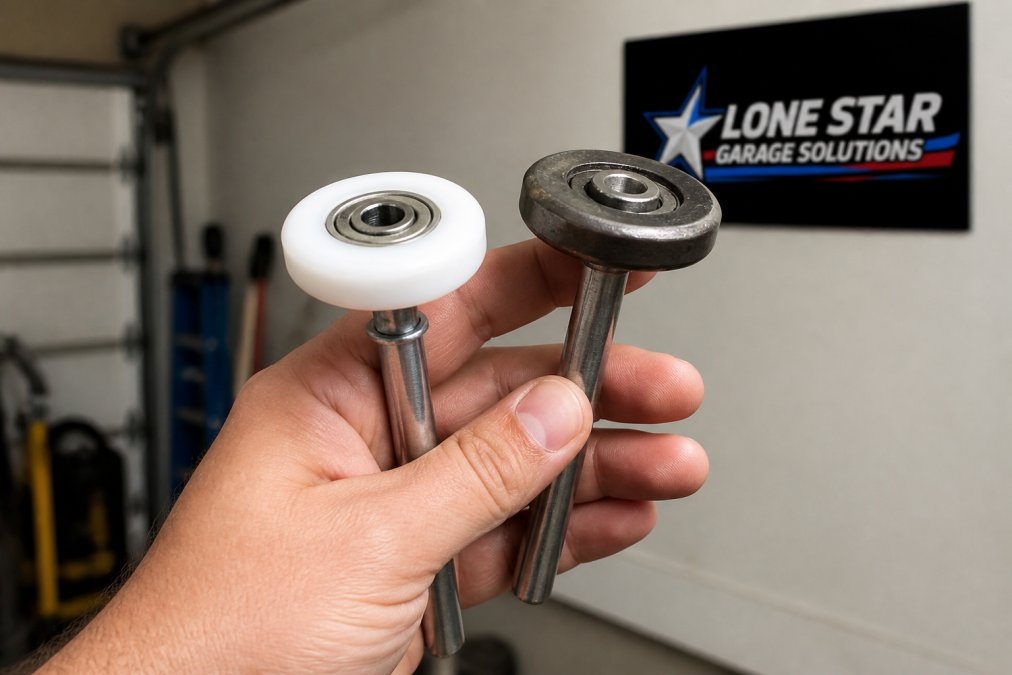
Signs of Worn Out Garage Door Rollers
Worn rollers produce grinding, squeaking, or rattling sounds. The door may move unevenly, hesitate, or feel jerky, signs that friction is increasing and rollers aren't rolling smoothly.
Visually inspect rollers at the sides where the door meets the track. Look for cracks, flat spots, or missing material. Rust on steel rollers signals corrosion and accelerated failure. Nylon rollers can crack or wear flat over many years.
If your opener struggles to lift the door or strains, worn rollers are likely forcing the motor to work harder, shortening opener life.
If you notice any of these signs, contact a professional for inspection. Lone Star Garage Solutions can assess your rollers and recommend whether repair or replacement makes sense for your system.
Garage Door Roller Replacement Cost Breakdown
The rollers themselves vary in price. Standard steel rollers are generally the least expensive option. Nylon rollers with sealed ball bearings may cost more per roller but can offer a longer lifespan. If you're replacing a full set (typically 8-12 rollers depending on your door), the material cost adds up.
Professional installation includes labor, which varies by job complexity. If your door is balanced properly and the installation is straightforward, the labor may be moderate. If the door is severely out of balance or the track needs adjustment, labor time increases. Getting a quote from Lone Star Garage Solutions gives you a clear picture of what the job actually costs for your specific door.
DIY replacement may save on labor costs but requires the right tools and skill. You'll need a socket set, possibly a drill, and a way to safely support the door while you work. Many homeowners underestimate how physically demanding and potentially dangerous this job is, garage door springs and cables are under tremendous tension.
How to Lubricate Garage Door Rollers
Regular lubrication keeps your rollers moving smoothly and extends their lifespan, especially important for standard steel rollers that corrode in humid climates.
Use a silicone-based lubricant or garage door-specific oil. Spray or apply lubricant directly to the roller stem (the shaft that spins in the track) and along the track itself. Work the lubricant in by opening and closing the door a few times. Wipe away excess to prevent dirt from sticking.
For standard steel rollers, lubrication may be needed every 3-6 months, potentially more frequently in high-humidity areas. Nylon rollers with sealed bearings may need less frequent lubrication, often just once a year or as needed if you hear squeaking.
Never use WD-40 or general-purpose oils. These attract dust and can gum up over time. Silicone-based lubricants stay cleaner and work better for garage door hardware.
If your rollers are severely corroded or the lubrication doesn't improve operation, replacement is the next step. Lone Star Garage Solutions can handle the full job from inspection to installation.
DIY vs Professional Installation: What You Need to Know
Replacing garage door rollers yourself is technically possible but carries real risks. Understanding the trade-offs, and the specific safety hazards, helps you make the right choice for your situation.
Why Spring Tension Is the Real Danger
Garage door springs store enormous amounts of energy.
If you're working on the door and accidentally release that tension without proper support, the spring can snap violently. A snapping spring can cause:
- Severe lacerations or crushing injuries to hands and fingers
- Eye injuries from flying metal
- Broken bones if the door or hardware falls
- In extreme cases, fatal injuries
The Real Trade-Off: Cost vs. Risk
For most homeowners, professional installation is the smarter choice. The labor cost is real, but it can be offset by:
- Reduced injury risk
- Correct balancing (which can extend roller life)
- Full system inspection (potentially catching problems early)
- Warranty protection
- Peace of mind
Conclusion: Which Rollers Are Right for Your Garage
Quiet garage door rollers can be a good long-term investment for many homeowners. They operate smoothly, can last longer, resist rust in humid climates, and may reduce strain on your opener and springs. Standard steel rollers are often cheaper upfront but may require more maintenance.
Frequently Asked Questions
Do nylon rollers actually make a garage door quieter?
Yes. Nylon rollers with sealed ball bearings reduce noise by up to 75% compared to standard steel rollers. The nylon tire material minimizes friction against the track, and sealed bearings eliminate metal-on-metal contact. Most homeowners notice the difference immediately after installation, especially in garages attached to living spaces where noise travels through walls.
What are the main signs of worn out garage door rollers?
Worn rollers typically produce grinding or squeaking sounds, cause the door to move unevenly or stick in certain spots, and may show visible flat spots or cracks on the roller wheel. You might also notice the door requires more effort to open or close, or it wobbles slightly during operation. Rust or corrosion on metal rollers is another clear indicator that replacement is due.
How often should garage door rollers be replaced?
Standard steel rollers may last 5-7 years with regular use, though local climate conditions can affect this lifespan. Nylon rollers with sealed bearings often last 10-15 years or longer because they resist corrosion and may require less maintenance. The frequency depends on how often you use your door, local climate conditions, and whether you perform regular lubrication.
Can I replace garage door rollers myself, or do I need a professional?
Roller replacement is possible for experienced DIYers, but it involves working with a torsion spring system under extreme tension. One slip can cause serious injury or property damage. Professional installation ensures proper door balance, correct bearing alignment, and safe handling of spring tension. If you're unsure about your skills or your door's spring system, professional installation is the safer choice.
Your garage door is one of the hardest-working systems in your home, and it deserves proper care. Quiet garage door rollers combined with regular maintenance keep your door operating safely and reliably for years. Reach out to Lone Star Garage Solutions today to discuss which roller upgrade makes sense for your situation and get started with a system that works as smoothly as it should.