 how-to
Garage Door Repair Seguin: Costs, Fixes & Local Tips
Table of Contents
- Garage Door Repair Seguin: What to Expect
- Common Garage Door Problems in Seguin
- Garage Door Off Track: Causes and Fixes
- Garage Door Binding When Closing: Why It Happens
- Garage Door Opener Repair: Troubleshooting Tips
- How Long Does a Garage Door Last? Understanding Lifespan
- Repair or Replace? Making the Right Call
- Frequently Asked Questions
Last Updated: October 12, 2026
Garage Door Repair Seguin: What to Expect
A garage door that won't open locks your car in and leaves your home exposed. If you're searching for garage door repair Seguin homeowners trust, most problems trace back to a handful of predictable failures.
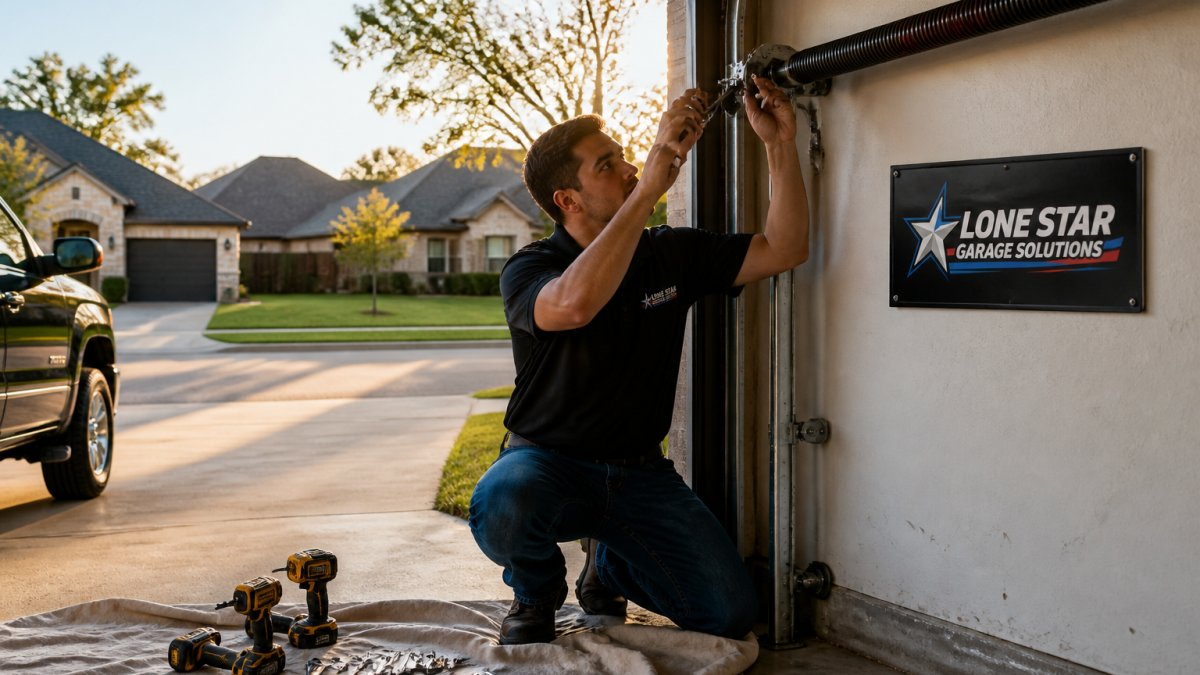
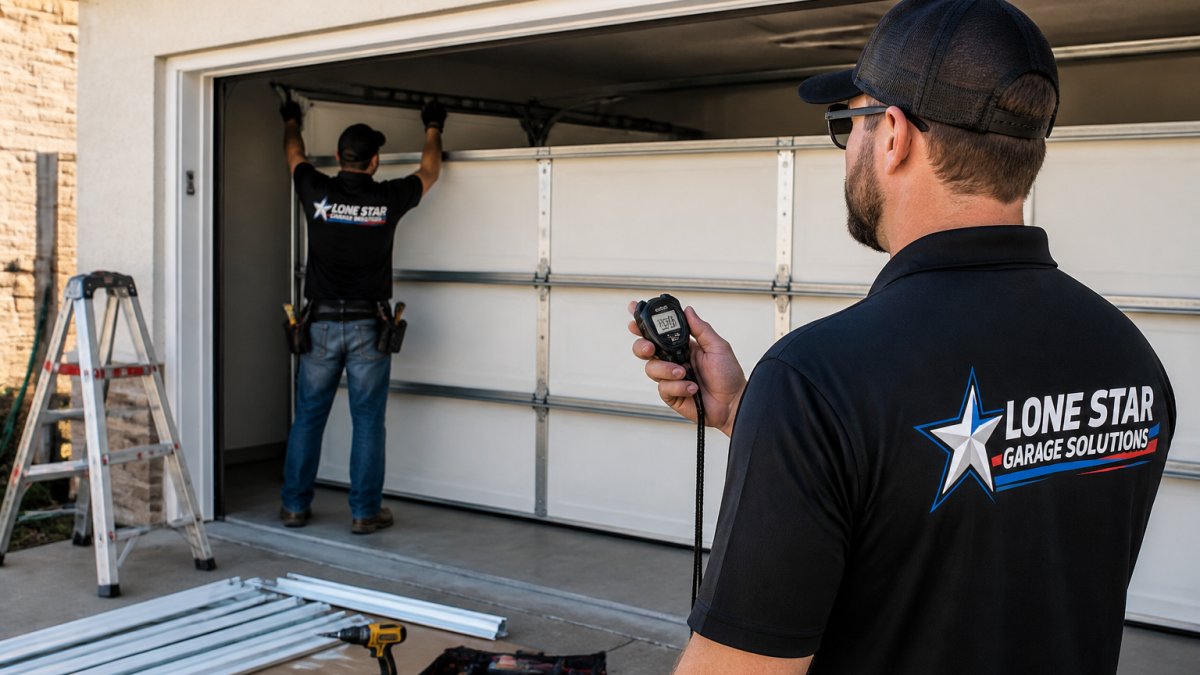
When you call for garage door repair, the visit follows a simple pattern: we diagnose the fault, quote the work before touching anything, and complete most common fixes the same day.
When to Call a Professional
Some issues are safe to look at yourself. Others are not. If you hear a loud bang from above the door and the door won't lift, that's a broken spring, and it needs a trained technician. Never try to wind, unwind, or remove torsion springs or cables yourself. Those parts store serious tension, and the U.S. Consumer Product Safety Commission guidance on garage door safety treats them as a leading source of serious home injuries.
What a Repair Visit Looks Like
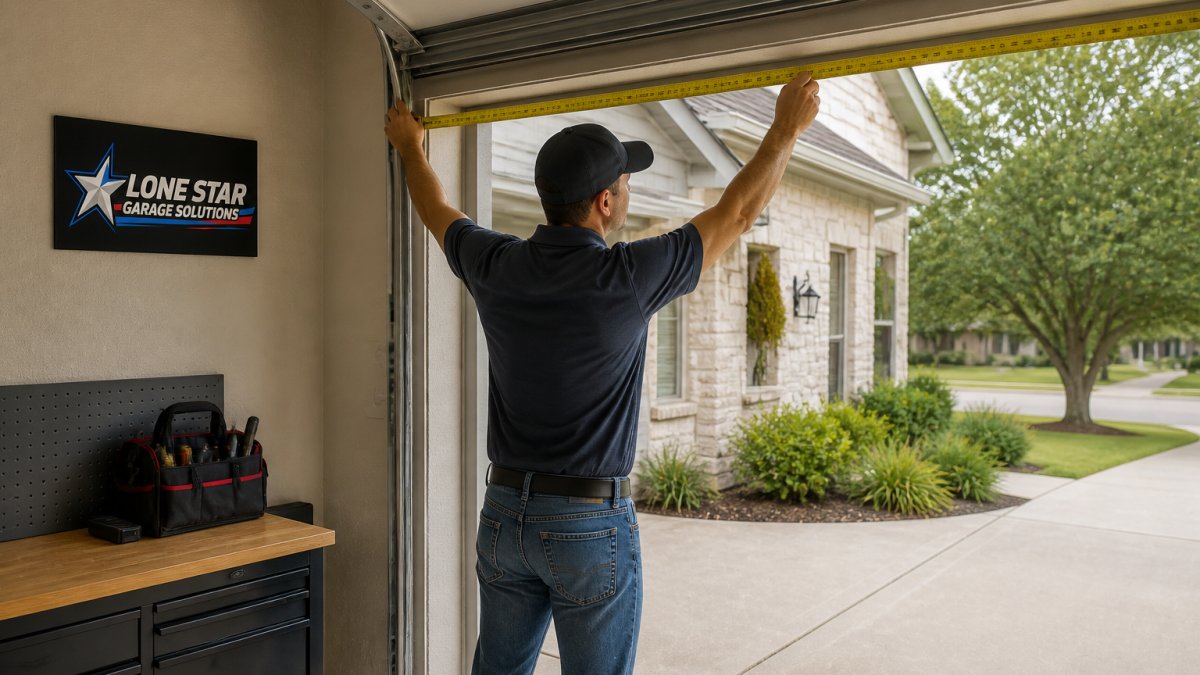
A typical visit starts with a full inspection of the door, tracks, hardware, and opener. The technician tests the door's balance by hand, checks the cables and rollers, and confirms the opener's safety reverse works. You get a clear explanation of the fault and a repair estimate before work begins, and most standard repairs finish in a single visit.
Common Garage Door Problems in Seguin
Heat, humidity, and clay soil shift the ground under a lot of Central Texas homes, and that movement shows up in garage doors. The most frequent complaints we hear are a door that won't open, a door that binds or jerks, and a door that comes off its track.
Broken Springs
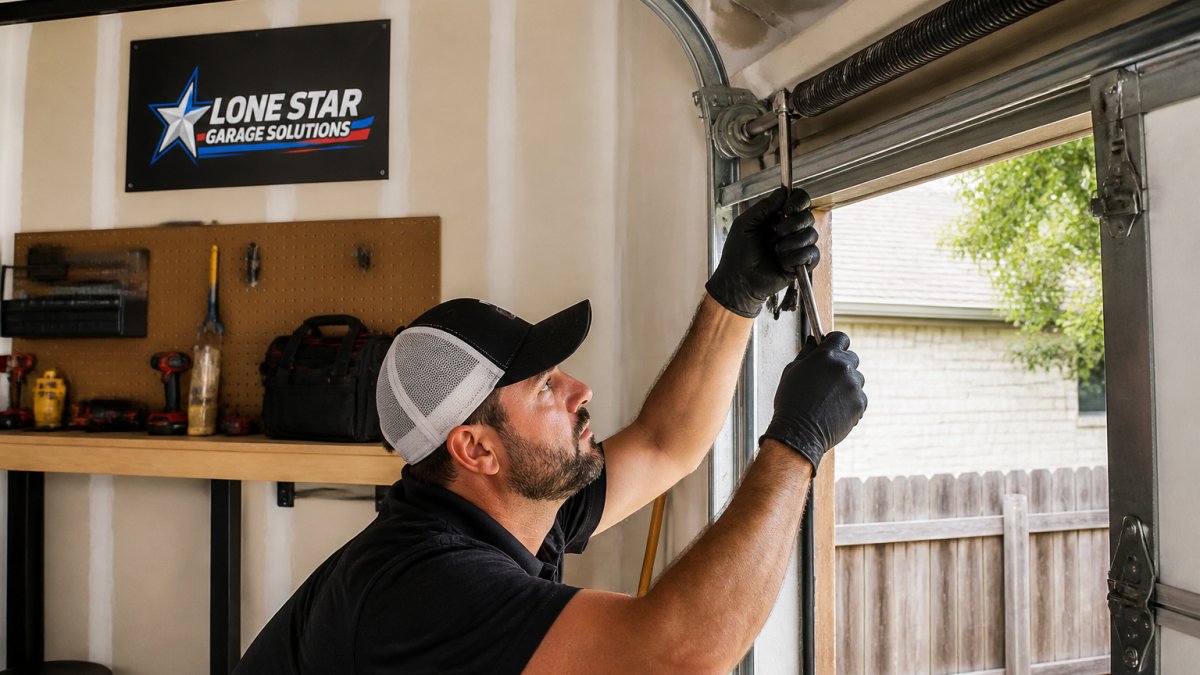
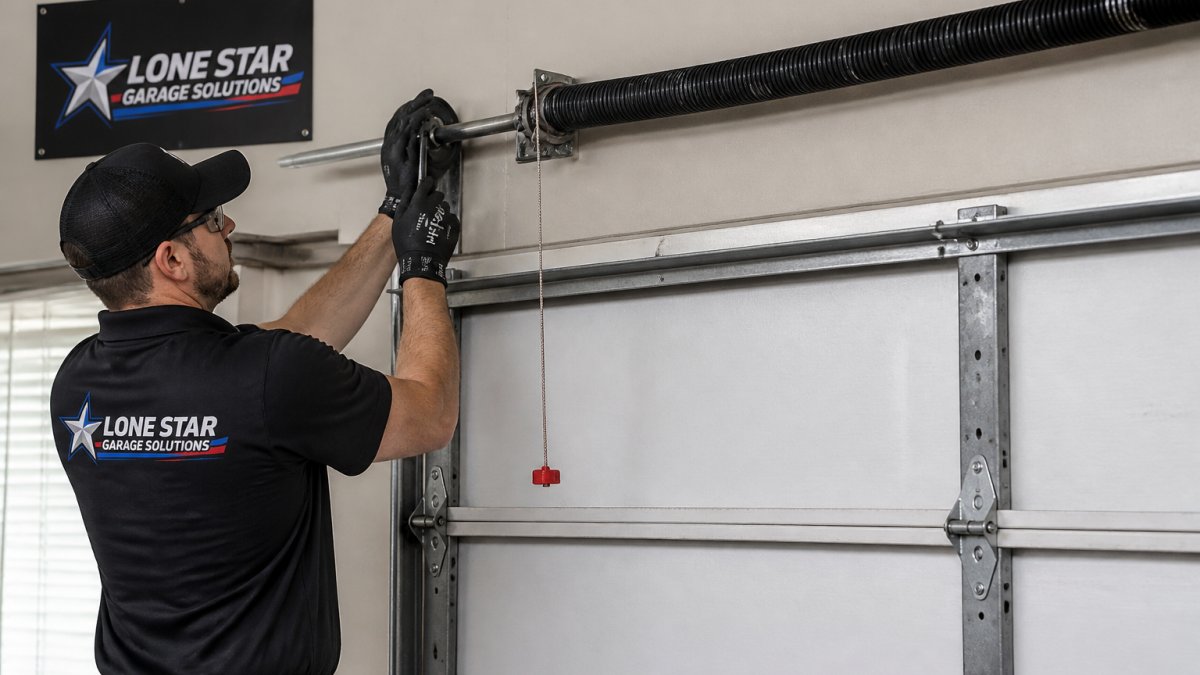
A broken spring announces itself with a sharp bang, and the door suddenly feels impossibly heavy or won't move at all. Torsion springs sit above the door; extension springs run along the sides. Both are under high tension and should only be replaced by a trained technician, this is the most common repair we handle, and the one homeowners should never attempt alone.
Cable and Roller Issues
A snapped cable usually means the door drops unevenly or hangs at an angle. Cables work with the springs to lift the door, so a frayed or broken cable is a safety issue, not a nuisance. Worn rollers cause a grinding or rumbling sound; they're inexpensive, but a failed one can jump the track if ignored. Replacing rollers early is one of the cheapest ways to prevent a bigger repair.
Garage Door Off Track: Causes and Fixes
A garage door off track has jumped its guide rails, usually because it was hit, because a roller failed, or because it was operated with a broken spring. You'll see it hanging crooked, stuck partway, or grinding against the frame.
Stop using the opener immediately if the door is off track, running it can bend the panels and turn a simple reset into a full track and panel replacement.
Garage Door Binding When Closing: Why It Happens
Garage door binding when closing means the door is catching, jerking, or stalling on its way down. It's a warning sign, not just an annoyance, and usually points to one of a few causes:
- Worn or dry rollers that no longer roll freely in the track
- Misaligned or bent tracks that pinch the door as it travels
- Loose or broken hinges that let panels shift out of line
Catching binding early is smart: a door that strains against resistance wears out its opener faster, and the fix is usually simple before the opener burns out.
Garage Door Opener Repair: Troubleshooting Tips
When the door won't respond, the opener is often the first suspect, but it isn't always the culprit. A few safe checks can save you a service call, and a few symptoms should send you straight to the phone.
Safe checks you can do yourself
- Test the wall switch and the remote separately. If the wall button works but the remote doesn't, the problem is the remote or its battery. If neither works, the fault is in the opener, power supply, or safety circuit.
- Confirm the opener has power. Check the breaker and the outlet the opener is plugged into. A tripped GFCI outlet in the garage is a common and easy fix.
- Inspect the safety sensors. The two photo-eye sensors near the floor should each have a steady light. If one is blinking, misaligned, or blocked by cobwebs, debris, or a stored item, the door won't close. Wipe the lenses and gently realign them until both lights are steady.
Symptoms that point to a real repair
- The opener hums but the door doesn't move. The motor runs but the drive gear, chain, belt, or trolley isn't engaging. A stripped nylon gear is common on older chain-drive units, and a gear-and-sprocket kit is often all that's needed.
- The door reverses immediately after starting down. That's the safety system doing its job, either the sensors are obstructed or the force/travel limits need adjustment. Don't override the safety reverse; diagnose the cause.
- The door opens a few inches and stops. Travel limits or a binding door are the usual suspects. If the door binds by hand, fix the door before blaming the opener.
When to repair vs. replace the opener
A general rule of thumb: if the opener is under about 10 years old and the fault is a gear, sensor, or remote, repair usually makes sense. If it's older, noisy, and on its second or third fault, replacement is often the better value, modern openers add battery backup, quieter belt drives, and smartphone control. We repair and install openers, so we can tell you honestly which way to go.
If you've run the safe checks and the door still won't cooperate, that's the point to call. We'll diagnose it, explain the fault in plain terms, and quote the repair before we start.
How Long Does a Garage Door Last? Understanding Lifespan
A well-maintained garage door typically lasts 15 to 30 years, depending on material and care. Steel doors sit at the lower end; wood and insulated doors reach the upper range with regular service. But the door itself is only part of the story, moving parts wear out on their own schedule, and knowing those timelines helps you plan instead of panic.
Component lifespan at a glance
| Component | Typical service life | What shortens it |
|---|---|---|
| Torsion springs | 7-12 years (about 10,000 cycles) | Heat, humidity, lack of lubrication, unbalanced door |
| Extension springs | 5-10 years | Same as above, plus rust |
| Nylon or steel rollers | 5-7 years | Dry tracks, debris, infrequent use |
| Cables | 7-12 years | Rust, fraying, a door run with a broken spring |
| Hinges and brackets | 10-15 years | Loose hardware, vibration |
| Opener (chain or belt) | 10-15 years | Heavy or unbalanced door, no maintenance |
| Door panels | 15-30 years | Impact damage, moisture, sun exposure |
A "cycle" is one open-and-close. A household using the door four times a day puts it through roughly 1,460 cycles a year, so a standard 10,000-cycle spring is a 7-to-12-year part. A busy driveway can burn through springs in half that time.
Why the local climate matters
Heat and humidity speed up wear on springs, rollers, and wood components. Clay soil movement can shift the slab and knock tracks out of alignment, wearing rollers and cables faster. That's why an annual inspection pays off here more than in milder climates.
A simple maintenance schedule
- Monthly: Test the safety reverse by placing a 2x4 flat on the floor in the door's path. The door should reverse on contact. If it doesn't, stop using the opener and get it adjusted.
- Twice a year: Lubricate the springs, hinges, rollers, and tracks with a garage-door-specific lubricant, not WD-40, which attracts dust. Wipe the tracks clean with a damp cloth; never grease the tracks themselves.
- Annually: Check the door's balance by disconnecting the opener and lifting the door halfway. It should stay put. Tighten loose bolts on the hinges and brackets, and inspect cables for fraying.
Repair timelines, parts, and warranties
Most common repairs, springs, cables, rollers, hinges, are completed in a single visit, with parts stocked on the service van. Less common parts, like a specific opener logic board or a discontinued panel, may need to be ordered, adding a few days.
Workmanship and parts coverage varies by provider and part. Springs and openers usually carry a manufacturer's warranty, and many companies add a workmanship guarantee on top.
If you're not sure where your door stands, a routine inspection is the cheapest way to find out. We'll check the balance, springs, cables, rollers, and opener, and give you a straight read on what needs attention now versus what can wait.
Repair or Replace? Making the Right Call
Most doors can be repaired, and repair is usually right when the door is structurally sound and the fault is a single part. Replacement makes more sense when the door is old, damaged, or costing you repeat repairs. Here's how we think through it:
| Situation | Better Choice | Why |
|---|---|---|
| One broken spring or cable | Repair | Single-part fix, door structure is fine |
| Worn rollers or hinges | Repair | Inexpensive parts, quick to swap |
| Off-track from a bump | Repair | Realignment and a new roller often solve it |
| Opener failure on a sound door | Repair or replace opener | Depends on opener age and model |
| Multiple bent panels | Replace | Panels are hard to match and costly to fix |
| Door over 20 years old with repeat faults | Replace | Ongoing repairs cost more over time |
If you're weighing repair against a new door, we'll give you a straight recommendation and a clear quote, not a sales pitch. We also offer flexible financing on qualifying projects, so a bigger upgrade doesn't have to be all at once.
A failing garage door is a security and access problem, not just a repair to put off. We're locally owned, we offer same-day repair services, and we install and service Lifestyle retractable garage screens and Templar motorized patio screens when you're ready to make more of your garage or patio.
Frequently Asked Questions
Can I fix a garage door myself?
Some minor issues like lubrication or track alignment can be DIY, but tasks involving springs, cables, or electrical components should be left to a professional. High-tension springs can cause serious injury if handled incorrectly. For safety and warranty reasons, call a local technician for anything beyond basic maintenance.
How do you get your garage door back on its track?
If the door is off track, do not force it. First, check if the door is stuck or jammed. If you can safely do so, disengage the opener and try to lift the door manually. However, calling a professional is best to avoid further damage. A technician can realign the door and inspect for bent tracks or broken rollers.
What's the average lifespan of a garage door?
A well-maintained garage door can last 15 to 30 years, depending on material and usage. Steel doors often last 15-20 years, while wood doors may need more frequent maintenance. Regular servicing and prompt repairs can extend the life of your door significantly.
My garage door is binding when I close it. What can I do?
Binding often indicates misaligned tracks, worn rollers, or lack of lubrication. Check for debris on the tracks and try lubricating the rollers and hinges with a silicone-based lubricant. If the problem persists, it may be a sign of a deeper issue like a failing spring or opener, so it's best to call a professional.
Is it safe to use a garage door with a broken spring?
No, it is not safe. A broken spring can cause the door to fall suddenly, posing a serious risk of injury or property damage. Do not attempt to open or close the door. Contact a qualified technician to replace the spring and inspect the entire system.