 blog
Garage Door Window Inserts: Pros and Cons
Table of Contents
- Garage Door Window Inserts: What You Need to Know
- The Benefits of Adding Windows to Your Garage Door
- The Drawbacks of Garage Door Windows
- Garage Door Windows and Privacy Concerns
- Security Considerations for Garage Door Windows
- Garage Door Window Glass Options and Glazing
- Garage Door Window Replacement and Installation
- Is a Windowed Garage Door Right for Your Home?
- Frequently Asked Questions
Last Updated: October 17, 2026
Garage Door Window Inserts: What You Need to Know
Adding windows to your garage door brings natural light and curb appeal, but garage door window inserts come with real trade-offs.
At Lone Star Garage Solutions, we help Hill Country homeowners decide whether windowed garage doors make sense for their homes.
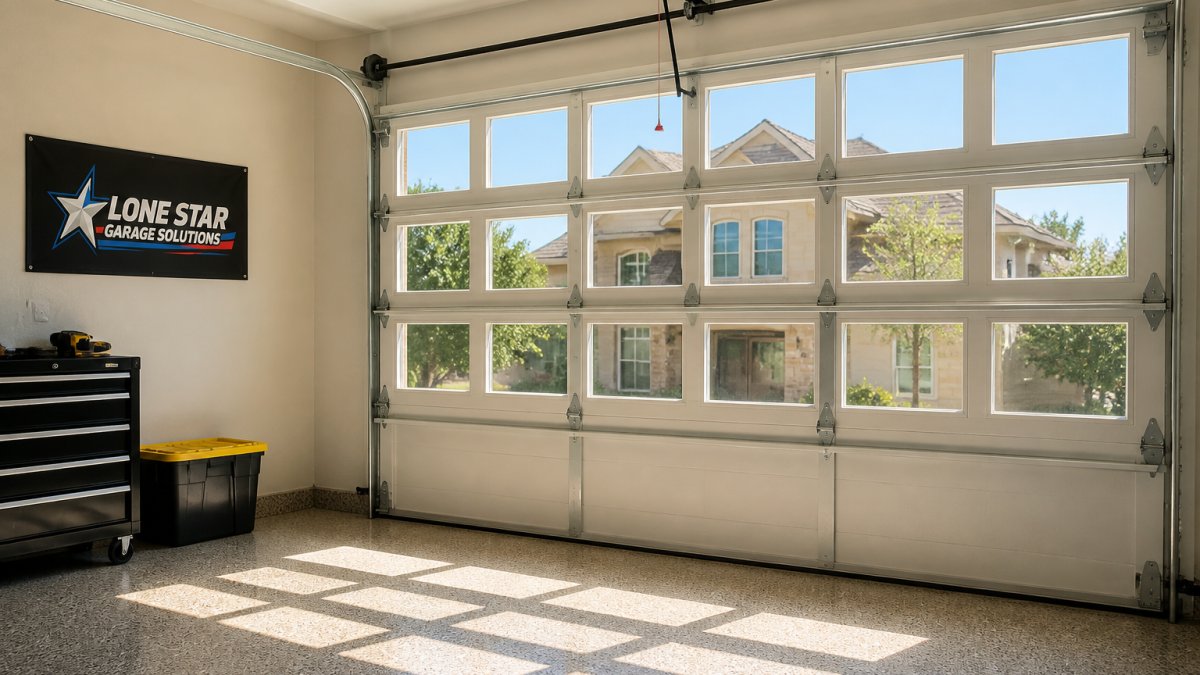
The decision depends on your climate, privacy needs, your door's condition, and how much maintenance you'll handle.
The Benefits of Adding Windows to Your Garage Door
Natural Light and Visibility
The biggest draw of garage door windows is daylight. In an attached garage, natural light makes the space feel larger and more usable, especially for workshops, gyms, or hobby spaces.
Visibility also helps security: you can see outside before opening the door. The downside? Natural light works both ways, people outside can see in just as easily.
Curb Appeal and Property Value
A well-designed garage door with windows looks intentional and modern, and quality glazing reads as an upgrade. A thoughtfully windowed door can help resale value, but the boost depends on your market, home style, and installation quality.
The catch: that advantage disappears if the windows are dirty, broken, or poorly maintained.
The Drawbacks of Garage Door Windows
Heat Loss and Energy Efficiency
This is where garage door window inserts get complicated in warmer climates like ours. Even high-quality glazed panels conduct heat more readily than solid panels, so in summer extra heat enters your garage, and in an attached garage, that heat radiates into your living spaces. In winter, heat escapes through the glass.
How much depends on how many windows you add, the glass quality, your garage's orientation and sun exposure, and how much you use the space. A few small windows might have minimal impact; a door that's mostly glass means meaningful energy loss.
Maintenance and Repair Costs
Windows need cleaning, dust, pollen, and grime accumulate faster on garage doors than you'd expect. Broken glass is the bigger issue: a single cracked panel is an eyesore and a security gap, and a ball, falling branch, or lawnmower rock can crack glazing.
Garage Door Windows and Privacy Concerns
Privacy is the question we hear most often about garage door window privacy. The useful question isn't "which glass is private" but "private from whom, at what time of day, and at what cost to daylight."
What each privacy option does well and poorly
Frosted or obscure glass diffuses light and blocks detail, from the street you see shapes and movement, not objects.
Tinted glass darkens the view and cuts glare and solar heat, which matters in our climate.
Reflective or mirror-tint glass works like a one-way mirror in daylight, but at night the effect reverses and the lit interior becomes visible.
Interior blinds or shades give full control: closed, they're the most private option short of solid panels; open, they let in maximum light.
Comparing the options side by side
| Option | Daytime privacy | Nighttime privacy | Daylight retained | Upkeep |
|---|---|---|---|---|
| Clear glass | None | None | Highest | Cleaning |
| Frosted / obscure | High | Moderate | High | Cleaning |
| Tinted | Moderate | Low | Reduced | Cleaning |
| Reflective | High | Low | Reduced | Cleaning |
| Laminated privacy | High | Moderate | Moderate to high | Cleaning |
| Interior blinds | Full when closed | Full when closed | Full when open | Adjusting, cleaning |
Matching the option to your situation
If your garage faces the street and you park valuable equipment inside, frosted or laminated privacy glass, plus keeping the garage light off at night, gives the best balance of daylight and privacy. If it faces a side yard or the back of the lot, clear or lightly tinted glass is usually fine. If privacy is the dominant concern, interior blinds or solid panels are the honest answer, glass alone is a compromise after dark.
For most homeowners in Central Texas, frosted or lightly tinted insulated glass strikes the right balance: daylight without broadcasting what is inside, and a look that reads as intentional from the curb. If you are weighing options for your door, talk to us about privacy glass choices and we will help you match the glass to your door's orientation and how you use the space.
Security Considerations for Garage Door Windows
Can someone break a window and reach inside to unlock your garage? Technically, yes, but it's not as easy as you might think. Most openers won't respond to manual unlocking attempts if the door is moving, and breaking glass takes time and makes noise.
Tempered glass is harder to break than standard glass and shatters into small, dull chunks instead of sharp shards.
Garage Door Window Glass Options and Glazing
Not all garage door window glass is the same. Your choices significantly affect durability, insulation, and appearance.
Clear, Frosted, and Tinted Glass
Clear glass offers maximum visibility and light and is usually the most affordable, but it gives zero privacy and shows every speck of dirt. Frosted or obscure glass diffuses light while blocking the view and looks clean longer. Tinted glass reduces glare and heat gain, at the cost of less natural light.
Insulated and Tempered Glass
Single-pane glass is basic and affordable, with minimal insulation. Insulated glass (double- or dual-pane) insulates better, reduces heat transfer, and dampens noise, and is worth the extra cost in the Texas climate. Tempered glass is heat-treated to be stronger and safer. The best choice for Central Texas is insulated, tempered glass, energy efficiency, durability, and safety in one.
Garage Door Window Replacement and Installation
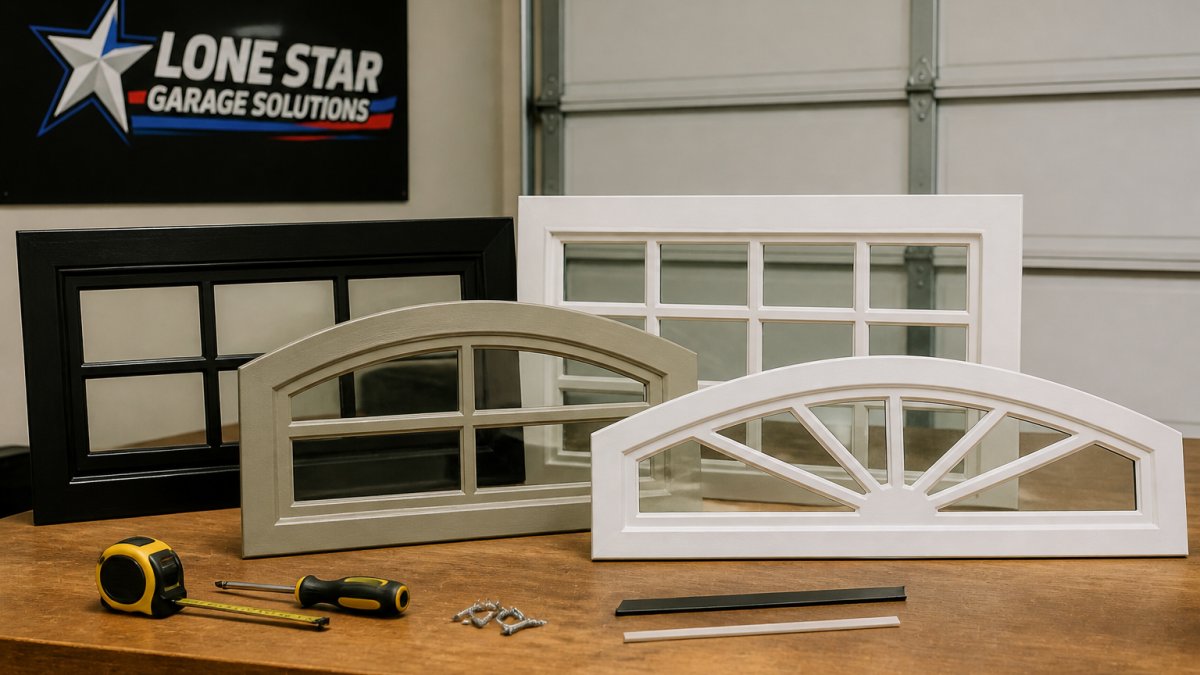
This is where garage door window inserts differ most from generic "garage door windows" advice. An insert is a framed glazed unit that drops into an opening cut or molded into a door panel; a factory-built window panel is a complete section manufactured with the glass already set. The two are not interchangeable.
Inserts versus factory-built window panels
Window inserts are retrofitted into an existing panel: an outer frame, a gasket or seal, and a glazed unit that snaps or screws into a precut opening. They're the practical choice when your door already has window cutouts or a manufacturer offers an insert kit for your model.
A quick way to tell what you are dealing with: look at the inside of the panel. An insert usually shows a separate frame and fasteners around the glass. A factory panel shows the glass set directly into the section with no add-on frame.
Compatibility and installation requirements
Before anyone cuts or orders anything, three things need to be confirmed:
- Panel construction. Steel, aluminum, and wood-composite panels accept inserts differently. Some are reinforced around the window opening; others are not, and an unreinforced panel can flex or crack around a retrofit opening.
- Dimensions and profile. The insert must match the panel's window opening and the door's section profile. A frame that is close but not exact will leak or rattle.
- Weather sealing. The gasket, the frame-to-panel joint, and the glass-to-frame joint all need to shed water. Poor sealing is the most common cause of callbacks on window work.
If any check fails, a replacement panel is usually the safer path, forcing an insert into a panel that wasn't built for it is how doors end up with cracked sections, water intrusion, and balance problems.
Door balance, springs, and opener performance
Glass is heavier than the steel or composite it replaces, and the added weight is concentrated high on the door. Your torsion or extension springs are calibrated to the door's original weight, so add glazed panels and the door may no longer hold position, the opener may strain, and the springs may wear faster. A common pattern after window work is a door that feels heavy at the top, drifts down when left partway open, or trips the opener's force limit, balance symptoms, not glass symptoms.
When to call a professional
Insert or panel replacement is not a weekend DIY job on a modern door. The work involves the door's structural sections, its weather seal, and its balance system. A professional installation confirms compatibility before ordering, seals the frame correctly, and rebalances the door afterward.
At Lone Star Garage Solutions, we check whether your existing door can accept inserts safely, confirm the panel construction and dimensions, and rebalance the door after the glass goes in.
Is a Windowed Garage Door Right for Your Home?
Here's how to decide:
| Factor | Best for Windows | Better Without Windows |
|---|---|---|
| Privacy needs | Low; garage faces side yard or back | High; faces street or neighbors |
| Energy priorities | Mild climate; detached garage | Hot/cold climate; attached garage |
| Maintenance tolerance | High; willing to clean and repair | Low; wants minimal upkeep |
| Garage use | Hobby space, gym, workshop | Vehicle storage only |
| Door condition | New or recently serviced | Older; springs showing wear |
| Budget | Can afford quality glass and installation | Limited; prefers no upgrades |
Windows make sense if:
- Your garage is detached or faces a private area
- You use the space as more than vehicle storage
- You're willing to maintain the glass and handle occasional repairs
- Your garage door is in good working order
- You prioritize natural light over energy efficiency
Skip the windows if:
- Privacy matters to you
- Your garage is attached and you want to minimize heat transfer
- You prefer low-maintenance solutions
- Your current door is aging or showing signs of wear
- You're on a tight budget
Windows are a lifestyle choice, not a necessity. They look great when they work, but they require attention and aren't the right fit for every home.
If you're leaning toward windows but unsure whether your existing garage door can handle them safely, reach out to Lone Star Garage Solutions. We'll evaluate your door's springs, balance, and opener to make sure everything works together properly. We can discuss glass options suited to the Texas climate, handle the installation with precision, and make sure your door operates smoothly for years to come.
Frequently Asked Questions
Are garage door window inserts worth it?
That depends on your priorities. Window inserts add natural light and curb appeal, which can improve how your home looks and potentially increase property value. However, they reduce privacy, may affect energy efficiency, and require ongoing maintenance. If you value daylight and aesthetics and can address privacy concerns with the right glass type, they're a worthwhile investment. If your garage is used for storage or houses valuables, the security trade-off may not be worth it. Contact Lone Star Garage Solutions for a consultation about your specific situation.
What type of glass is best for garage door windows?
The best choice depends on your needs. Clear glass maximizes natural light but sacrifices privacy. Frosted or obscured glass provides privacy while still allowing daylight through. Tinted glass reduces solar heat gain, which matters in Texas heat. Tempered glass is stronger and safer if broken. Laminated glass offers sound reduction and added security. For most homeowners, frosted or lightly tinted tempered glass balances light, privacy, and durability. Discuss your climate and usage with a professional to select the right option.
Do garage door windows make a garage less secure?
Windows do create a potential security concern because they allow visibility into your garage. However, the risk depends on what you store and which glass type you choose. Frosted, tinted, or obscured glass limits what someone can see from outside. Tempered and laminated glass are harder to break. If you're concerned about security, choose privacy-focused glazing and ensure your garage door opener and locks are secure. The actual break-in risk is relatively low compared to other entry points, especially with proper glass selection.
Can you add windows to an existing garage door?
Yes, garage door window inserts can be added to many existing doors through replacement panels or retrofit kits. However, compatibility depends on your door's age, material, and design. Older or custom doors may not accommodate standard window panels. Adding windows also adds weight to your door, which can affect torsion springs and your garage door opener's performance. A professional inspection is necessary to ensure your existing system can handle the added load. Lone Star Garage Solutions can evaluate your door and recommend whether inserts are feasible or if a full replacement is a better option.