
 blog
blog
Best Garage Door Opener 2026: Top Picks & Buying Guide
Table of Contents
- What Makes the Best Garage Door Opener in 2026
- Belt Drive vs Chain Drive Garage Door Opener: Which Is Right for You
- Garage Door Opener Horsepower Requirements: Matching Power to Your Door
- Smart Features and Cybersecurity for Modern Openers
- Garage Door Opener Installation Cost: DIY vs Professional
- Compatibility, Longevity, and Repairability: What Most Buyers Overlook
- How to Choose the Best Garage Door Opener for Your Home
- Frequently Asked Questions
Last Updated: September 12, 2026
What Makes the Best Garage Door Opener in 2026
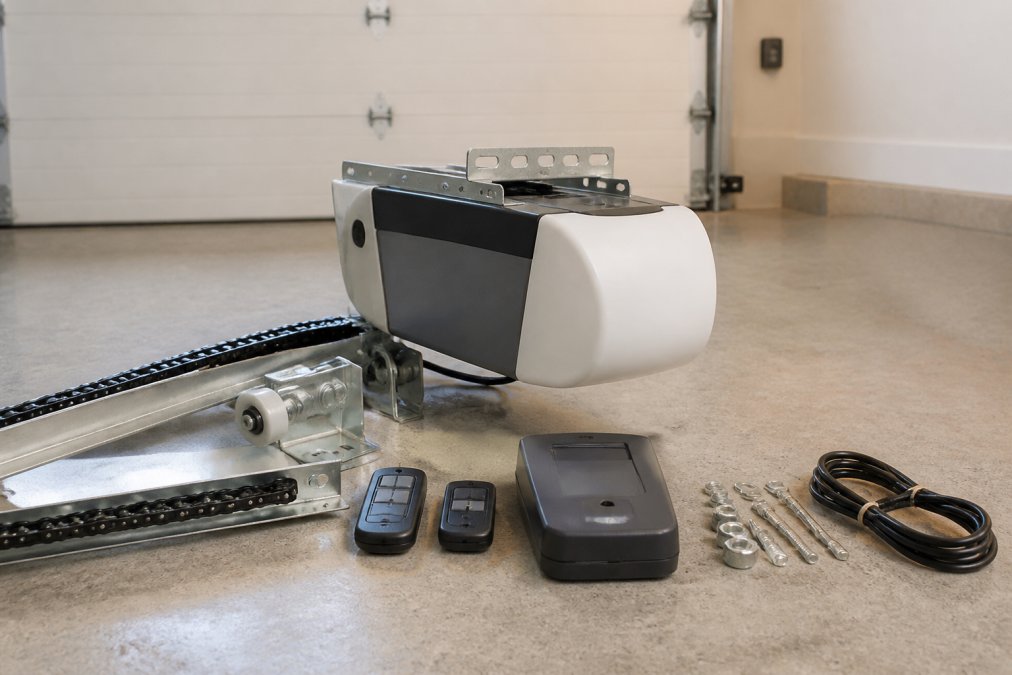
The best garage door opener 2026 buyers can find is one that matches your door's weight to the right horsepower, uses a drive system suited to your home's layout, and includes modern safety and connectivity features. At Lone Star Garage Solutions, we know that the flashiest model isn't always the right one for your garage.
A garage door opener is a motorized lifting device that raises and lowers your overhead door using a drive mechanism, a control board, and safety sensors. The three main drive types are belt-drive, chain-drive, and direct-drive, and each behaves differently in terms of noise, maintenance, and lifting capacity.
Most homeowners overlook one critical spec: your existing torsion springs and door weight determine how much horsepower you actually need. An opener that's too weak will strain, overheat, and fail early, especially during Texas summers.
Below, we break down exactly how to evaluate drive systems, horsepower, smart features, installation costs, and long-term repairability so you can choose with confidence.
Belt Drive vs Chain Drive Garage Door Opener: Which Is Right for You
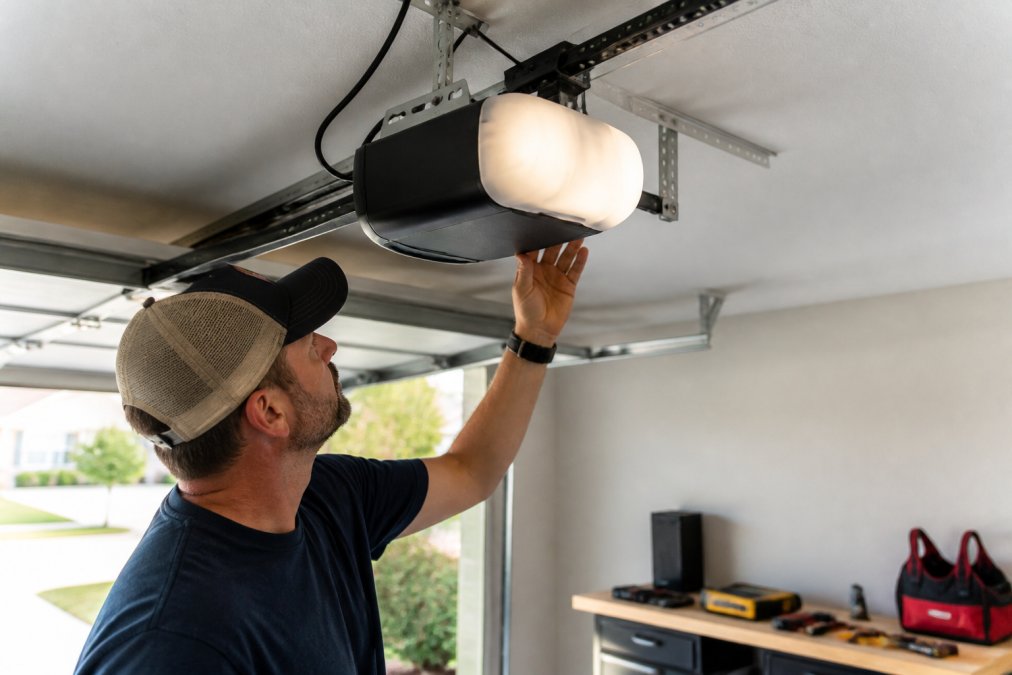
Belt-drive openers use a reinforced rubber belt to move the trolley, while chain-drive models use a metal chain. Belt-drive wins on noise, chain-drive wins on price and heavy-door durability.
If your garage sits under a bedroom or shares a wall with living space, belt-drive is the clear choice. The rubber belt absorbs vibration, producing ultra-quiet operation that won't wake anyone at 6 a.m. Chain-drive models cost less upfront and handle heavier doors without stretching, but they're noticeably louder and need periodic lubrication.
Direct-drive and wall-mount (jackshaft) designs round out the options. A jackshaft opener mounts on the wall beside the torsion bar instead of the ceiling, which frees overhead clearance for storage or a car lift. Direct-drive motors eliminate the belt or chain entirely, reducing moving parts that wear out.
| Drive Type | Noise Level | Best For | Maintenance |
|---|---|---|---|
| Belt-drive | Ultra-quiet | Attached garages, bedrooms above | Low |
| Chain-drive | Loud | Detached garages, heavy doors | Lubricate annually |
| Direct-drive | Quiet | Minimal-maintenance households | Very low |
| Wall-mount (jackshaft) | Quiet | Low-clearance, high-ceiling garages | Low |
Garage Door Opener Horsepower Requirements: Matching Power to Your Door
Most single-car doors need a 1/2-horsepower opener, while double-car doors and heavier insulated models typically require 3/4 horsepower or more. Horsepower requirements scale with door weight, not door width alone.
A common mistake is buying by door size instead of door weight. A standard 7-foot steel door and an insulated wood door of the same width can differ significantly in lifting capacity needs. Heavier doors, or those with extension springs that have lost tension, demand more torque from the motor.
DC motors have largely replaced AC motors in newer openers because they ramp up and down smoothly, reducing strain on the door and hardware. If your door hesitates, reverses unexpectedly, or the motor hums without lifting, the opener is likely undersized or the springs need service.
Smart Features and Cybersecurity for Modern Openers
Wi-Fi connectivity, myQ technology, and voice control through smart home ecosystems have become standard expectations, but cybersecurity is the feature most buyers ignore until it's too late.
Modern openers support remote control, keypad entry, real-time alerts, and integrated camera or two-way audio options. Rolling code technology changes your opener's access code with every use, which prevents would-be intruders from capturing and replaying a signal (cpsc.gov). Older fixed-code remotes transmit the same code every time, which is why any opener still using them should be replaced rather than repaired.
What to actually look for in the smart layer
- Radio and protocol: Most current openers ship with Wi-Fi built in and a bridge or hub for older models. Look for compatibility with Matter, Apple HomeKit, Google Home, Amazon Alexa, or Samsung SmartThings if you want one app to control everything. Z-Wave and Zigbee bridges still exist for retrofit situations, but native Wi-Fi is now the default.
- Local vs. cloud control: Cloud control is convenient but depends on the manufacturer's servers staying online. Some openers offer local control through a hub, which keeps working if the vendor's cloud goes down.
- Notifications and audit trail: Real-time open/close alerts and a history log are the features that actually help you notice a problem. A camera or two-way audio adds verification, not prevention.
- Battery backup: An opener with battery backup keeps your garage accessible during a power outage, a genuine concern during storm season. Confirm the backup is user-replaceable and check the rated number of open/close cycles on a charge.
Cybersecurity: the gap most guides miss
A smart opener is a network device attached to the largest moving object in your home. Weak credentials create a real vulnerability, and the fixes are the same ones you'd apply to any connected device:
- Change default credentials on the opener, the wall console, and any hub or bridge before you connect it to your network.
- Put the opener on a separate Wi-Fi network or guest SSID so a compromised opener can't reach your laptops, cameras, or file storage.
- Enable two-factor authentication in the manufacturer's app wherever it's offered.
- Keep firmware updated. Manufacturers patch vulnerabilities quietly; if you never open the app, you never get the patch.
- Disable remote access you don't use. If you never open the door from another state, turn that feature off.
- Audit paired remotes and keypads at least once a year and remove any device you don't recognize.
For safety, confirm your opener includes photo-eye safety sensors and auto-close functionality. The [U.S. Consumer Product Safety Commission guidance on automatic garage door(/garage-door-installation.html) openers | cpsc.gov] outlines the federal safety standard requiring entrapment protection on residential openers.
Garage Door Opener Installation Cost: DIY vs Professional
Garage door opener installation cost depends on whether you tackle it yourself or hire a pro, and the trade-off isn't just money. It's time, safety, and warranty coverage.
A DIY install saves on labor but requires the right tools, a second person to lift the rail assembly, and comfort working with high-tension springs, which are genuinely dangerous if mishandled. Professional installation typically includes hauling away the old unit, balancing the door, and testing all safety sensors.
What most homeowners don't factor in: an improperly installed opener voids the manufacturer's warranty and can fail prematurely. If your door uses torsion springs, adjusting them is a job for a trained technician, not a weekend project.
For a clear picture of what installation involves, the U.S. Department of Energy guidance on garage door insulation and efficiency is a useful reference for homeowners planning an upgrade.
Compatibility, Longevity, and Repairability: What Most Buyers Overlook
Compatibility with your existing hardware is the single biggest source of installation surprises, and almost no buying guide walks you through it. Before you order anything, run these checks.
Compatibility checks before you buy
- Door weight and lifting capacity. Check the manufacturer label on the door or the original opener's spec plate. If neither is readable, a bathroom scale under one edge of a disconnected door gives a rough per-side reading you can double. Match that number to the opener's rated lifting capacity, not the door's width.
- Spring type. Torsion springs (a horizontal shaft above the door) and extension springs (two springs running along the horizontal tracks) behave differently and change which openers are appropriate. A door with tired extension springs will feel heavy even with a correctly sized motor.
- Overhead clearance. Measure from the top of the door in the open position to the ceiling. Standard rail openers need roughly 2 inches of clearance above the highest point of travel; low-clearance situations usually point to a jackshaft (wall-mount) unit.
- Track and roller condition. Worn rollers, bent tracks, or a door that binds will make any new opener work harder and shorten its life. Fix the door before you replace the motor.
- Electrical. Most openers need a 120-volt outlet within reach of the ceiling unit. If your garage doesn't have one, an electrician's visit is a real line item, not an afterthought.
- Remote frequency and wall control wiring. Older openers used different frequencies and wiring conventions. Expect the new unit's safety sensors and wall console to require fresh low-voltage wiring, even if the old wiring looks fine.
Longevity: what actually determines how long it lasts
Longevity comes down to three things: motor quality, drive-system maintenance, and how well the door itself is balanced. Belt-drive openers generally need less attention than chain-drive units, but all openers benefit from an annual inspection of safety sensors, the emergency release cord, and mounting hardware.
A balanced door is the single largest factor in opener lifespan. An unbalanced door forces the motor to lift weight the springs should be carrying, which shows up first as strain and later as a failed gear or logic board. A door that stays put when you release it halfway by hand is balanced; one that drifts is not.
Repairability: the cost most buyers never price in
Repairability matters more than most buyers realize, and it's the piece competitors skip entirely. Over a 5- to 10-year ownership window, the realistic repair categories are:
- Logic board failure, the most common electronic failure, and often repairable for a fraction of replacement cost.
- Drive gear and sprocket wear, common on chain-drive units and on any opener lifting an unbalanced door.
- Safety sensor and wiring faults, frequently the actual cause of a door that reverses or won't close.
- Remote and wall console failures, usually the cheapest fix and the easiest to misdiagnose as a motor problem.
Openers with widely available parts and standard remote frequencies are easier and cheaper to fix years down the road. Before buying, check whether the manufacturer sells replacement gears, boards, and remotes directly, and whether a local technician can source them. A unit with no parts channel is effectively disposable.
A common mistake is replacing a whole opener when only the logic board or a gear failed. Many units are repairable for a fraction of replacement cost. This is where a local technician's honest assessment saves you money, and it's exactly the kind of clear recommendation Lone Star Garage Solutions builds its service around.
How to Choose the Best Garage Door Opener for Your Home
Choosing the right opener comes down to matching drive type, horsepower, and smart features to your specific door and household. Work through these steps before you buy.
- Weigh your door or check its manufacturer label for lifting capacity
- Confirm your spring type (torsion vs. extension) and available overhead clearance
- Pick a drive system: belt for quiet, chain for budget, jackshaft for low clearance
- Match horsepower to door weight, not just width
- Decide which smart features you'll actually use, and secure them properly
- Verify warranty coverage and local parts availability
- Schedule professional installation if your door uses torsion springs
For homeowners in the New Braunfels and Hill Country area, Lone Star Garage Solutions offers same-day repair service, flexible financing on qualifying projects, and opener installations tailored to the Texas climate. Our team handles everything from opener replacement to full garage door systems, plus retractable Lifestyle garage screens and Templar motorized patio screens if you're upgrading the whole space.
Frequently Asked Questions
Should I get a 1/2 HP or 3/4 HP garage door opener?
For a standard single-car door up to 7 feet tall, a 1/2 HP opener handles the load fine. Choose 3/4 HP or higher if you have a double-car door, a heavier insulated door, or a door taller than 8 feet. Horsepower needs also rise with door weight, so a solid wood or steel-backed door may demand 1 HP or more. Matching power to your specific door prevents premature motor wear and keeps daily operation smooth.
What are the benefits of a belt-drive versus chain-drive garage door opener?
Belt-drive openers run quieter because a rubber belt absorbs vibration, making them ideal for garages under bedrooms. Chain-drive models cost less upfront and handle heavier doors with fewer maintenance concerns, but they produce more noise. In Texas heat, belt-drive units may need occasional tension checks, while chain-drive systems typically require light lubrication once a year. Your choice depends on noise tolerance, budget, and door weight.
Do modern garage door openers require professional installation?
Most openers can be installed by a confident DIYer, but professional installation ensures proper rail alignment, safe torsion spring handling, and correct safety sensor placement. Garage door opener installation cost varies by door type, ceiling height, and whether new wiring is needed. A professional can also verify that your existing springs, tracks, and hardware are compatible, which prevents callbacks and keeps your warranty valid.
What smart features should I look for in a new garage door opener?
Prioritize Wi-Fi connectivity and app-based control so you can open, close, and monitor the door from anywhere. Look for real-time alerts when the door opens or stays open too long, voice control through major smart home ecosystems, and rolling code technology to prevent remote signal theft. Battery backup keeps the opener working during outages, and integrated camera or two-way audio options add security for deliveries and guests.
The right opener protects your home, your vehicles, and your daily routine. When you're ready to stop guessing and get an honest recommendation, get a quote from Lone Star Garage Solutions. We'll match the right opener to your door, handle installation and safety testing, and back the work with dependable local service.