 blog
5 Signs You Need Same-Day Garage Door Repair Service
Last Updated: October 25, 2026
Quick Summary
Same-day garage door repair works because professional technicians arrive with stocked vehicles, diagnose the problem in 15-20 minutes, explain what needs fixing, get your approval, and complete the repair usually within an hour. Common failures like broken springs, snapped cables, opener problems, and misaligned tracks can typically be fixed the day you call.
- A clear repair process starts with honest diagnosis, a full system inspection, and a clear explanation before any work begins.
- Common remote failures can be isolated by testing the wall control, replacing the battery, checking range, re-pairing, and identifying interference from nearby devices.
- Before calling for service, have ready the door's behavior, when it started, what you've tried, your address, and your availability window.
- Five urgent problems needing same-day attention are broken springs or cables, door stuck open or closed, unusual grinding noises, motor running but door not moving, and misaligned safety sensors.
- Same-day service works for broken springs, cables, opener failures, and track alignment, but custom door panels, specialty openers, and full replacements typically need a return visit.
Table of Contents
- Why a Clear Garage Door Repair Process Matters
- Understanding the Garage Door Repair Process
- When Your Garage Door Remote Is Not Working
- Step 1: Confirm the remote is the problem, not the opener
- Step 2: Rule out the battery
- Step 3: Test range at three distances
- Step 4: Re-pair the remote to the opener
- Step 5: Isolate interference one device at a time
- Step 6: Check LED bulbs and fixtures
- Step 7: Inspect the opener antenna and receiver
- When to stop and call a professional
- Scheduling a Garage Door Repair Appointment
- Same-Day Garage Door Repair: What to Expect
- Five Critical Signs Your Garage Door Needs Immediate Attention
- Getting a Quote and Moving Forward with Your Repair
- Frequently Asked Questions
Why a Clear Garage Door Repair Process Matters
When your garage door stops working, you can't get your car out and your home feels less secure.
A clear repair process changes everything: you know what to expect, understand what's broken and why, and get same-day garage door repair without wondering if you're being overcharged.
At Lone Star Garage Solutions, we've built our reputation on making garage door repair simple and transparent.
Understanding the Garage Door Repair Process
A good repair process starts with honesty: the technician diagnoses the real problem, not solutions you don't need. Here's how it works:
-
You describe what's happening. Is the door stuck? Making noise? Not responding to the remote? Specifics help the technician pinpoint the issue faster.
-
The technician inspects the entire system. They check springs, cables, the opener, sensors, and the door itself, finding hidden problems before they become expensive emergencies.
-
You get a clear explanation. A professional tells you what's broken, why it happened, and what it will take to fix it. No jargon. No pressure.
-
You approve the work. You decide whether to move forward, and you know the scope before anything starts.
-
The repair happens. The technician completes the work and tests everything, so your door opens and closes smoothly and you know what was fixed and why.
When you call Lone Star Garage Solutions for same-day garage door repair, this is the process you get. No surprises.
When Your Garage Door Remote Is Not Working
A remote that won't respond is the most common opener complaint and the easiest to misdiagnose. Most people replace the remote, then the opener, and still have the problem. Work through this sequence, isolating one variable at a time, and stop as soon as the remote works.
Step 1: Confirm the remote is the problem, not the opener
Press the wall control inside the garage. If the door opens and closes from the wall, the opener, springs, and safety sensors are fine, and the issue is in the remote, its battery, its programming, or the signal path. If the wall control also fails, stop here, this is an opener or door problem.
Step 2: Rule out the battery
Put in a fresh alkaline battery of the correct size and check the orientation against the diagram inside the compartment. A battery can test fine on a meter yet sag under the brief load of a button press, so watch whether the indicator light dims or fails to light.
Step 3: Test range at three distances
Test from about 10 feet, then 30 feet, then from inside the house, noting where it works and where it stops. Working only within a few feet suggests weak signal or early interference; working far away sometimes but not others suggests intermittent interference.
Step 4: Re-pair the remote to the opener
Programming can be lost after a power outage, lightning strike, or receiver reset. Follow the pairing procedure for your opener model, usually a learn button on the opener head or a menu on the wall control. If it pairs but fails again within a day, suspect the receiver or a nearby device.
Step 5: Isolate interference one device at a time
Instead of unplugging everything at once, change one thing, test, and record the result:
- Unplug or move one suspect device, a Wi-Fi router, a security camera, a smart speaker, a baby monitor, or a LED fixture near the opener.
- Test the remote from the same distance where it previously failed.
- If it works, you've found the source. If not, plug it back in and move to the next device.
Keep a simple log: device, what you changed, and whether the remote worked.
Step 6: Check LED bulbs and fixtures
LED bulbs with cheap drivers are a well-known source of opener interference. Remove bulbs one at a time from fixtures near the opener and in the ceiling, testing the remote after each. If a bulb is the culprit, replace it with one rated for garage door opener use.
Step 7: Inspect the opener antenna and receiver
On many openers, a short wire hangs from the head unit as the antenna. Make sure it isn't coiled, taped to metal, or buried behind stored items, metal shelving, foil-faced insulation, and metal doors can block signal. If the antenna is damaged or the receiver is failing, a technician can test signal strength and recommend a fix.
Stay out of the opener's electrical box. Checking the antenna wire and the learn button is safe; opening the housing, probing wiring, or working near the opener's power supply is not a homeowner task. If you've worked through the steps above and the remote still fails, stop and call a qualified technician.
When to stop and call a professional
Call for service if the wall control also fails, the opener runs but the door doesn't move, you smell burning or see scorch marks near the opener, or you've isolated interference but can't eliminate it.
If you're in the New Braunfels area and have worked through these steps without a fix, contact Lone Star Garage Solutions for a professional diagnosis.
Scheduling a Garage Door Repair Appointment
A low-stress service process is mostly about knowing what happens next. The call should take a few minutes, and by the end you should know whether same-day service is realistic and what the technician will check.
What to have ready before you call
- The door's behavior. Does it not open at all, open partway, reverse immediately, or run noisily? "Won't open" is less useful than "the motor runs but the door doesn't move."
- When it started. After a storm, a power outage, or a loud bang are all meaningful clues.
- What you've already tried. New remote batteries, a wall control test, and whether the safety sensor lights are on.
What a good intake call sounds like
A professional dispatcher will ask a few questions to triage the problem before sending a truck:
- Is the door stuck open, stuck closed, or working intermittently?
- Does the opener motor run when you press the wall control?
- Have you heard a bang, snap, or grinding sound?
- Is the door safe to leave as-is overnight?
Those answers determine whether the call is routine, urgent, or a safety issue. A door stuck open is a security concern; a door stuck closed with a car inside is an access concern; a door with a broken spring should not be forced.
Setting expectations for the visit
Ask three questions on the call and you'll remove most of the uncertainty:
- What's the arrival window, and will I get a call or text before the technician heads my way?
- What's the diagnostic process, and will I approve the work before it starts?
- What parts do you carry on the truck, and what would require a return visit?
A company that answers those clearly is telling you how it operates; one that won't is a warning sign.
What same-day service can and can't fix
Same-day repair works because common failures, broken springs, snapped cables, opener failures, misaligned tracks, and safety sensor problems, use parts most technicians carry. What typically can't be finished same-day: custom or specialty door panels, certain opener models needing a specific receiver or logic board, and full door replacements that require measurement and ordering.
If your door is stuck open and you can't get same-day service, don't force it closed. Secure the opening as best you can and keep people and pets away from the moving parts until a technician arrives.
After the repair
Ask for a short explanation of what was replaced, what was inspected, and what to watch for. A clear process ends with you knowing more about your door than before the call.
For same-day garage door repair in the New Braunfels area, contact Lone Star Garage Solutions.
Same-Day Garage Door Repair: What to Expect
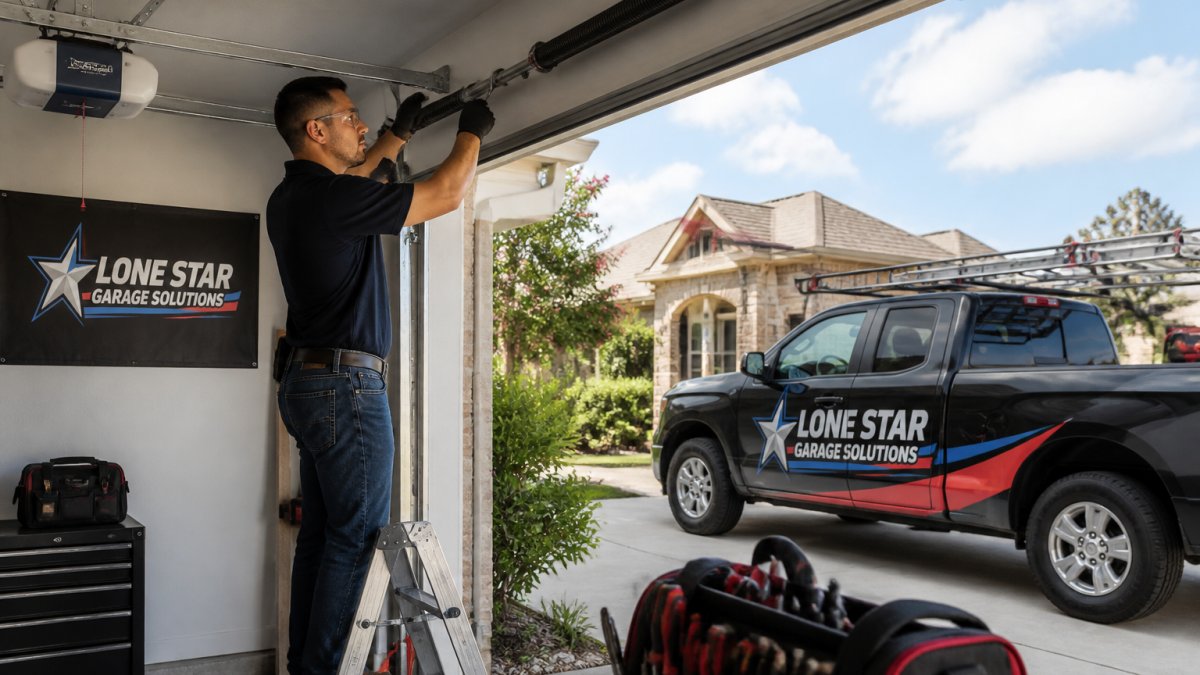
Same-day garage door repair isn't magic. It works because a professional team has trained technicians, stocked vehicles, and a process that gets you fixed fast.
When you schedule same-day service:
- The company confirms they can reach you that day
- A technician arrives during your scheduled window
- They diagnose the problem in 15-20 minutes
Lone Star Garage Solutions handles same-day garage door repair for broken springs, snapped cables, opener failures, and door alignment issues.
Five Critical Signs Your Garage Door Needs Immediate Attention
Some garage door problems can wait a few days. Others need attention right away. Here are five signs your door needs same-day garage door repair:
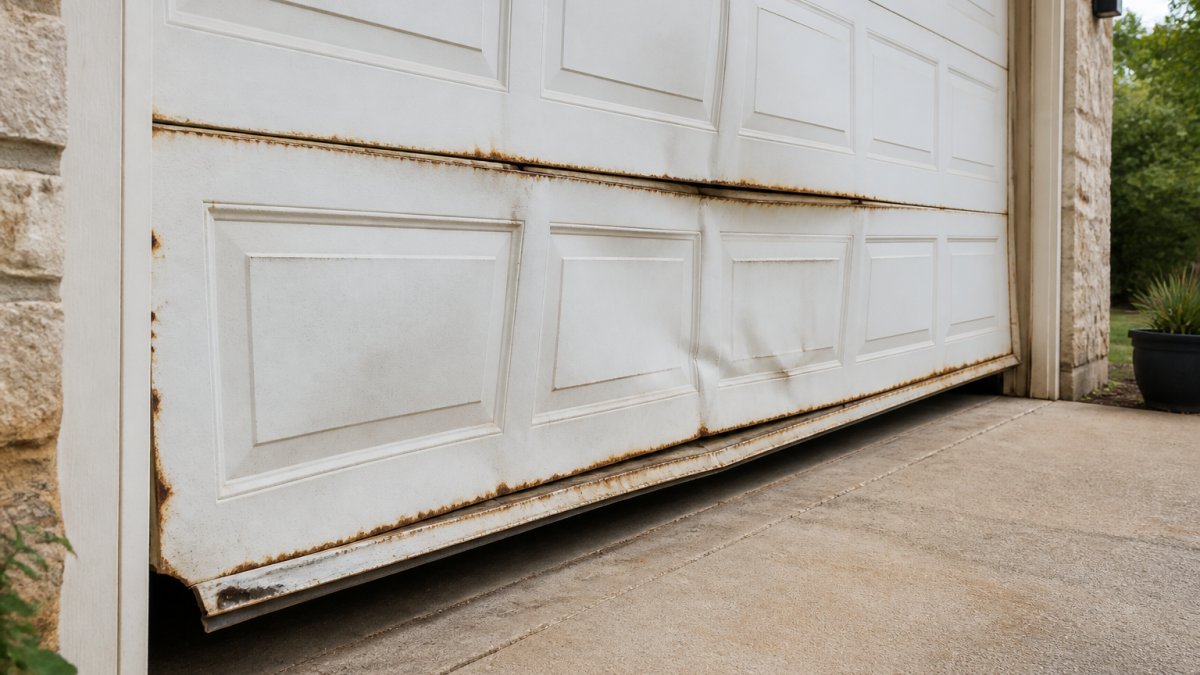
Broken Springs or Cables
A broken spring or cable is the most common reason a garage door stops working.
You'll notice: The door won't open at all, or it opens partway and stops.
Why it's urgent: A broken spring puts enormous stress on the opener motor, and forcing it can damage the opener beyond repair.
What to do: Stop trying to open the door. Call for same-day service right away. See our garage door spring replacement service or check our cable replacement service.
Door Won't Open or Close
If your door is completely stuck, something is seriously wrong, a broken spring, a misaligned track, or an opener failure.
You'll notice: The door won't budge no matter what you try. The opener motor might run, but nothing happens.
What to do: Try the wall control first.
Unusual Noises or Grinding Sounds
A garage door should open and close quietly.
You'll notice: Grinding, squealing, rattling, or banging sounds during operation.
Why it's urgent: These sounds signal failing parts. Ignoring them turns a small problem into an expensive repair later.
What to do: Dive deeper into what's causing the grinding noise and when to call a professional.
Opener Motor Runs but Door Doesn't Move
This is a classic sign of a broken spring or cable. The motor spins, but the door stays put.
You'll notice: You hear the opener working, but the door doesn't open or barely moves.
What to do: Stop using the opener. Call for same-day service.
Safety Sensors Misaligned or Blocked
You'll notice: The door starts to close, then reverses.
Why it's urgent: A door that won't close is a security risk.
What to do: Check if something is blocking the sensors. Wipe them clean.
These five problems signal that your garage door needs same-day repair service.
| Problem | What You'll Notice | Why It's Urgent |
|---|---|---|
| Broken Springs or Cables | Door won't open or opens partway; loud bang or snap | Stress on opener motor; door can fall unexpectedly |
| Door Won't Open or Close | Door completely stuck; opener motor runs but nothing happens | Traps your car or locks you out; motor risks burning out |
| Unusual Noises or Grinding Sounds | Grinding, squealing, rattling, or banging during operation | Signals failing parts; small problem becomes expensive later |
| Opener Motor Runs but Door Doesn't Move | Motor works but door stays put or barely moves | Motor damaged by load it can't handle; wastes energy |
| Safety Sensors Misaligned or Blocked | Door reverses when closing or won't close; sensor lights off or flickering | Security risk; animals or children could get trapped |
Getting a Quote and Moving Forward with Your Repair
Once you've identified the problem, the next step is getting a clear quote.
Get an instant price estimate for your garage door or screen project.
For repairs that need a professional inspection, call Lone Star Garage Solutions.
Same-day garage door repair is possible when you work with a company that has trained technicians, stocked vehicles, and a straightforward process.
Frequently Asked Questions
What should I provide when requesting same-day garage door repair?
When you contact a garage door repair service for same-day help, have ready: your address, a description of what's wrong (door won't open, making noise, remote not working), when the problem started, and your availability. If your garage door remote is not working, mention whether you've tried new batteries or if other remotes have the same issue. This information helps the technician prepare and arrive with the right parts.
How does the garage door repair process typically work?
The garage door repair process usually starts with a phone consultation where you describe the problem. A technician schedules a visit, arrives to inspect the door, opener, springs, cables, and remote control. They diagnose the issue, explain what needs fixing, and perform the repair if you approve. Most same-day repairs take 1-3 hours depending on complexity. You'll receive an invoice and warranty information for the work completed.
Can a garage door technician diagnose a problem during the first visit?
Yes, a qualified garage door technician can diagnose most problems during the initial visit. They'll examine the door, springs, cables, opener motor, and safety sensors. If your garage door remote is not working, they'll test the remote control and receiver to identify whether it's a battery, programming, or signal issue. A thorough inspection takes 15-30 minutes and gives you a clear picture of what repair is needed and what it involves.
Why is scheduling a garage door repair appointment quickly important?
A stuck or broken garage door compromises home security and daily access. Delaying a garage door repair appointment means your garage stays inoperable, which affects your routine and leaves your home vulnerable. Same-day or next-day service prevents the problem from worsening, for example, a worn cable can snap completely if the door keeps being forced. Prompt repair keeps your system safe and functional.
When your garage door stops working, a clear repair process and same-day service make all the difference. Lone Star Garage Solutions handles broken springs, snapped cables, opener failures, and sensor issues with transparent diagnosis and fast repair. We keep trucks stocked with common parts, so most problems are fixed the day you call. Contact us for a quote and get your door working again today.