 listicle
Best Garage Screen Mesh Types for High Wind Areas
Last Updated: October 23, 2026
Quick Summary
The best garage screen mesh types for high wind areas are aluminum-reinforced mesh for superior wind resistance and durability, and fiberglass mesh for moderate wind areas where visibility and cost matter more. Wind performance depends on the complete system, mesh material, frame design, retention track, and installation, not fabric strength alone.
- Aluminum-reinforced mesh resists sagging and holds tension better than fiberglass in high wind areas, though it reduces visibility and airflow.
- Mesh openness percentage affects wind load: denser mesh blocks more air, forcing the frame and fasteners to absorb more pressure on large garage openings.
- Wind-rated retractable systems can be rolled up or removed entirely before severe weather, eliminating wind load during storms.
- A published wind-speed rating must specify which mesh was tested, the panel size tested, and the installation method assumed to be meaningful.
- Garage openings wider than 12 feet should be divided into multiple panels to reduce unsupported span and limit billowing under wind pressure.
Table of Contents
- Understanding Garage Screen Mesh for High Wind Conditions
- Fiberglass vs Aluminum Screen Mesh: Which Stands Up to Wind
- Heavy-Duty and Pet-Resistant Mesh Options
- Screen Mesh Strength and Airflow: Finding Your Balance
- Wind-Rated Retractable Garage Screens and System Design
- Garage Screen Wind Limits: What You Need to Know
- Mesh Selection Checklist for High Wind Areas
- Conclusion
- Frequently Asked Questions
Understanding Garage Screen Mesh for High Wind Conditions
Choosing a garage screen mesh for high wind areas means two decisions at once: which fabric handles gusts, and whether the complete system is rated for your region's wind speeds. At Lone Star Garage Solutions, we've helped Central Texas homeowners navigate this, and mesh strength alone doesn't determine wind performance. Wind resistance depends on the whole package: mesh weave, frame design, retention track, and anchoring.
This guide covers the best garage screen mesh types for high wind areas, fiberglass, aluminum, and specialty meshes, how wind load and screen area interact, and why some high-wind-rated screens still fail in severe gusts.
Fiberglass vs Aluminum Screen Mesh: Which Stands Up to Wind
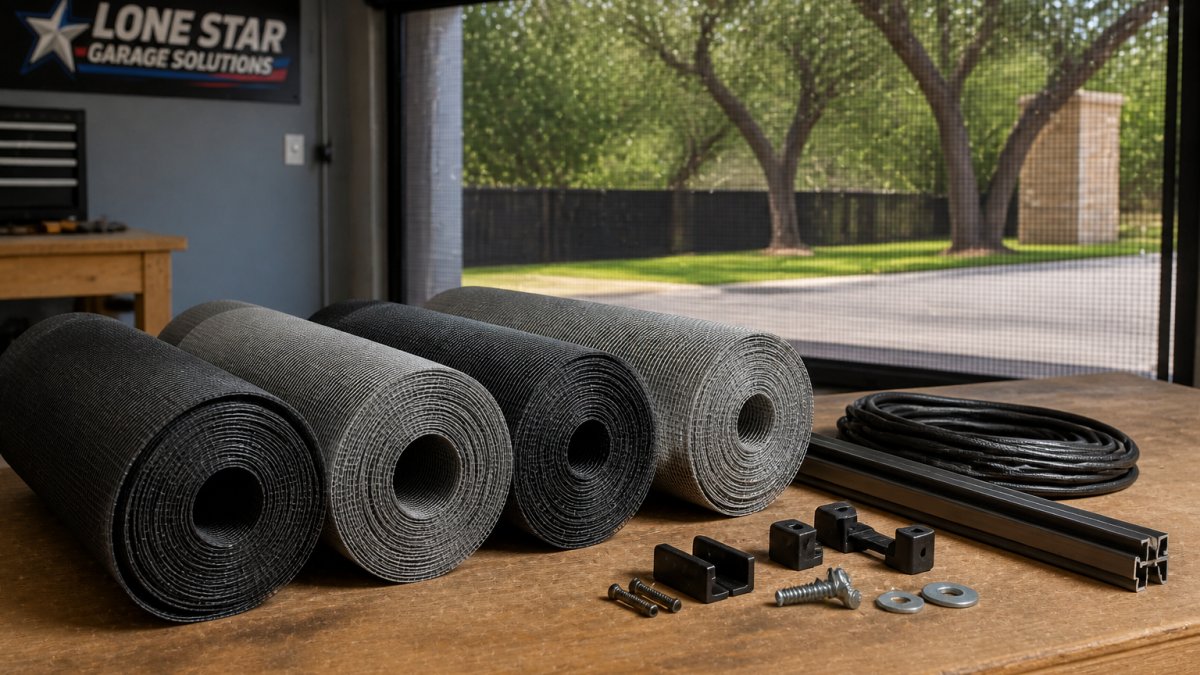
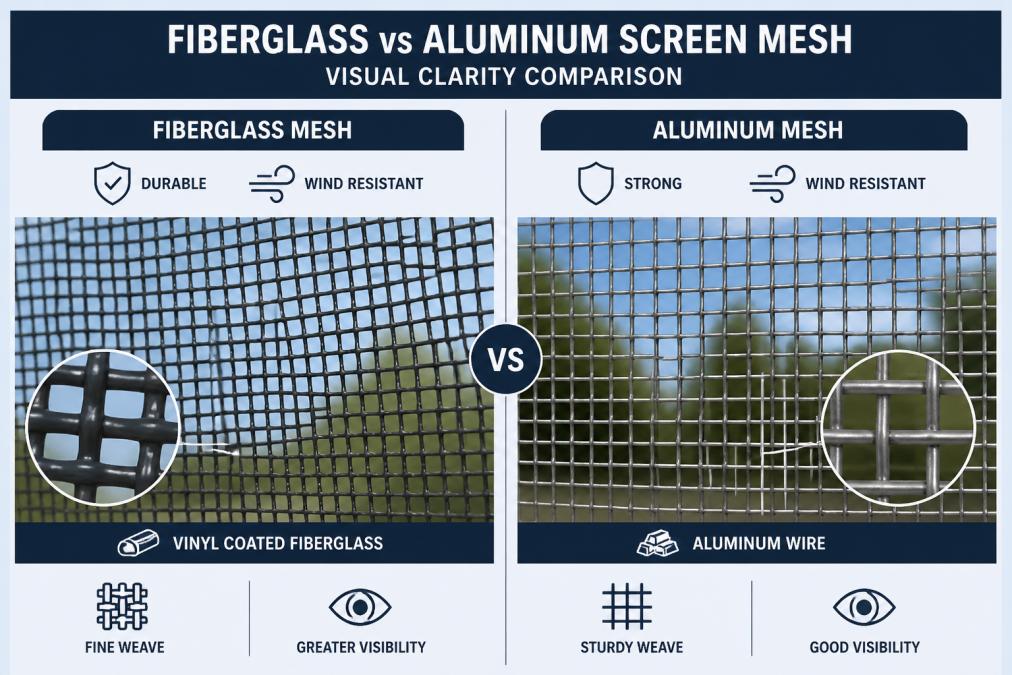
Fiberglass and aluminum are the two most common screen mesh materials, and they're built for very different priorities. Fiberglass is popular because it balances cost and performance. Aluminum is more durable but comes with trade-offs in visibility and airflow.
Fiberglass Mesh: Cost, Visibility, and Wind Limits
Fiberglass mesh is woven glass fiber coated with vinyl resin. It's affordable, offers excellent visibility compared to aluminum, and allows good airflow. For moderate wind areas, fiberglass works well.
Where fiberglass falls short in high wind areas: it sags over time, especially in larger openings. Once mesh sags, the retention track loses tension and the screen becomes vulnerable to wind infiltration.
Aluminum Mesh: Durability and Performance Trade-offs
Aluminum mesh is reinforced with aluminum wire woven through the fabric.
The trade-off is visibility: aluminum mesh is darker, blocks more light, and shows a slight grid pattern. Airflow is also slightly reduced because the denser weave is less open.
For homeowners in the Hill Country and surrounding areas where wind gusts are common, aluminum-reinforced mesh is often the better choice despite the visibility trade-off.
Heavy-Duty and Pet-Resistant Mesh Options
If you have pets or live in a particularly exposed location, consider heavy-duty or pet-resistant mesh, engineered to resist tearing from claws, impacts, and sustained wind pressure.
Pet-resistant mesh uses a tighter weave and thicker fabric than standard options, with larger wire diameter and higher mesh count.
The downside is reduced visibility and airflow: pet-resistant mesh blocks more light and restricts ventilation.
Screen Mesh Strength and Airflow: Finding Your Balance
Most mesh comparisons stop at "stronger mesh means less airflow." That's true, but not useful when you're screening a two-car garage opening 16 feet wide and 7 feet tall. At that scale, mesh openness, wind load, and ventilation become a design problem.
Openness Is the Number That Matters
Mesh openness is the percentage of the screen's surface that is actually open space. Standard fiberglass insect screen runs around 60-70% open; aluminum-reinforced mesh lands in the 55-65% range depending on wire diameter; pet-resistant and no-see-um weaves can drop to 40-50% or lower.
Here's the counterintuitive part for high wind areas: a more open mesh lets more air pass through, reducing the pressure differential across the fabric.
How Screen Area Changes the Equation
Wind load scales with area. A 16-foot-wide garage opening presents roughly four times the surface area of a standard 8-foot patio door, so at the same wind speed it experiences proportionally more total force on the frame and anchors.
A common pattern in high wind areas is dividing a wide opening into two or more panels. Smaller panels reduce the unsupported span of fabric, limiting billowing and reducing point loads on the retention track.
Practical Balance by Use Case
- Storage-focused garage, moderate wind: Standard fiberglass in a properly anchored frame is usually adequate. The higher openness supports ventilation, and the lower cost makes replacement less painful if the screen eventually wears.
- Screened living space, exposed location: Aluminum-reinforced mesh in a wind-rated retractable system is the better balance. You give up some visibility and airflow, but the fabric holds tension better across large spans.
- Pets plus wind exposure: Pet-resistant mesh adds tear resistance, but its tighter weave increases wind load on the frame. Confirm the system's wind rating accounts for the denser fabric, not just the standard mesh option.
Visibility and View Clarity
Visibility follows openness closely. Fiberglass gives the clearest view because the weave is more open and lighter in color; aluminum-reinforced mesh shows a faint grid pattern; denser specialty weaves trade view clarity for strength or insect exclusion. If your garage screen faces a view you care about, factor visibility in alongside wind performance.
The Takeaway
Don't pick mesh by strength alone. Match openness to your ventilation needs, confirm the frame and track are sized for your opening's area, and verify the system's wind rating reflects the specific mesh you're installing.
Wind-Rated Retractable Garage Screens and System Design
A wind-rated retractable garage screen is designed to handle gusts and sustained wind pressure while remaining functional.
A retractable system's wind rating depends on mesh material, frame rigidity, track design, and installation.
When evaluating a retractable system for high wind areas, ask the installer for the documented wind-speed rating and confirm your garage opening and installation method support it.
Garage Screen Wind Limits: What You Need to Know
Every screen system has a maximum wind speed it's designed to handle, but a spec-sheet rating is only meaningful if you know how to verify it and what happens when conditions exceed it. Most garage screen shopping goes wrong here: homeowners compare fabric claims instead of documented system ratings.
What a Wind Rating Actually Covers
A wind-speed rating for a retractable or fixed garage screen reflects testing of the complete assembly, mesh, frame, track, retention hardware, and anchoring, under controlled pressure.
Ratings are typically expressed as a maximum sustained wind speed, sometimes with a gust assumption. A system rated for 60 mph sustained wind is not the same as one rated for 60 mph gusts.
A Practical Verification Checklist
Before you commit to any system for a high wind area, work through these questions:
- Is there a published wind rating for the complete system? Ask for the document, not a verbal claim. "Heavy-duty" and "wind-resistant" are marketing terms, not ratings.
- Which mesh was tested? Confirm the rating applies to the mesh you're actually installing. Denser weaves can lower the rating.
- What panel size was tested? A rating for a standard single-car opening may not transfer to a wide two-car span without panel division.
- What installation method is assumed? Fastener type, anchor spacing, and substrate (wood framing versus masonry) all affect real-world performance.
- Are local requirements relevant? Some jurisdictions have wind-load provisions in their building or residential codes. Confirm with your local permitting office whether a screen installation triggers any review, especially on newer construction or in exposed locations.
- What maintenance keeps the rating valid? Track tension, fastener tightness, and fabric condition all degrade over time. A rating assumes the system is maintained.
Common Failure Modes in High Wind
Understanding how screens fail helps you spot weak points before a storm does:
- Fabric pullout at the retention edge. The mesh tears away from the spline or track when tension is lost or the edge is worn. This is the most common failure and often starts with sagging.
- Track and spline failure. Retention tracks can deform or release under pressure, especially if the track profile is lightweight or the spline has aged.
- Fastener pullout. Anchors back out of framing or masonry when the load exceeds what the fastener and substrate can hold. Undersized or spaced-too-far anchors are a frequent culprit.
When to Retract or Remove the Screen
No residential garage screen is designed for hurricane-force winds or extreme gusts. In severe weather, the safest approach is to retract a motorized or manual screen fully, or remove a fixed panel if the system allows it.
A reasonable rule of thumb: when forecasts call for sustained winds or gusts approaching the system's published rating, retract or remove the screen before the weather arrives. Don't wait to see how it performs.
Matching the Rating to Your Location
Central Texas wind exposure varies widely. Open, elevated sites and new construction on exposed lots see higher sustained winds and more frequent gusts than sheltered neighborhoods. If your opening is large, your site is exposed, or your system stays deployed through storm season, choose a system with a documented rating above your expected conditions and confirm the installation method supports it.
Mesh Selection Checklist for High Wind Areas
Use this checklist when you're evaluating a garage screen mesh for high wind conditions:
| Consideration | What to Check | Why It Matters |
|---|---|---|
| Mesh Material | Fiberglass, aluminum-reinforced, or pet-resistant | Aluminum-reinforced offers best wind resistance; fiberglass offers better visibility |
| Wind-Speed Rating | System rating, not just mesh rating | The complete system must be rated for your local wind speeds |
| Frame and Fasteners | Steel or aluminum frame, stainless steel fasteners | Poor frame design fails regardless of mesh quality |
| Retention System | Track design and tension adjustment | Loose tension increases wind infiltration and tearing risk |
| Screen Area | Size of opening and number of panels | Larger openings experience more total wind load |
| Installation Method | Proper anchoring and support | Improper installation reduces the system's wind rating |
| Maintenance Access | Can you adjust tension or replace mesh later | High wind areas may need periodic adjustments |
When you're ready to choose a system, how to measure your garage for retractable screens is the first step. You'll need accurate dimensions to determine the right panel size and confirm that a particular system fits your opening.
For mesh types that work well in high wind areas, compare top retractable garage screens built for Texas heat to see how different systems handle the combination of wind exposure and temperature swings that are common in Central Texas.
Conclusion
Choosing the best garage screen mesh types for high wind areas comes down to understanding that mesh material is just one piece of the puzzle. Wind resistance depends on the complete system: fabric weave, frame strength, retention track, and installation method. Aluminum-reinforced mesh offers better wind performance than standard fiberglass, but only when paired with a properly rated frame and fastener system.
For homeowners in New Braunfels and the surrounding Hill Country, Lone Star Garage Solutions can help you evaluate your specific garage opening and wind exposure. We're an authorized installer of Lifestyle retractable garage screens and can recommend the right mesh material and system design for your needs. Explore the full range of garage screens available for Texas conditions and get a quote to see how we can transform your garage into a comfortable, protected space that handles the local climate.
Frequently Asked Questions
What is the strongest garage screen mesh for high wind areas?
Aluminum mesh is the strongest option available for garage screen mesh in high wind conditions. It resists tearing and deformation better than fiberglass or polyester. However, wind performance depends on the complete screen system, the frame, fasteners, and retention track matter as much as the fabric itself. Ask your installer about the system's documented wind rating and whether it's rated for your local wind exposure.
How do fiberglass and aluminum screen mesh compare for wind resistance?
Fiberglass mesh is lighter, less expensive, and offers better visibility and airflow, but aluminum mesh is more durable and resists tears and wind deformation. Fiberglass works well in moderate wind areas; aluminum is the better choice if you face frequent gusts or severe weather. The trade-off is that aluminum blocks slightly more light and reduces airflow compared to fiberglass.
Can retractable garage screens withstand high winds?
Wind-rated retractable garage screens can withstand significant wind when properly installed and maintained. The key is selecting a system with a documented wind rating that matches or exceeds the typical gusts in your area. Many manufacturers recommend retracting the screen during severe storms or sustained high winds to prevent damage. Always confirm the specific wind limits with your installer before purchase.
Does tighter screen mesh block more wind?
A tighter mesh weave does reduce wind flow slightly, but wind resistance is not determined by mesh density alone. The frame strength, fastener quality, and how the mesh is secured in the retention track are equally important. A loose mesh in a strong frame can outperform tight mesh in a weak frame. Discuss the complete system specifications with your installer rather than focusing on mesh count alone.
What should I look for when choosing garage screen mesh for a windy area?
Look for a complete screen system with a documented wind rating, not just mesh material. Check the frame and fastener quality, confirm the retention track design, and ask about the manufacturer's testing standards. Choose aluminum or heavy-duty polyester mesh for better durability. Have your installer evaluate your specific garage opening, wind exposure, and local weather patterns before making a final choice.