 listicle
Best Garage Door Weather Stripping Options for 2026
Table of Contents
- Why Garage Door Weather Stripping Matters
- Understanding Garage Door Bottom Seal Types
- Top Garage Door Weather Stripping Options
- How to Measure Garage Door Bottom Seal
- Garage Door Seal for Uneven Floor
- Garage Door Weather Stripping Replacement
- Choosing the Right Seal for Your Climate
- Frequently Asked Questions
Last Updated: October 18, 2026
Why Garage Door Weather Stripping Matters
A garage door sits between your home and the outside world. When it doesn't seal properly, cold air leaks in during winter, hot air escapes in summer, and dust, insects, and moisture find their way inside.
Weather stripping solves this problem by filling the gaps around and beneath your garage door. The right seal keeps drafts out, protects your belongings from rain and pests, and helps maintain consistent temperatures. At Lone Star Garage Solutions, we've helped homeowners throughout Central Texas choose the right weather stripping for their climate and door type.
The good news: selecting the right garage door weather stripping doesn't require guesswork. Understanding the main seal types, measuring your door correctly, and matching the seal to your specific situation takes maybe an hour of your time, and the benefits last for years.
Understanding Garage Door Bottom Seal Types
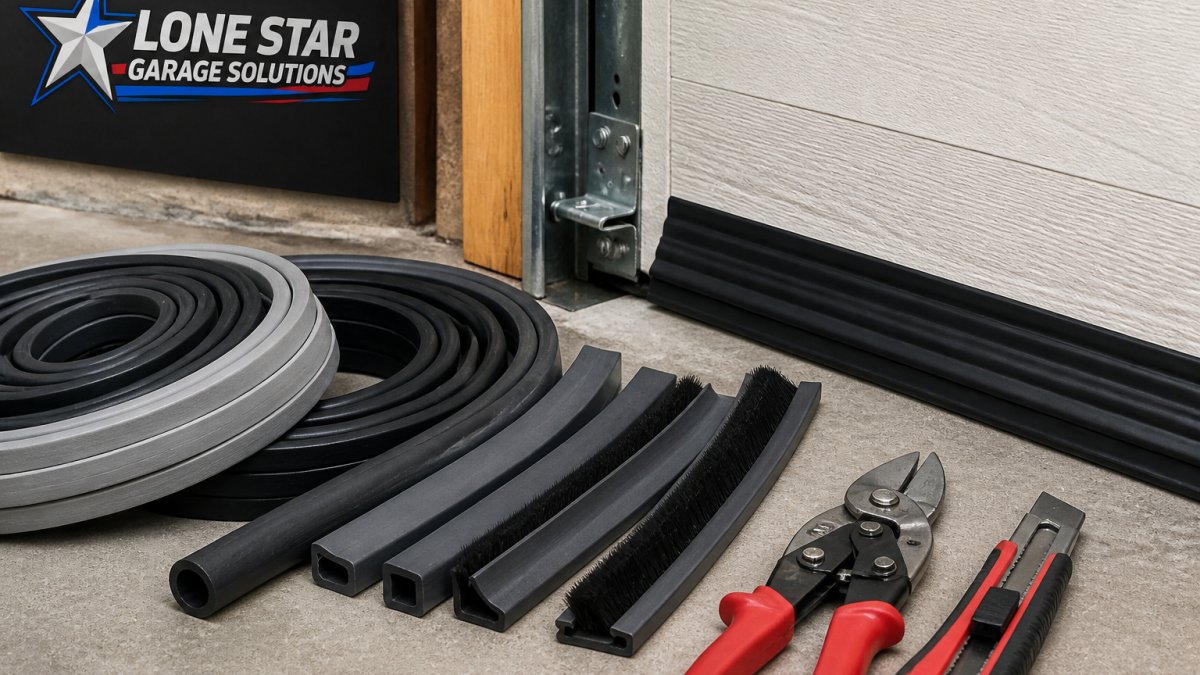
Your garage door's bottom seal is the most critical weatherstripping component because it faces the most wear. Every time the door opens and closes, the seal compresses and flexes. Understanding the three main profile types helps you pick a replacement that fits your door's retainer channel.
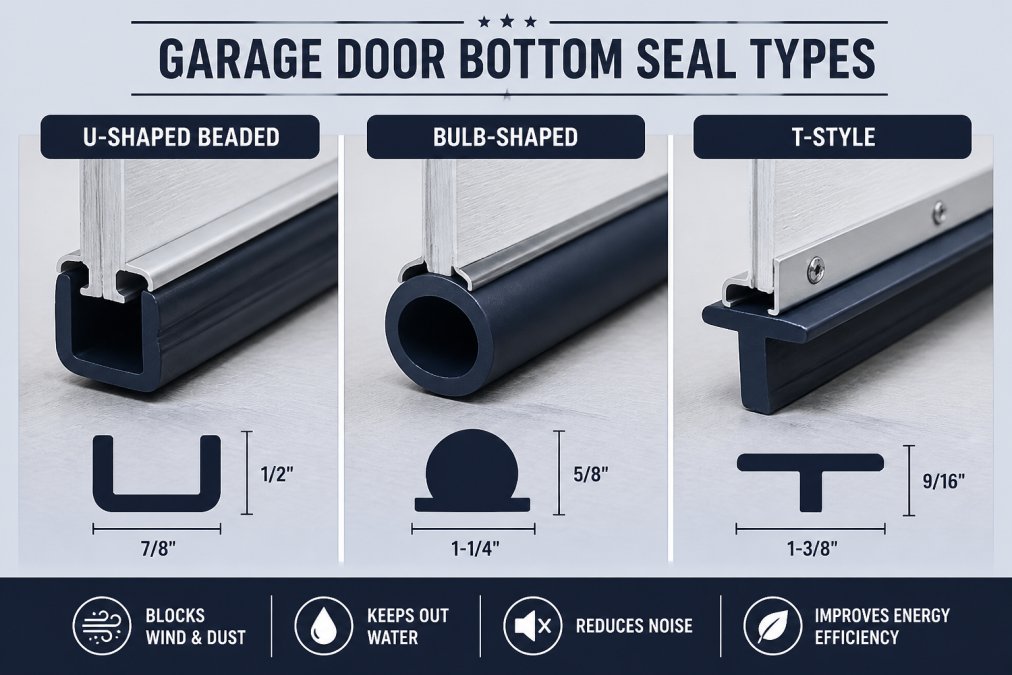
U-Shaped Beaded Seals
A U-shaped beaded seal has a rounded profile that slides into a retainer channel at the bottom of your garage door. The beads compress when the door closes, creating a tight fit against the garage floor. This profile works well on doors where the retainer is designed to hold a rounded seal firmly in place.
U-shaped seals are durable and handle temperature changes reasonably well. They compress predictably and maintain their shape over time. The main limitation: if your door's retainer channel is worn or damaged, the seal may not stay seated properly. A quick visual check of your existing seal will tell you if this is your door type.
Bulb-Shaped Seals
Bulb-shaped seals have a rounded, almost balloon-like profile. They expand slightly when compressed, filling gaps more aggressively than U-shaped seals. This makes them excellent for garage floors that are slightly uneven or sloped, the bulb can conform to minor irregularities better than a rigid profile.
The trade-off: bulb seals are softer and more prone to compression set, meaning they may not bounce back to full height after repeated use in extreme heat. For Texas garages that experience both intense summer heat and occasional cold snaps, a quality bulb seal holds up better than a cheaper alternative.
T-Style Seals
T-style seals have a flat bottom with a vertical stem that slides into a retainer. They work best on garage doors where the retainer is designed specifically for this profile. T-style seals offer good compression and a clean appearance, and they tend to last longer in high-traffic applications because the profile distributes pressure more evenly.
T-style seals are less common than U-shaped or bulb seals, so availability can be an issue. Before choosing this type, verify that your door's retainer is actually designed to accept it. Installing the wrong profile wastes money and creates gaps.
Top Garage Door Weather Stripping Options
When you're ready to replace your garage door weather stripping, several material and installation options are available. The right choice depends on your door type, climate exposure, and how much ongoing maintenance you're willing to do.
EPDM Rubber Bottom Seals
EPDM (ethylene propylene diene monomer) rubber is the industry standard for garage door bottom seals. It resists UV damage, temperature extremes, and ozone, all common stressors in Texas garages. EPDM seals remain flexible in cold weather and resist hardening in heat, which matters when your garage experiences both.
EPDM seals typically last 5-7 years with normal use. They handle the Texas climate well because they don't become brittle in winter or overly soft in summer. The downside is cost: EPDM seals are more expensive upfront than vinyl alternatives, but the longer lifespan usually justifies the investment.
Quality matters here. Budget EPDM seals may use lower-grade rubber that hardens faster. Mid-range and premium EPDM products hold their properties longer. If you're replacing a seal that failed prematurely, upgrading to a better-quality EPDM option often prevents repeat failures.
Self-Adhesive Bottom Seals
Self-adhesive bottom seals use a pre-applied adhesive backing, eliminating the need for a separate adhesive application. This speeds up installation and appeals to homeowners who want a quick fix without tools or mess.
The catch: self-adhesive seals only work on smooth, clean surfaces. If your garage floor is dusty, oily, or textured, the adhesive won't bond properly. Even on ideal surfaces, adhesive-backed seals can peel away after a few months, especially in high-traffic garages or if the door is used frequently.
For a temporary solution or a door that doesn't see heavy use, self-adhesive seals are acceptable. For permanent, reliable weatherstripping in an actively used garage, a retainer-mounted seal (U-shaped, bulb, or T-style) is more dependable.
Side and Top Weatherstripping
While the bottom seal gets most of the attention, side and top weatherstripping seals the perimeter of your garage door. Adhesive-backed rubber strips work well here because the sides and top experience less compression than the bottom.
Adhesive-backed side and top seals typically last 3-5 years. They're easy to install, clean the surface, peel the backing, and press firmly into place. When they start to peel or harden, replacement is straightforward. Many homeowners tackle this themselves, though a professional installation ensures the strips are applied evenly and make full contact with the door frame.
How to Measure Garage Door Bottom Seal
Before ordering a replacement seal, measure your garage door opening to ensure you get the right size. A seal that's too short leaves gaps; one that's too long bunches up and won't fit properly.
Measure the width of your garage door opening at the bottom, from the left edge to the right edge. Use a tape measure and pull it tight. If your door is a standard single-car opening, it's typically 8-9 feet wide.
Next, check the profile of your existing seal. Look at the bottom of your garage door where the seal attaches. Is it U-shaped, bulb-shaped, or T-style?
Finally, measure the height of the gap between the bottom of your door and the garage floor when the door is fully closed. A healthy seal should compress to nearly eliminate this gap.
Garage Door Seal for Uneven Floor
Not every garage floor is perfectly level. Concrete settles, cracks, and shifts over time, especially in Central Texas where soil movement is common. An uneven floor creates challenges for bottom seals because the door can't compress evenly across the entire width.
Bulb-shaped seals handle uneven floors better than U-shaped or T-style seals. The softer, more flexible bulb profile conforms to minor irregularities and maintains compression even where the floor dips or rises slightly.
For floors with larger irregularities, dips, humps, or cracks, a single seal may not be enough. Some homeowners add a threshold or floor seal in addition to the bottom seal, creating a two-layer barrier. This is more effective but also more complex to install.
If your garage floor is severely uneven or damaged, addressing the floor itself may be necessary. Concrete patching or leveling ensures that any seal you install will work as intended.
Garage Door Weather Stripping Replacement
Replacing your garage door weather stripping is manageable as a DIY project if you're comfortable with basic tools. However, professional installation ensures the seal is properly aligned, compressed, and sealed for maximum performance.
When to Replace Your Seal
Inspect your garage door seal annually, especially before winter. Look for these signs of wear:
- Cracks, splits, or chunks missing from the seal
- Hardened or brittle rubber that doesn't compress when pressed
- Visible gaps between the seal and the garage floor when the door is closed
- Water stains or moisture inside the garage along the bottom edge
- Daylight visible under the door when it's fully closed
- The seal is pulling away from the retainer or peeling at the edges
If you notice any of these, replacement is due. A worn seal won't protect your garage from weather, pests, or temperature extremes. Replacing it promptly prevents moisture damage, pest intrusion, and energy loss.
Installation Tips
If you're replacing the seal yourself, start by removing the old seal. For retainer-mounted seals, slide the old seal out of the channel. For adhesive-backed seals, peel them away carefully.
Measure the opening one more time to confirm the length.
For retainer-mounted seals, slide the new seal into the channel, starting at one end and working toward the other. Push firmly to ensure it's fully seated.
For adhesive-backed seals, clean the surface with a cloth and allow it to dry completely.
After installation, close the garage door slowly and listen for any unusual sounds. The door should close smoothly without binding. Check that the seal compresses evenly and eliminates the gap at the floor.
If you're unsure about any step, or if your garage door has a complex retainer system, professional installation is worth the investment.
Choosing the Right Seal for Your Climate
Central Texas weather presents specific challenges for garage door seals. Summers are hot and dry, winters are mild but can include cold snaps, and humidity levels fluctuate throughout the year.
EPDM rubber seals are the best choice for Texas garages because they handle temperature swings without becoming brittle or overly soft.
For garages in high-humidity areas or near water sources (like a creek or low-lying property), a bulb-shaped EPDM seal provides extra compression to keep moisture out.
For a garage that's well-protected from direct sun and doesn't experience temperature extremes, a mid-range EPDM seal is sufficient.
| Seal Type | Material | Best For | Expected Lifespan |
|---|---|---|---|
| U-Shaped Beaded | EPDM Rubber | Standard doors with even floors | 5-7 years |
| Bulb-Shaped | EPDM Rubber | Uneven floors, high-humidity areas | 5-7 years |
| T-Style | EPDM Rubber | Heavy-use doors with compatible retainers | 6-8 years |
| Self-Adhesive | Vinyl or Rubber | Temporary fixes, light-use garages | 1-3 years |
| Side/Top Strips | Adhesive-Backed Rubber | Perimeter sealing | 3-5 years |
A properly sealed garage door makes a real difference in comfort, energy efficiency, and protection.
If you're unsure which seal type matches your garage door, or if you'd like professional guidance on the best option for your specific situation, Lone Star Garage Solutions is here to help.
Frequently Asked Questions
How often should garage door weather stripping be replaced?
Most garage door weather stripping lasts 3-5 years, depending on climate exposure and material quality. In areas with extreme temperature swings or intense sun, you may need replacement sooner. Check annually for cracks, gaps, or loss of compression. If cold air, dust, or water enters around the seal, it's time to replace it. Worn stripping also increases energy costs and allows pests inside.
What are the different types of garage door bottom seal types?
Common garage door bottom seal types include U-shaped beaded seals, which fit into a retainer channel; bulb-shaped seals, which compress against the garage floor; and T-style seals, which work with specific retainer designs. EPDM rubber and vinyl are the most durable materials. Self-adhesive seals offer easier installation but may have shorter lifespans. Your door's retainer profile determines which type fits.
Can weather stripping keep dust and pests out of a garage?
Yes, properly installed garage door weather stripping significantly reduces dust and pest entry. Bottom seals close gaps where insects and debris enter. Side and top weatherstripping seal perimeter gaps. EPDM and rubber materials compress tightly against surfaces, creating a barrier. However, no seal is 100% effective if the floor is very uneven or the door doesn't close flush. Regular inspection and replacement maintain protection.
How do I know what size weather stripping my garage door needs?
Measure the width of your garage door opening at the bottom. Most residential doors are 8 to 16 feet wide. Check your door's retainer profile (U-shaped, bulb, or T-style) by examining the bottom channel, this determines seal compatibility, not just size. Measure the height of any gaps around the sides and top. Take photos of your retainer and bring them to a local garage door specialist to ensure the correct profile and material fit.