 how-to
Seal Garage Door Gaps Against Texas Pests
Table of Contents
- Why Garage Door Gaps Let Pests In
- Finding Gaps Around Your Garage Door
- Installing Garage Door Weather Stripping
- Garage Door Bottom Seal Replacement
- Sealing Side and Top Gaps with a Garage Door Threshold Seal
- Garage Door Gap Repair for Larger Openings
- When to Call a Professional
- Conclusion
- Frequently Asked Questions
Last Updated: October 11, 2026
Why Garage Door Gaps Let Pests In
Texas pests don't need much space to invade your garage. Roaches, spiders, scorpions, and rodents slip through tiny openings around your garage door frame. Once inside, they nest in dark corners, chew through stored items, and create health hazards for your family. The good news: you can seal garage door gaps and block most of these intruders with basic materials and simple techniques.
Gaps form naturally over time as your garage door settles with temperature changes, weather stripping deteriorates from sun exposure, and bottom seals crack and pull away from the concrete.
The most effective approach combines multiple sealing methods: weather stripping on the sides and top, a strong bottom seal, and threshold seals for larger openings. This guide walks you through each technique so you can tackle the project yourself or understand what a professional installation involves.
Finding Gaps Around Your Garage Door
Start by inspecting your garage door carefully. Turn off the opener and close the door fully. A systematic inspection reveals not just where gaps exist, but what type of problem caused them, information that determines whether you can seal it yourself or need professional help.
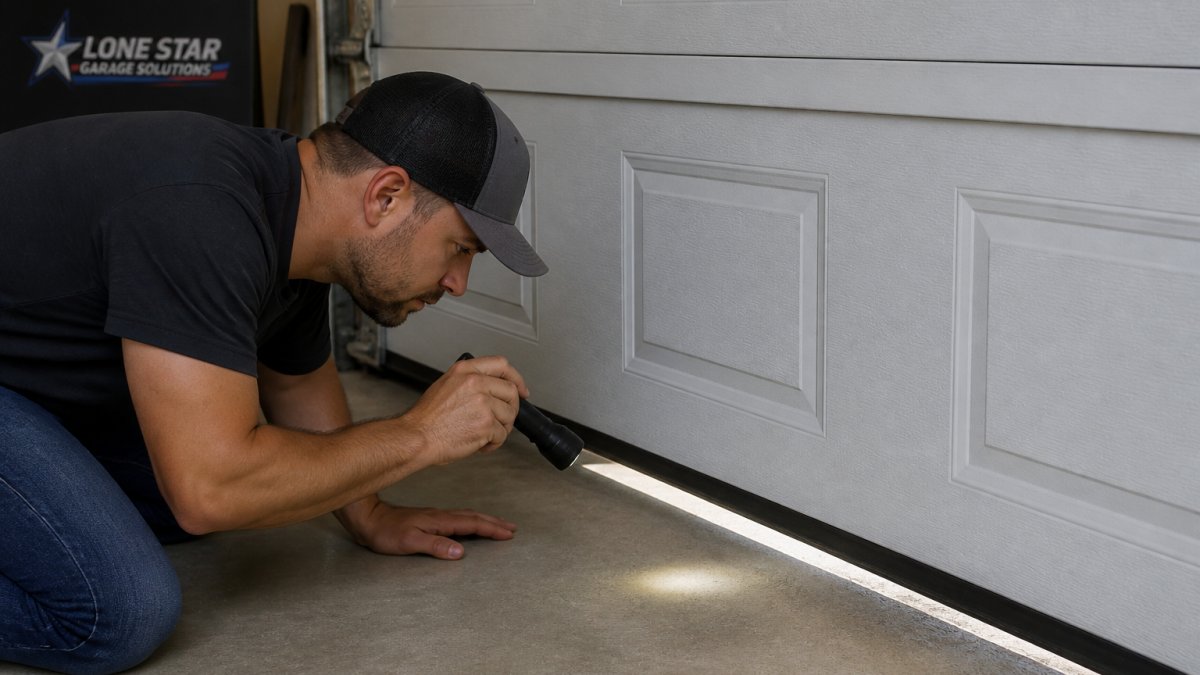
The flashlight test:
Darken your garage or wait until dusk. Shine a flashlight along the entire perimeter of the closed door from the outside while someone inside watches for light leaks. Mark every spot where light appears. This reveals gaps too small to see in daylight.
Check these specific areas and what they tell you:
- Bottom edge: Light leaks indicate a failing bottom seal. If the gap is uneven (wider on one side), the door may be sagging.
- Sides: Gaps even on both sides suggest weather stripping failure. Gaps wider at the top than the bottom suggest door sag or frame misalignment.
- Top: Gaps here are common if the frame has settled.
- Corners: Gaps concentrated in one corner point to frame damage or door misalignment.
Measure and document:
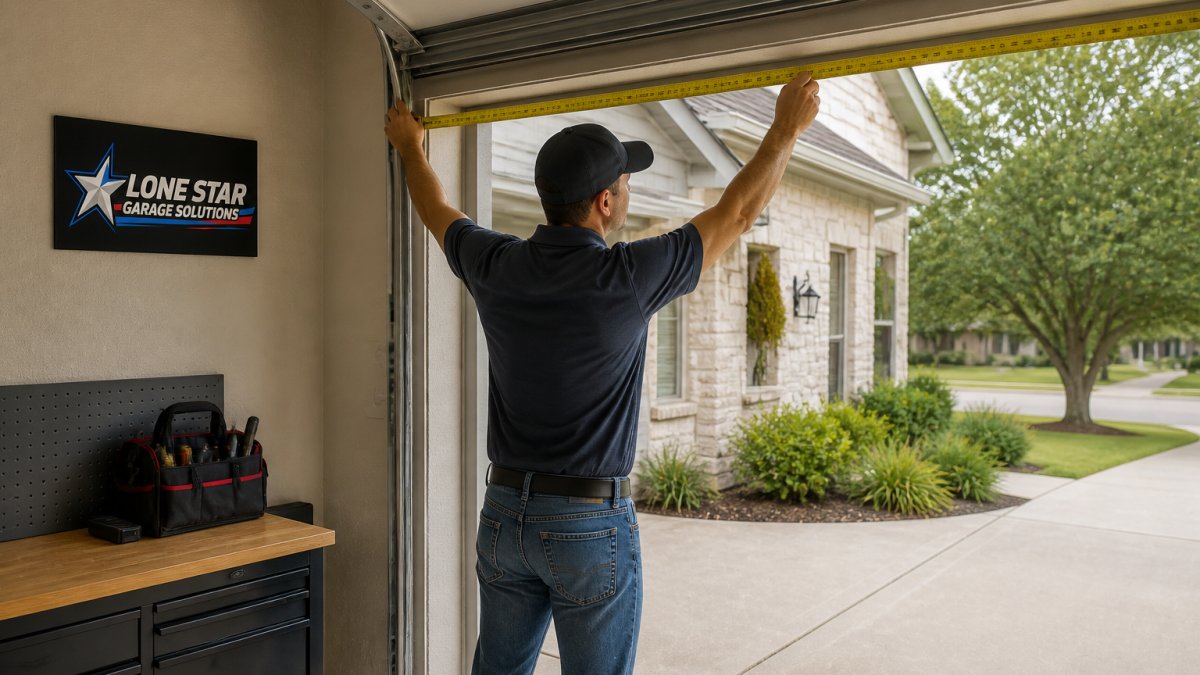
Measure gap width and note whether gaps are uniform (same width along the edge), tapered (wider at top or bottom), or concentrated in one area. Small gaps (under 1/4 inch) respond well to weather stripping. Larger gaps (1/2 inch or more) need a threshold seal. Tapered or concentrated gaps signal that the door or frame needs adjustment first.
Installing Garage Door Weather Stripping
Weather stripping seals the sides and top of your garage door and is the most common fix for small to medium gaps. Most homeowners can install it in 30 to 60 minutes.
What you'll need:
- Garage door weather stripping (vinyl or rubber, typically 1/4 to 1/2 inch thick)
- Measuring tape
- Utility knife
- Caulk gun (if using adhesive-backed stripping)
- Mineral spirits and a cloth (to clean the frame)
Installation steps:
- Clean the garage door frame with mineral spirits and let it dry.
- Measure the length of each side and the top of the door frame.
- Cut weather stripping to length using a utility knife with 90-degree angle cuts at corners.
- For adhesive-backed stripping, peel the backing and press firmly into place.
- For fastener-based stripping, use included nails or screws spaced 12 inches apart.
- Test the door operation, it should close smoothly without binding.
Replace weather stripping every 3 to 5 years as UV exposure and temperature cycling degrade the material.
Garage Door Bottom Seal Replacement
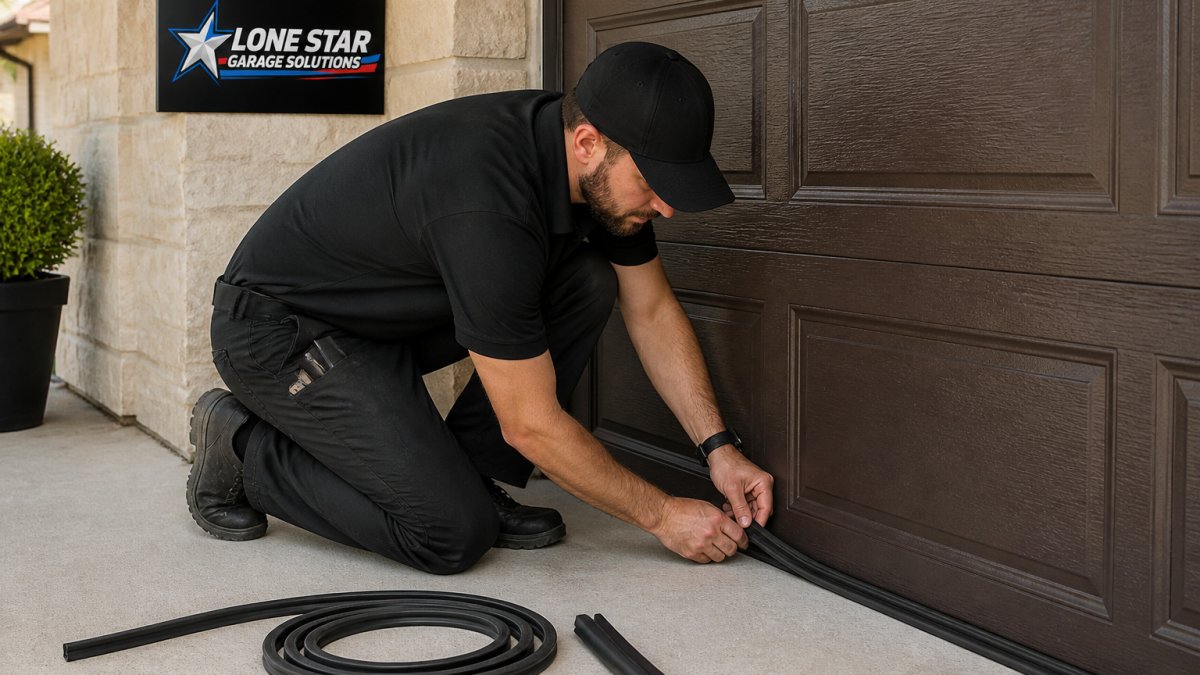
The bottom seal takes the most abuse, flexing with every cycle and sitting in direct contact with moisture and debris. Replacing it takes 45 to 90 minutes, depending on fastener corrosion.
What you'll need:
- Replacement bottom seal kit (rubber or vinyl, sized for your door width)
- Adjustable wrench or socket set
- Screwdriver (Phillips and flathead)
- Pry bar
- New fasteners (bolts and nuts) if the old ones are damaged
Removal and installation:
- Disconnect the garage door opener.
- Open the door fully and support it with locking pliers or a door brace.
- Remove the bolts holding the bottom seal (usually on the inside edges).
- Clean the bottom edge of the door to remove debris and corrosion.
- Slide the new seal into the channel or bolt it into place.
- Tighten all fasteners evenly so the seal sits flush against the ground.
Test the seal by closing the door slowly. It should close smoothly without resistance and block nearly all light at the bottom.
Sealing Side and Top Gaps with a Garage Door Threshold Seal
For gaps larger than 1/4 inch, a threshold seal provides superior protection by mounting to the floor and sides of the frame to create a compression seal as the door closes.
What you'll need:
- Garage door threshold seal kit
- Caulk gun and polyurethane caulk
- Measuring tape
- Utility knife
- Hammer and fasteners (nails or screws included with kit)
Installation:
- Clean the floor and frame thoroughly and remove any old caulk.
- Measure the width of your garage door opening.
- Cut the threshold seal to length with straight cuts at corners.
- Apply polyurethane caulk along the floor where the seal will sit.
- Press the seal firmly into place, working from center outward.
- Nail or screw the seal every 12 inches, starting at center.
- Allow caulk to cure for 24 hours before operating the door.
Threshold seals also work on the sides of the door frame mounted vertically. This dual approach (bottom and side seals) blocks the vast majority of pest entry points.
Garage Door Gap Repair for Larger Openings
If your gaps exceed 1/2 inch or your frame shows significant damage, you need to identify and address the underlying cause before sealing. Sealing over a structural problem won't hold.
Diagnose the root cause:
Large gaps result from one of four problems:
1. Door sag (most common)
A sagging door pulls away from the frame unevenly, creating a larger gap at the top or on one side.
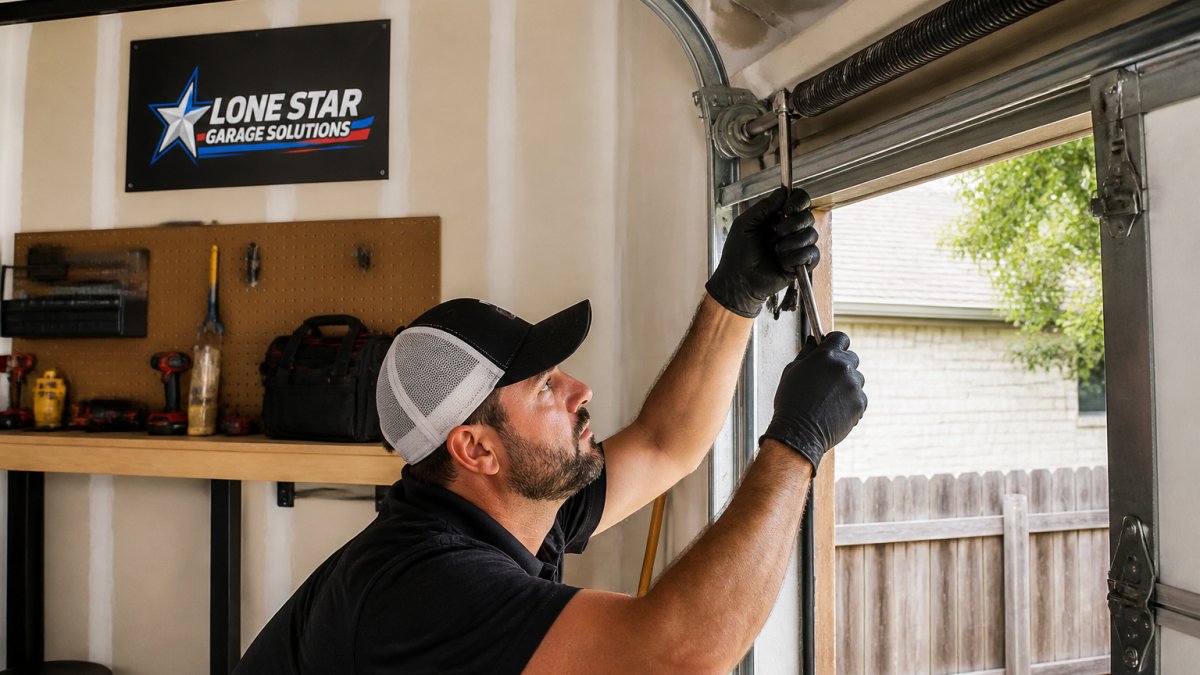
What to do: Tighten all hinge bolts with an adjustable wrench, working from top to bottom evenly.
2. Misaligned or bent track
The door rolls on tracks on both sides. If a track is bent or misaligned, the door won't close flush. Test for track problems:
- Close the door and look at the gap on both sides. Is one side significantly larger than the other? This suggests one track is bent or the door is binding on that side.
- Open the door and look at the tracks themselves. Do you see dents, bends, or visible debris inside the track?
- Manually push the door up and down (with the opener disconnected). Does it move smoothly, or does it stick or bind at a particular height?
What to do: If the track has minor debris, clean it out with a dry cloth.
3. Frame misalignment or foundation settling
The house shifts slightly over time, especially in Central Texas where temperature swings and soil moisture changes cause foundation movement. This tilts the door frame out of square. Test for frame problems:
- Use a level on the top of the closed door. Does it read level, or is one end higher than the other?
- Check the vertical sides of the frame with a level. Are they plumb (perfectly vertical), or do they tilt?
- Look at the gap all the way around the door. Is it roughly the same width on all sides, or much larger in one area?
What to do: If the frame is slightly out of square (less than 1/4 inch difference), weather stripping and a threshold seal may be sufficient.
4. Worn or damaged rollers
Rollers wear out over time, causing the door to sag or bind. Test for roller wear:
- Open the door fully and look at the bottom rollers (the wheels at the base of the door on both sides). Are they visibly flat, cracked, or missing chunks? Damaged rollers are obvious.
- Manually push the door up and down. Does it move smoothly, or does it hesitate or jump at certain points? Hesitation or jumping suggests a roller is catching.
- Listen as the door moves. Do you hear grinding or scraping sounds? These indicate roller damage.
What to do: Worn rollers require replacement, which involves removing the door from the tracks, a job best left to a professional.
When to stop and call a professional:
If your diagnostic testing reveals any of the following, do not attempt repairs:
- Visible bends or dents in the door frame or tracks
- Door sag that doesn't improve after tightening hinges
- Binding or sticking that occurs at the same point every time the door moves
- Damaged or visibly worn rollers
- Frame that is out of level or plumb by more than 1/4 inch
- Any work that requires supporting the door overhead or removing it from the tracks
Lone Star Garage Solutions serves New Braunfels and surrounding Central Texas communities.
When to Call a Professional
You can handle small gaps and routine maintenance yourself. Call a professional when:
- Gaps exceed 1/2 inch on multiple sides
- The frame appears bent or damaged
- The door sags noticeably on one side
- Weather stripping and seals don't resolve pest entry
- The door binds or doesn't close smoothly after your repairs
Lone Star Garage Solutions serves New Braunfels and surrounding Central Texas communities. We assess your garage door system, identify the root cause of gaps, and recommend the most cost-effective solution. Whether you need weather stripping installation, a new bottom seal, frame realignment, or a full door replacement, we handle it with the expertise your Texas climate demands.
A professional inspection typically reveals issues you might miss: misaligned tracks, worn springs under tension, or opener problems that amplify gaps. These issues create safety risks and reduce the effectiveness of any sealing work.
Conclusion
Sealing garage door gaps against Texas pests is a manageable project when you start with the right approach. Identify your gaps, choose the appropriate sealing method, and execute the work carefully. Small gaps respond to weather stripping. Larger gaps need threshold seals. Gaps wider than 1/2 inch signal deeper problems that may require professional attention.
Frequently Asked Questions
How do I know if my garage door bottom seal needs replacing?
Check for visible cracks, tears, or hardening in the rubber seal. If you see daylight under the door when it's closed, or notice insects, dust, or water entering, the seal has failed. In Texas heat, rubber seals typically last 5-10 years before hardening and losing effectiveness. A worn seal won't keep out roaches, spiders, or rodents. If the seal pulls away from the door or hangs unevenly, replacement is overdue.
Can I install a garage door weather stripping seal myself?
Yes, most homeowners can install garage door weather stripping and bottom seals. The job takes 1-2 hours with basic tools: a screwdriver, caulk gun, and utility knife. Remove the old seal by unbolting or unscrewing it, clean the surface, and install the new seal according to the manufacturer's instructions. Measure twice and cut carefully. If your garage door is misaligned or the frame is damaged, call a professional, improper installation can cause the door to bind or seal gaps unevenly.
What's the best way to seal side gaps on a garage door?
Side gaps are typically sealed with foam weather stripping tape or vinyl trim that attaches to the vertical frame. Clean the frame thoroughly, measure the gap width, and choose a weather stripping product rated for your climate. Peel and stick foam is fastest; nail-on vinyl is more durable in Texas heat. Apply the stripping along the full height of both sides, pressing firmly. For gaps wider than 1/2 inch, use threshold seal trim or call a professional to assess whether the door frame needs adjustment.
How do I seal the gap at the bottom of a garage door against pests?
The bottom gap is sealed with a garage door bottom seal (also called a weather seal or gasket) that bolts to the bottom of the door. This rubber or vinyl seal compresses when the door closes, blocking insects, rodents, and water. If your current seal is cracked or missing, replacement is straightforward. Measure the door width, buy a matching replacement seal, unbolt the old one, and install the new seal with bolts spaced evenly. Ensure the seal sits flush against the floor when the door closes.
Pest intrusion through your garage door is a real problem in Texas, but it's also preventable. If your sealing efforts don't stop the pests or if your garage door shows signs of misalignment or damage, Lone Star Garage Solutions can help. We install durable weather stripping, replace worn bottom seals, and align frames to seal every gap. Contact us for a quote on sealing your garage door and protecting your home.