 comparison
Motorized vs Manual Garage Screen Cost
Table of Contents
- Motorized vs Manual Garage Screens: Cost and Performance Overview
- Understanding Motorized Garage Screen Cost
- Understanding Manual Garage Screen Cost
- Manual vs. Motorized Patio Screens: Which Fits Your Needs
- Garage Screen Maintenance: What You Need to Know
- Making Your Decision: Motorized or Manual
- Frequently Asked Questions
Last Updated: October 15, 2026
Motorized vs Manual Garage Screens: Cost and Performance Overview
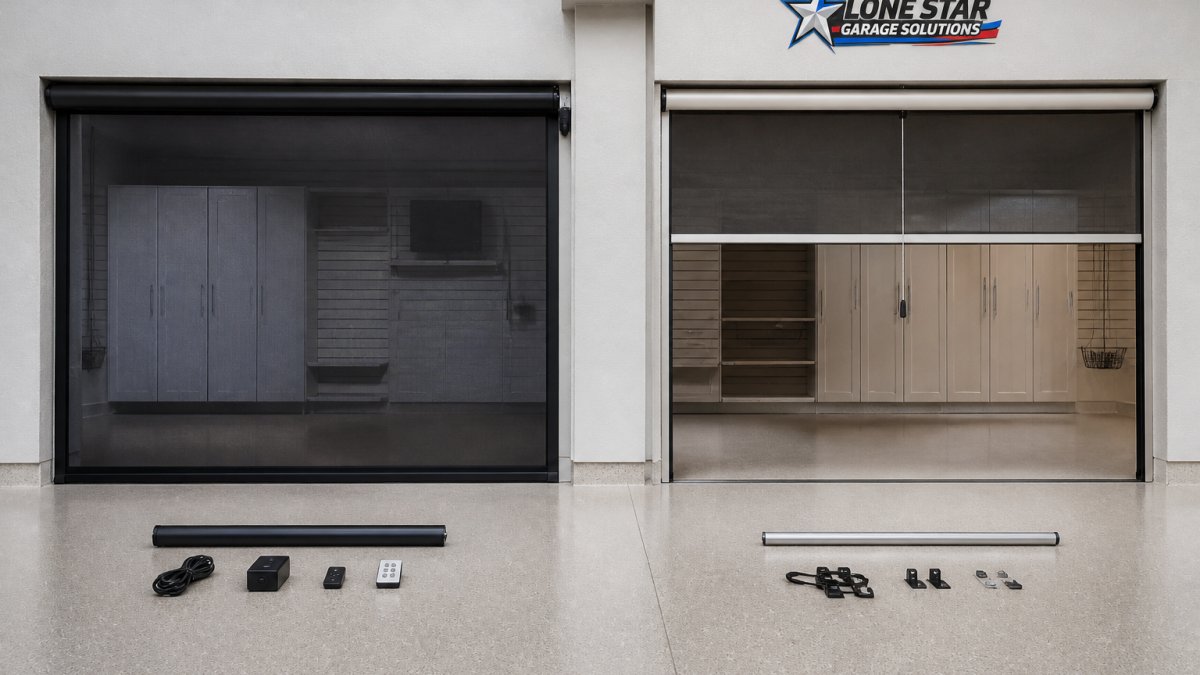
When you're deciding in the motorized vs manual garage screen choice, it comes down to upfront cost, long-term value, and how you actually use your garage. At Lone Star Garage Solutions, we help homeowners in New Braunfels and the Hill Country understand these differences so they can make the right call for their space and budget.
A motorized garage screen operates at the push of a button, no physical effort required. A manual garage screen requires you to pull it down and retract it by hand. The price gap between them is significant. But cost alone doesn't tell the whole story. Your daily habits, garage layout, and how often you actually use the screen matter just as much as the price tag.
| Feature | Manual Garage Screen | Motorized Garage Screen |
|---|---|---|
| Upfront installed cost | $800-$1,500 | $2,500-$4,000+ |
| Daily operation | Pull down / retract by hand | Press button or use remote |
| Maintenance needs | Minimal, no motor or electrical | Motor, wiring, and controls to maintain |
| Best for | Budget-conscious, frequent manual operation OK | Convenience priority, regular daily use |
| Durability | Durable mesh and frame; no moving parts to fail | Motor and controls add failure points |
Understanding Motorized Garage Screen Cost
Motorized screens deliver convenience, but that ease comes with a higher price. Here's what you're actually paying for, broken down by opening size so you can compare quotes apples to apples.
Installed Cost by Opening Size
A motorized garage screen price has three parts: the screen and housing, the motor and controls, and installation labor. Because a wider opening needs a longer tube, a heavier motor, and more mounting hardware, the installed price scales with width.
| Opening Type | Approx. Width | Installed Range |
|---|---|---|
| Single-car | 8-9 ft | $2,200-$3,000 |
| Double-car | 16 ft | $3,200-$4,500 |
| Oversized / RV bay | 18-20 ft | $4,500-$6,500+ |
These are ballpark figures for a standard-height opening with an accessible power source nearby. Your exact number depends on the factors below.
What Separates a Low Quote From a High One
- Electrical work. If there's no outlet or circuit near the header, an electrician may need to run power. That adds labor and a separate trade to the job.
- Mounting surface. A clean, square wood or steel header mounts quickly. Brick, stucco, or a header that's out of square takes more time and hardware.
- Headroom and clearance. The screen housing and tube need space above the opening. Limited headroom can require a different mounting approach or a low-profile housing.
- Controls. A single wall switch is basic. Adding a remote, a second remote, or smart-home integration raises the price.
- Battery backup. Some motors accept a backup battery so the screen still works in a power outage. It's an add-on, not standard on every unit.
Long-Term Operating Costs
A motorized screen's ongoing cost is small but not zero. Power draw is minimal, a motor runs for seconds at a time, so you won't notice it on a utility bill. The real budget items are maintenance and eventual repair:
- Annual upkeep. Cleaning tracks, checking the wiring, and lubricating moving parts. Most of this you can do yourself.
- Motor replacement. A quality motor can last many years, but it is the single most expensive component to replace if it fails. Budget for it as a someday expense, not a monthly one.
- Control repairs. Remotes, wall switches, and receivers are inexpensive to replace compared with the motor itself.
- Screen mesh. The fabric wears from sun and weather and will need replacing before the motor does in most cases.
When the Motor Quits: What Actually Happens
This is the question most cost articles skip. If the power goes out or the motor fails, a motorized screen doesn't simply drop, it stays where it is until you deal with it. Many units have a manual release or crank so you can raise or lower the screen by hand in an outage. Ask about this before you buy; not every model offers it, and it's the difference between a minor inconvenience and a stuck screen.
Repairability matters too. Motors, control boards, and remotes are replaceable parts, so a failure usually means a service call rather than a whole new system. The exception is a motor that's been discontinued, then you may be looking at a full replacement. Choosing a brand with ongoing parts support protects your investment years down the road.
Understanding Manual Garage Screen Cost
Manual screens offer a lower-cost entry point to garage screening. The trade-off is straightforward: you save money upfront, but you handle the operation yourself.
Why Manual Screens Cost Less Upfront
Manual retractable screens have no motor, no electrical wiring, and no remote control system. That simplicity keeps costs down. Installation is faster because the installer only needs to mount the frame and ensure the retraction mechanism works smoothly. No electrical work means no licensed electrician fees, which further reduces labor costs.
For homeowners who don't mind the physical effort of raising and lowering a screen each time, manual systems are an attractive option. You get the same mesh protection from insects and the same ventilation benefits as a motorized system, just without the push-button convenience.
Maintenance and Durability Factors
Manual screens rely on mechanical parts: springs, rollers, and the frame itself. These components are durable and typically last many years with minimal care. Unlike a motor, there's nothing electrical to fail. The screen mesh itself wears over time from sun exposure and weather, but replacement mesh is inexpensive and straightforward.
Your main maintenance task is keeping the tracks and rollers clean so the screen glides smoothly. Occasionally, you might need to adjust the tension or replace a worn roller, but these are minor repairs compared to a motor replacement. If you're comfortable with basic maintenance, a manual screen can serve you reliably for a decade or more.
Manual vs. Motorized Patio Screens: Which Fits Your Needs
The choice between manual and motorized isn't just about price, it's about your lifestyle and how you use the space.
Choose motorized if you use your garage frequently as a living space. If you're opening and closing the screen multiple times a day, the convenience justifies the higher cost.
Choose manual if you open the screen occasionally or if budget is your primary concern. Many homeowners find that manual operation becomes routine quickly.
Consider your garage's location and climate too. In areas with frequent wind, a motorized screen with secure locking is often preferred. For Central Texas heat, both systems work well, but motorized screens are easier to operate during the hottest parts of the day when you want ventilation without effort.
Garage Screen Maintenance: What You Need to Know
Both manual and motorized screens need basic upkeep to stay functional and looking good.
For manual screens, clean the tracks and rollers every few months, especially after windy periods. Use a soft brush and mild soap to remove dust and debris. Check the screen mesh for tears or damage and replace it if needed.
Motorized screens require the same track cleaning, plus annual inspection of the motor and wiring. Listen for unusual sounds during operation, grinding or squeaking can signal a need for lubrication or repair.
Both systems benefit from regular visual inspection. Look for gaps where the screen meets the frame, signs of rust on metal components, or tears in the mesh. Catching small issues early prevents them from becoming expensive repairs.
Making Your Decision: Motorized or Manual
Most articles tell you to pick based on "budget versus convenience." That's true but not useful. Here's a sharper way to decide, based on how you'll actually use the screen.
Match the System to Your Usage Pattern
| If you... | Lean toward |
|---|---|
| Open the screen a few times a week, seasonally | Manual |
| Open it multiple times a day, year-round | Motorized |
| Use the garage as a workshop, gym, or living space | Motorized |
| Screen a rental or a second property you visit occasionally | Manual |
| Have mobility limitations or reach concerns | Motorized |
| Want the lowest upfront spend and don't mind the effort | Manual |
The Questions That Actually Decide It
How often will you really open it? A manual screen is easy to live with if you use it a few times a week.
Who else will operate it? If kids, older family members, or guests will use the screen, push-button operation removes a barrier. A manual screen that's stiff or high to reach may simply go unused.
Is this your forever home or a rental? For a rental or a property you visit seasonally, a manual screen's lower cost and simpler maintenance usually make more sense.
What's your garage's layout? Headroom, mounting surface, and whether power is already nearby all affect which system installs cleanly, and how much either one costs. A tight header or a brick facade can change the recommendation.
The Upgrade Path
You're not locked in forever. Some homeowners start with a manual screen and move to motorized later if their habits change. Others go motorized from day one because they know the garage will be a daily living space. If you're unsure, a manual screen is the lower-risk first step; if you already know you'll use it constantly, skip the middle step and go motorized.
A Note on Climate and Wind
In Central Texas, heat and wind both matter. Either system handles the heat fine, but a motorized screen is easier to operate during the hottest part of the day when you want airflow without effort.
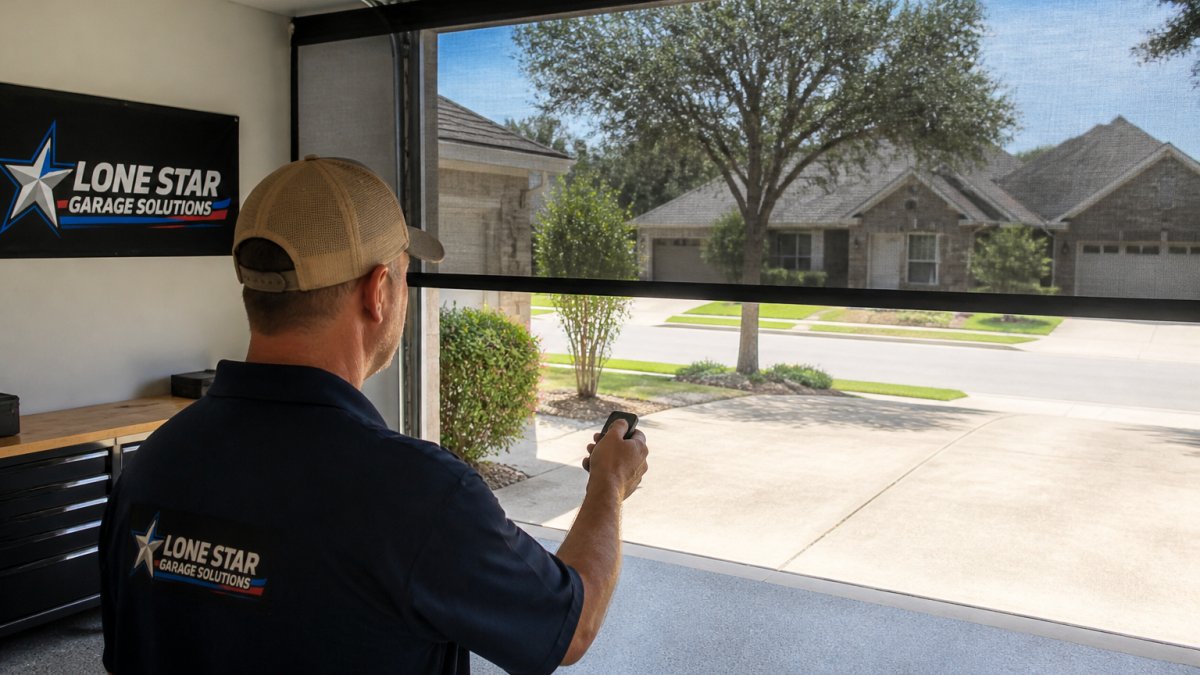
The team at Lone Star Garage Solutions can assess your garage layout, opening size, and usage patterns to recommend the best fit. We carry both Lifestyle manual retractable screens and Templar motorized patio screens, and we'll walk you through the real costs and benefits of each option based on your situation.
Frequently Asked Questions
Are motorized garage screens worth the extra cost?
Whether a motorized garage screen is worth the investment depends on your usage frequency and convenience priorities. If you open and close your screen multiple times daily, motorized operation eliminates manual effort and is often worth the upfront difference. However, if you rarely use the screen or prefer lower maintenance, a manual retractable screen delivers the same insect protection and ventilation at a lower price. Consider how often you'll actually operate it before deciding.
What's the typical installed price range for a motorized garage screen versus a manual one?
Installed costs vary based on opening size, frame material, and local installation factors. Generally, motorized systems cost more than manual retractable screens due to the motor and control components. Pricing depends on your specific garage dimensions, the quality of materials, and your location. Contact Lone Star Garage Solutions for a detailed quote tailored to your project.
How do I know if my garage is compatible with a motorized screen installation?
Most garages can accommodate a motorized screen, but older or non-standard openings may require minor adjustments. The installation team assesses your opening width, height, frame condition, and electrical access to determine compatibility. If upgrades are needed, they'll be identified during the consultation. Reach out to Lone Star Garage Solutions to schedule an assessment and learn what's required for your specific setup.
What maintenance does a motorized garage screen need compared to a manual one?
Manual screens require occasional cleaning and frame inspection but have no electrical components to maintain. Motorized screens need the same mesh and frame care plus periodic checks of the motor, remote batteries, and electrical connections. Both types benefit from regular cleaning to prevent debris buildup. If your motorized screen develops motor issues, professional service may be needed, whereas a manual screen typically only needs simple repairs.
The right garage screen system depends on how you live. Whether you choose manual operation to keep costs down or motorized for everyday convenience, a quality screen transforms your garage into a bug-free, ventilated space. Contact Lone Star Garage Solutions for a consultation and a quote tailored to your garage opening and budget. We'll help you understand the true installed cost and guide you toward the option that makes sense for your home and lifestyle.