
 how-to
Clean Motorized Patio Screens Without Damaging Mesh
Table of Contents
- Why Motorized Patio Screens Need Careful Cleaning
- What You'll Need: Tools and Cleaning Solutions
- Step-by-Step: How to Clean Motorized Patio Screens
- Motorized Screen Maintenance Tips for Long-Term Care
- What to Avoid: Common Mistakes That Damage Mesh
- Seasonal Maintenance for Texas Weather
- Conclusion
- Frequently Asked Questions
Last Updated: September 30, 2026
Why Motorized Patio Screens Need Careful Cleaning
Your motorized patio screens block bugs, reduce glare, and let you enjoy outdoor living without the mess. But the delicate mesh fabric requires the right care, harsh chemicals, high-pressure water, or rough scrubbing can tear it or damage the motor housing. Learning how to clean motorized patio screens without damaging the mesh is simpler than most people think.
Dirt, pollen, and debris build up naturally on retractable patio screens, especially in Central Texas where seasonal weather brings dust storms and pollen spikes. The motor and tracks also collect grime that can slow the retraction mechanism or cause grinding sounds. Regular, gentle cleaning keeps everything running smoothly, you don't need expensive tools or harsh chemicals, just the right technique.
What You'll Need: Tools and Cleaning Solutions
Gather these items before you start. Most are already in your home. Your specific tools may vary slightly depending on your screen's mesh material.
Essential Tools for All Mesh Types
Soft-bristle brush or microfiber cloth A soft-bristle brush is your best tool for initial debris removal. Stiff brushes or scouring pads will snag and tear the mesh. Microfiber cloths work equally well, especially on finer mesh weaves. Keep separate cloths for wet and dry work to avoid spreading debris.
Mild dish soap Plain, gentle dish soap mixed with water is all you need for any mesh type. Use only a few drops per bucket of water, too much soap leaves residue that attracts more dust and creates spots.
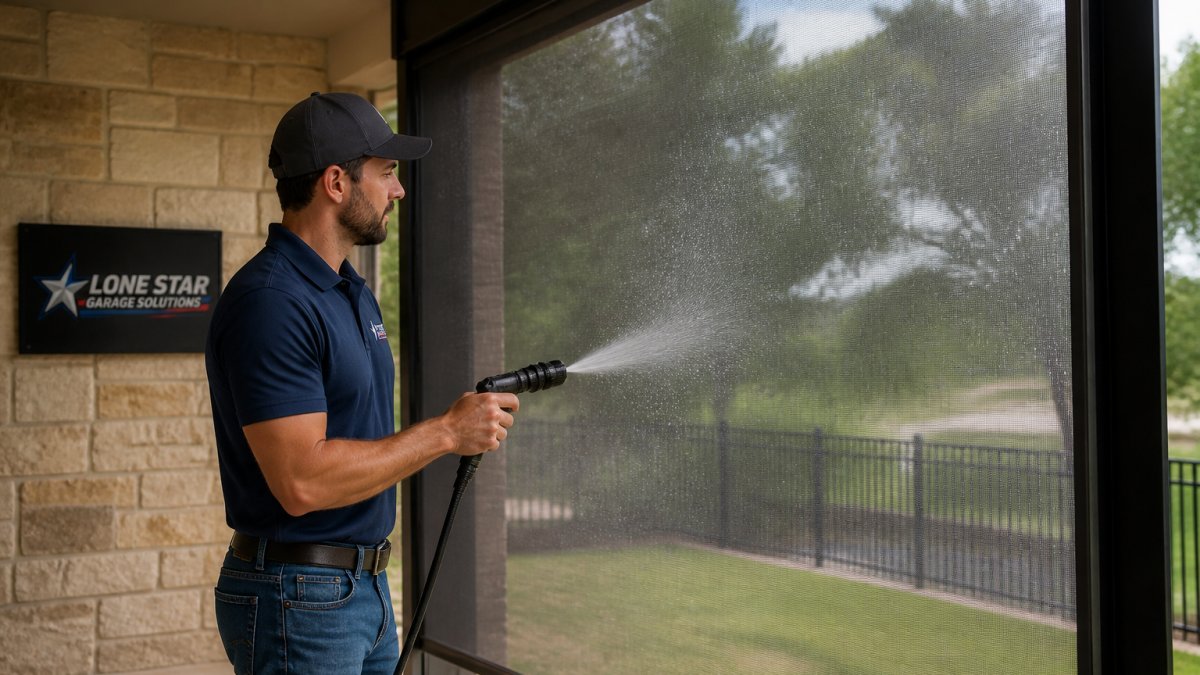
Garden hose with low-pressure spray A standard garden hose on a gentle setting rinses without forcing water into the motor or damaging the mesh. Never use a pressure washer, the high-pressure stream tears any mesh type and forces water into the motorized housing, causing electrical damage.
Soft cloth or towel for drying Microfiber cloths work best because they absorb water without leaving lint. Avoid paper towels, they can snag on the mesh weave.
Optional: silicone spray After cleaning and drying completely, a light silicone spray on the tracks helps the screen retract smoothly. Apply sparingly to moving parts only; too much attracts dust and can gum up the mechanism. Do not apply to the mesh itself.
Material-Specific Considerations
Motorized patio screens use different mesh materials, and each has slightly different care needs:
Fiberglass mesh (most common): Fiberglass is durable and handles gentle cleaning well. Use soft-bristle brushes and mild soap. Avoid scrubbing in circles, brush in one direction only.
Solar or sun-control mesh: Solar mesh is tighter and finer than standard fiberglass, designed to reduce heat and glare. Because of its tight weave, it clogs more easily with pollen and dust. Use a microfiber cloth or very soft brush. Soak the mesh longer with soapy water before gentle wiping to let soap break down buildup. Rinse thoroughly and allow extra drying time because the tight weave holds moisture longer.
Vinyl-coated polyester: Vinyl-coated mesh offers excellent durability and stain resistance. Use only mild soap and water. Avoid vinegar or acidic cleaners, they degrade the vinyl coating.
What to Skip (All Mesh Types)
- Pressure washers: High pressure damages any mesh type and forces water into the motor housing.
- Abrasive scrubbers or steel wool: Tears fabric and can puncture the mesh weave.
- Bleach or harsh chemicals: Corrodes metal frames and weakens or discolors mesh fibers. Bleach is especially damaging to vinyl-coated mesh.
- Vinegar-based solutions: Too acidic for most mesh types and can degrade vinyl coatings.
- Ammonia-based cleaners: Can cause discoloration and weaken certain mesh materials over time.
- Acetone or solvents: Will damage vinyl coatings and can dissolve polyester components.
Step-by-Step: How to Clean Motorized Patio Screens
Step 1: Prepare Your Screen and Work Area
Close the screen fully and lock it in place if your model has a lock feature. This keeps it stationary while you work and protects the motor from accidental activation.
Step 2: Remove Loose Debris from Retractable Screens
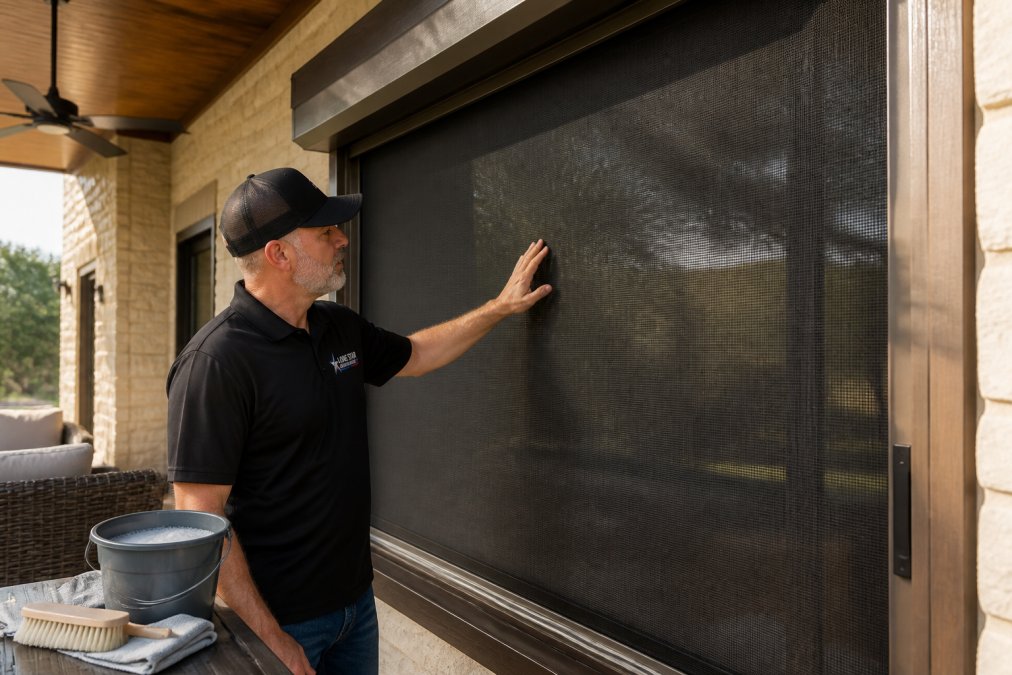
Use your soft-bristle brush to gently sweep away loose pollen, dust, and debris from both sides of the mesh, brushing in one direction. Pay special attention to the zipper side tracks and motor housing area. For stubborn pollen buildup, use a slightly damp cloth. Work from top to bottom so gravity helps debris fall away naturally.
Step 3: Apply Gentle Cleaning Solution
Mix warm water with a few drops of mild dish soap in a bucket. Dip your soft-bristle brush lightly into the soapy water, squeeze out excess, and brush gently in one direction. Let the soap do the work, don't press hard. Work methodically across the entire screen surface, paying extra attention to the bottom edge, zipper tracks, and where the mesh meets the frame.
Step 4: Rinse and Dry Thoroughly
Use your garden hose on a low-pressure setting, holding it at least 12 inches from the mesh and rinsing gently from top to bottom. Rinse both sides thoroughly to remove all residual soap. Pat the mesh dry with a soft cloth or microfiber towel without wringing or twisting. Let the screen air dry completely in sunlight before retracting it, this usually takes 1-2 hours depending on humidity and temperature.
Motorized Screen Maintenance Tips for Long-Term Care
Regular maintenance extends the life of your motorized screen and prevents costly repairs. The key is protecting both the mesh and the motor housing during and after cleaning.
Protecting the Motor During Cleaning
Your motorized screen's motor is an electrical component vulnerable to water intrusion. When cleaning, keep water away from the motor housing, the box or cylinder where the retraction mechanism connects to the frame. If your screen model has an exposed motor housing, cover it loosely with a plastic bag or cloth before you begin. Never spray directly at the motor housing; angle your hose spray toward the mesh itself, letting water flow downward and away from electrical components.
Troubleshooting Stubborn Residue Without Damage
Bird droppings and tree sap: Soak the affected area with mild soapy water for 5-10 minutes to soften the residue, then gently wipe with a soft cloth. Repeat the soak rather than increasing pressure.
Drying Protocol to Prevent Mold and Mildew
Incomplete drying is the leading cause of mold growth on motorized screens in humid climates. Pat dry with a microfiber cloth, working from top to bottom. Air dry in sunlight if possible, UV light naturally inhibits mold growth. Allow at least 2-3 hours of drying time on humid days, 1-2 hours on dry days. Wipe the frame edges, zipper tracks, and motor housing area with a separate dry cloth.
Inspection and Early Repair
Inspect the mesh monthly for small tears or damage. Small rips can be patched with mesh repair tape if addressed within days. Check the motor housing for debris or corrosion, if you notice rust spots, water stains, or discoloration, contact a professional. Test the retraction mechanism monthly by opening and closing the screen fully. It should move smoothly without grinding, hesitation, or unusual sounds.
Seasonal Frequency and Track Maintenance
Clean your screens every 3-6 months under normal conditions. In high-pollen seasons or dusty areas, increase frequency to every 4-6 weeks. After storms or dust events, do a light cleaning within a few days. After cleaning and drying completely, apply a light coat of silicone spray to the tracks and moving parts, wiping away any excess. During winter months or extended periods when you won't use the screen, retract it fully and store it to protect the mesh from weather exposure and UV damage.
What to Avoid: Common Mistakes That Damage Mesh
High-pressure washers: Pressure washers tear mesh and force water into the motor. Use only a gentle garden hose spray.
Seasonal Maintenance for Texas Weather
Spring (pollen season): Clean screens every 4-6 weeks during peak season. A slightly damp cloth picks up pollen better than a dry one.
Conclusion
Motorized patio screens are an investment in your outdoor living space. They work best when treated gently and maintained regularly. Soft brushes, mild soap, low-pressure water, and patience are all you need to keep them clean and functional.
Frequently Asked Questions
Can I use a pressure washer on motorized patio screens?
No. High-pressure washers will tear the mesh and damage the motorized housing and electrical components. Always use a low-pressure rinse from a standard garden hose, or hand-wash with a soft brush and mild solution. Pressure washers are one of the fastest ways to destroy a motorized screen system.
What is the best cleaning solution for retractable screen mesh?
A mixture of warm water and a few drops of mild dish soap works best. Avoid bleach, vinegar, abrasive cleaners, and anything with harsh chemicals, these degrade the mesh fibers and protective coating. For stubborn pollen buildup, let the soapy solution sit for a minute or two before gently brushing and rinsing with fresh water.
How often should I clean my motorized patio screens?
Clean your screens at least twice a year, especially in spring and fall when pollen is heaviest. If you live in a dusty area or near trees, monthly cleaning keeps debris from accumulating and damaging the weave. Regular light cleaning prevents the need for aggressive scrubbing later.
Can I clean motorized screens without removing them from the housing?
Yes, and it's actually safer. You can hand-wash the mesh while it's in the frame using a soft brush and mild soapy water. Avoid spraying directly at the motorized housing or zipper side tracks. If you need to remove the screen, consult your system's manual or contact a professional to avoid damaging the retraction mechanism.