 comparison
Motorized Garage Screen Repair Services: Pricing Guide
Table of Contents
- What Affects Motorized Garage Screen Repair Pricing
- Motorized Garage Screen Repair Cost Breakdown
- Garage Screen Motor Repair and Replacement
- Motorized Garage Screen Replacement Cost vs. Repair
- Getting a Motorized Screen Repair Quote
- Maintenance Tips to Avoid Costly Repairs
- Conclusion
- Frequently Asked Questions
Last Updated: October 21, 2026
What Affects Motorized Garage Screen Repair Pricing
When your motorized garage screen needs repair, the final bill depends on several interconnected factors. Homeowners who understand these variables upfront rarely get surprised by their estimates.
The most common mistake is assuming all motorized garage screen repairs cost the same. A simple mesh replacement runs far less than a motor replacement, and a stuck screen costs differently than a track that's jumped its guide.
Screen size and garage opening dimensions
Larger garage openings require more materials and labor.
A bigger screen also means more weight on the motor and mechanical components, and that stress can cause multiple failures at once.
Custom openings, angled garages, arched entryways, or non-standard dimensions cost more to repair because technicians may need to fabricate parts or adapt standard components. Mention any unusual shape when requesting your estimate.
Motor and operating system type
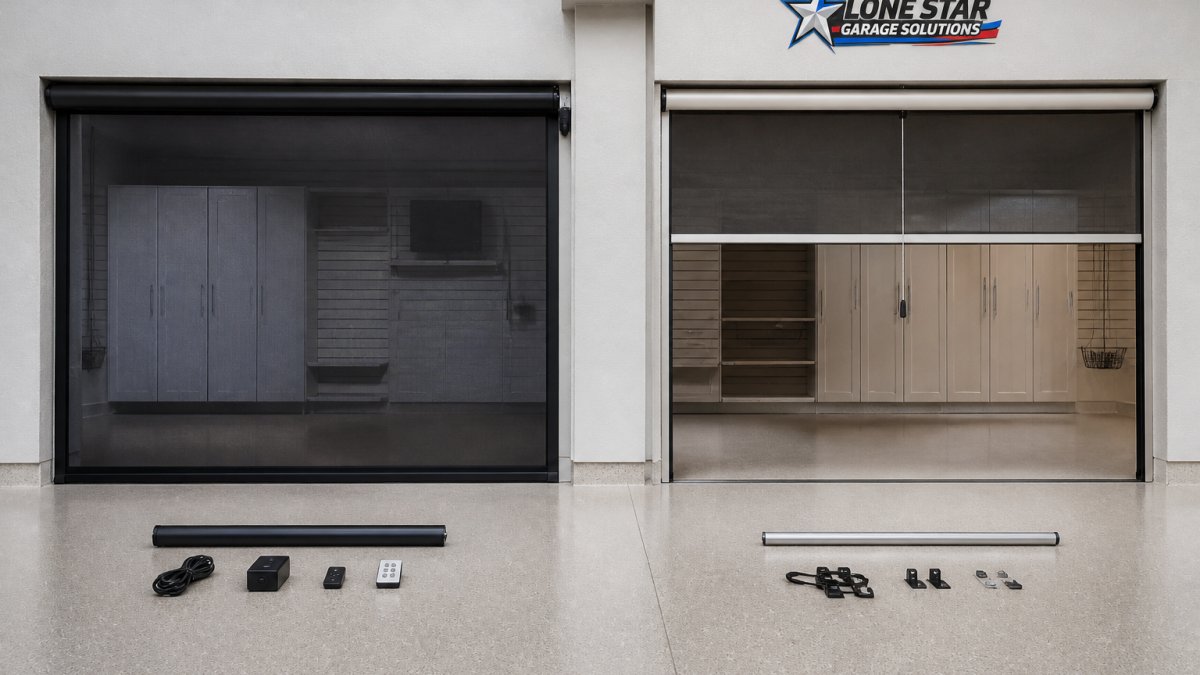
A single-motor system (common on smaller openings) is simpler to diagnose and repair than a dual-motor setup, which balances larger screens better but adds complexity and cost when repairs are needed.
The brand and age of your motor matter too.
Remote control systems, wall switches, and electrical connections vary by installation. Electrical issues, faulty remotes, broken switches, or wiring problems require different troubleshooting than mechanical failures.
Screen mesh material and condition
Standard fiberglass mesh is affordable to replace, while heavier-duty or specialty mesh (for wind resistance or superior insect protection) costs more.
The condition of the mesh also affects repair decisions. Small tears can be patched, but extensive damage, fading, or deterioration usually means full mesh replacement makes more sense.
Motorized Garage Screen Repair Cost Breakdown
Most repair estimates split into three buckets: the diagnostic visit, labor, and parts. Here's how common motorized screen failures break down and how to read a quote line by line.
Service call and diagnostic fees
Many companies charge a diagnostic or trip fee to inspect the screen, test the motor under load, check the tracks, and confirm mesh condition before quoting a repair.
A thorough diagnostic separates a simple fix from a major one. A screen that won't move could be a dead remote battery, a tripped breaker, a failed capacitor, or a seized motor, and those outcomes land in very different price ranges.
Itemized repair ranges by fault
Use these ranges as planning benchmarks, not quotes. Actual pricing depends on your opening size, motor brand, parts availability, and local labor rates, and any reputable provider will confirm the number after inspection.
- Mesh or fabric replacement: Usually the lowest-cost repair. Patching a small tear is cheaper than a full panel swap; a full re-screen on a double-car opening costs more than a single-car opening because of material and labor time. Specialty or wind-rated mesh runs higher than standard insect mesh.
- Track adjustment or realignment: Moderate cost. A screen that has jumped its guide or binds in the track often needs realignment, roller or guide replacement, and a re-tension. Left alone, a misaligned track strains the motor and can turn a cheap fix into an expensive one.
- Spring, cable, or tension component replacement: Moderate cost, and often the hidden cause behind "the motor is struggling." A weak spring or stretched cable forces the motor to work harder, so technicians frequently find these worn alongside a motor complaint.
- Remote, wall switch, or control board: Low to moderate cost depending on whether it's a battery, a pairing issue, a failed switch, or a control board. Control boards cost more than remotes and are model-specific.
- Electrical fault (wiring, breaker, capacitor): Varies widely. A tripped breaker or loose connection is a quick fix; a failed capacitor or damaged wiring run takes more time and parts.
- Motor repair (bearings, gears, capacitor): Higher cost. Rebuilding internal components is sometimes possible but only when parts are available and the housing is sound.
- Full motor replacement: Typically the most expensive single repair. It includes removing the old unit, installing the new one, and re-testing the whole system, and dual-motor setups cost more than single-motor ones.
Labor and parts pricing
Labor tracks complexity and time. A mesh swap might take one to two hours; a motor replacement or track realignment can run three to five hours. Some shops bill hourly, others quote flat fees per job. Parts pricing swings widely by brand and model: a common motor with in-production parts is cheaper and faster to source than a discontinued unit.
Your estimate should itemize parts separately from labor so you can compare quotes apples to apples.
How screen size, brand, and system type shift the number
Opening width is the biggest multiplier. A standard single-car opening (roughly 8 to 9 feet wide) uses less mesh and labor than a double-car opening (16 to 18 feet), and the larger screen's extra weight stresses the motor, tracks, and springs, so repairs often uncover secondary wear.
Brand and system type matter just as much. Single-motor systems are simpler to diagnose than dual-motor setups, which add a second motor and more controls to test.
Garage Screen Motor Repair and Replacement
The motor is the heart of a motorized garage screen system. When it fails, your screen won't operate at all.
Motor problems show up as slow operation, grinding sounds, the screen stopping mid-cycle, or complete failure to open or close.
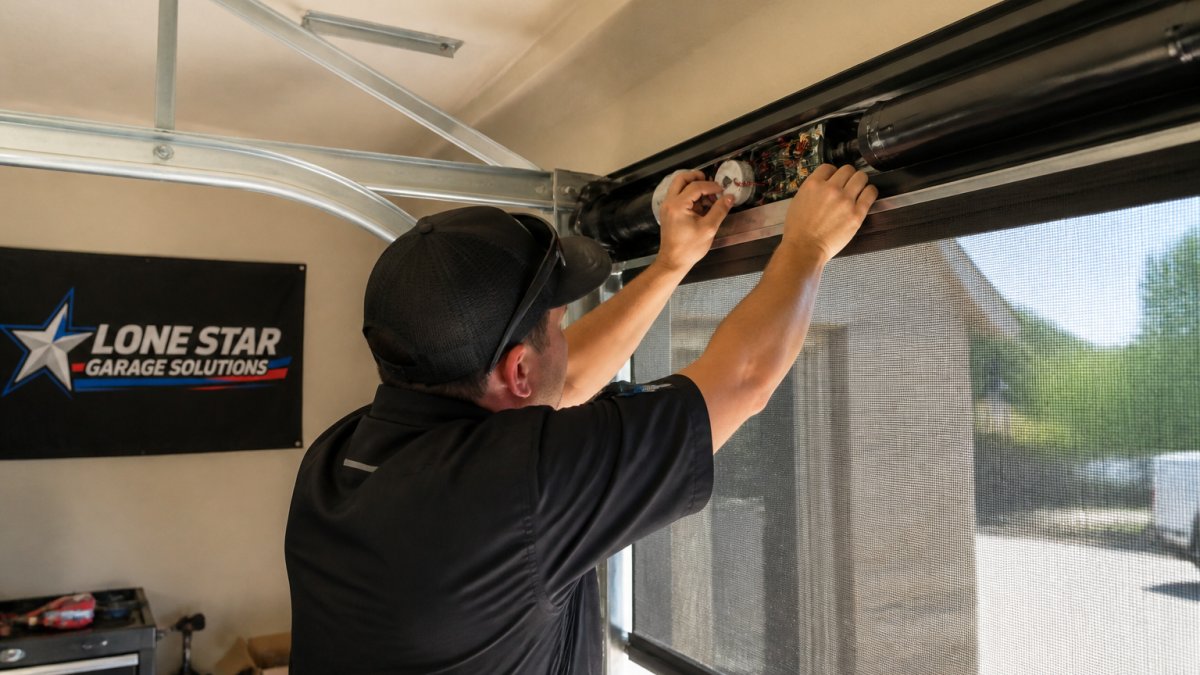
Motor repair sometimes means replacing internal components, bearings, capacitors, or gears.
The age of your motor affects this decision.
Motorized Garage Screen Replacement Cost vs. Repair
At some point, repair costs add up to replacement costs. Knowing when to replace instead of repair saves money and frustration.
A motorized garage screen replacement includes a new screen assembly, motor, tracks, and installation.
Consider replacement if your screen has multiple failing components, the motor is beyond repair, the mesh is severely damaged, or the system is very old.
Repair makes sense for isolated problems, a single torn panel, a stuck track, or an electrical connection issue.
Getting a Motorized Screen Repair Quote
A repair quote is only useful if you can compare it to another one. Providers quote differently: one bundles the diagnostic into the repair, another bills it separately; one lists parts by model number, another gives a lump sum. The checklist below standardizes the comparison so you're judging the same things across every quote.
What to ask before scheduling service
Describe the symptom precisely when you call. Does the screen not move at all, move slowly, grind, stop mid-cycle, or fail to respond to the remote? Those details tell the technician which tools and parts to bring and often shorten the visit.
Confirm these basics up front:
- Is there a diagnostic or trip fee, and does it apply to the repair if you approve the work?
- Is there a minimum labor charge, and does it apply to small jobs like a remote or switch replacement?
- Do you serve my area, and what's the typical lead time for a repair visit?
- Will I get a written estimate before work starts, and will you call me before doing anything beyond the quoted scope?
- Are parts priced at list, or is there a markup, and are they in stock or special-order?
Quote-comparison checklist
Line up two or three quotes against these categories. A quote that's missing a line is a red flag, not a bargain.
- Diagnostic/trip fee: stated amount, and whether it's credited toward the repair.
- Labor: hourly rate or flat fee, estimated hours, and any minimum charge.
- Parts: each part named with model number, price, and whether it's in stock or ordered.
- Scope: exactly what's being repaired and what's excluded (for example, "motor replacement only, track wear noted but not included").
- Warranty: labor warranty length, parts warranty length, and whether the manufacturer or the shop backs each.
- Completion time: expected visit length and, for special-order parts, the lead time.
- Payment terms: deposit required, accepted methods, and whether the balance is due on completion.
A low quote that omits a needed part or a labor warranty isn't actually cheaper. Compare totals only after every line is filled in.
Repair versus replacement: a quick decision guide
Before you commit to a repair, run this comparison:
- Repair cost vs. replacement cost: if the repair approaches roughly half or more of a full replacement, replacement often wins on long-term value.
- Screen age: an older system near the end of its expected life is a weaker repair candidate than a newer one with an isolated failure.
- Parts availability: a discontinued motor or control board can mean long lead times and higher cost, which tilts toward replacement.
- Warranty status: if the system is still under a manufacturer warranty, check coverage before paying out of pocket; if it's out of warranty, factor that into the math.
- Number of failing components: one failed part favors repair; multiple failures at once favor replacement.
Warranty coverage and service guarantees
Ask what the repair warranty covers and for how long. Labor warranties are commonly short-term, while parts carry separate manufacturer coverage. Clarify who honors each: the shop for labor, the manufacturer for parts.
When you contact Lone Star Garage Solutions for a quote, we'll walk you through the diagnostic findings, itemize parts and labor, and explain what's covered and for how long, so you can compare our estimate against any other on equal terms.
Maintenance Tips to Avoid Costly Repairs
Regular maintenance catches small problems before they become expensive repairs.
Inspect your screen monthly for tears in the mesh, debris in the tracks, or visible frame damage.
Test your screen's operation regularly.
Clean the tracks and frame with a soft brush or cloth.
Lubricate moving parts according to the manufacturer's recommendations.
Test your remote control and wall switch regularly. Replace batteries in remotes as needed.
Conclusion
Motorized garage screen repair pricing depends on screen size, motor type, the specific problem, and the parts needed. Diagnostics identify exactly what's wrong so you get an accurate estimate.
Understanding these factors helps you evaluate repair quotes and decide whether to repair or replace. When you're ready to move forward, contact Lone Star Garage Solutions for a detailed repair estimate tailored to your motorized garage screen.
Frequently Asked Questions
How much does motorized garage screen repair typically cost?
Motorized garage screen repair costs depend on the fault, screen size, motor type, and your location. Service calls include diagnostics to identify the problem. Labor and parts vary widely based on whether you need mesh replacement, motor repair, track adjustment, or electrical troubleshooting. Contact a local repair service for a quote tailored to your specific issue and system.
What is the difference between motorized garage screen repair cost and replacement cost?
Repair costs address specific faults like mesh tears, motor failure, or track misalignment. Replacement cost covers an entirely new motorized system. If your screen is aging, has multiple issues, or the motor is beyond repair, replacement may offer better long-term value. A professional can help you compare repair versus replacement based on your system's condition and age.
Can a motorized garage screen motor be repaired, or does it need replacement?
Many motor issues can be repaired, including electrical problems, switch failures, and mechanical wear. However, if the motor is burned out or severely damaged, replacement is usually the better option. A diagnostic service call will determine whether repair is practical. Motors vary by system type, so replacement costs depend on your specific screen brand and model.
What should I ask a contractor before scheduling motorized screen repair service?
Ask about the service call fee, diagnostic process, and estimated repair timeline. Confirm whether they service your specific screen brand and system type. Ask if they offer same-day service and what warranty or guarantee covers the repair. Request an itemized quote that breaks down labor and parts costs. Also ask about preventive maintenance to help you avoid future repairs.