 listicle
Garage Cooling Solutions for Home Gyms That Actually Work
Last Updated: November 5, 2026
Quick Summary
Effective garage cooling for a home gym starts with the door and airflow, not a bigger AC unit. Insulate or screen the door, add shade and ventilation, then choose fans for mild heat, a portable or window AC for single bays, or a mini-split heat pump for year-round comfort.
- A garage runs hot because the door is the largest, least insulated wall and faces the sun.
- For comfort cooling, aim for roughly 4 to 6 air changes per hour in your garage.
- A single-bay garage of about 240 square feet needs an exhaust fan in the 150 to 250 CFM range.
- Portable ACs drain condensate, are noisy, and dual-hose models perform better in a hot garage.
- Most mini-splits in the 12,000 to 18,000 BTU range want a dedicated 240-volt circuit.
Table of Contents
- Why Your Garage Gym Gets So Hot
- Garage Cooling Solutions Compared: Fans, Portable AC, and Mini-Splits
- Garage Gym Fans and Air Circulation That Make a Difference
- Home Gym Air Conditioning: Portable Units vs. Mini-Splits
- DIY Garage Cooling Solutions for Home Gyms You Can Install Yourself
- Cheap Garage Cooling Solutions for Home Gyms That Still Deliver
- Get a Quote on a Garage Setup Built for Texas Heat
- Frequently Asked Questions
Why Your Garage Gym Gets So Hot
A garage gym gets so hot because the garage door is usually the largest, least insulated wall in the house, and it faces the sun for hours every afternoon. Add a concrete slab that holds heat, no ductwork, and a door that opens to a driveway full of radiant heat, and you have a room that runs hotter than the rest of the house all summer.
We hear this constantly from homeowners around New Braunfels: a workout that feels fine at 7 a.m. feels dangerous by 2 p.m. This guide covers garage cooling solutions for home gyms that actually move the needle.
Here is the part most guides skip: the door itself is often the biggest heat source. Fix the envelope first, and every cooling method below works better and costs less to run.
Garage Cooling Solutions Compared: Fans, Portable AC, and Mini-Splits
The right garage cooling approach depends on how hot your garage gets, how you use the space, and whether you own or rent. Here is the short version before we dig into each option.
| Solution | Best For | Cooling Power | Install Effort | Watch Out For |
|---|---|---|---|---|
| Box or wall fans | Mild heat, airflow only | Low | None | Does not lower air temperature |
| Whole-garage ventilation fan | Trapping hot air, smell, humidity | Medium | Moderate | Needs a vent path |
| Portable AC | Renters, single-bay garages | Medium | Low | Needs a window or vent, drains water |
| Window AC | Garages with an existing window | Medium | Low to moderate | Window must fit the unit |
| Mini-split heat pump | Year-round comfort, larger garages | High | Professional install | Electrical work required |
| Insulated door plus screens | Everyone, as a first step | Foundational | Varies | Do this before buying equipment |
Quick picks: Fans and ventilation for mild heat and airflow. Portable AC for renters and single bays. A mini-split heat pump for year-round training. Insulation and a screened door as the foundation under all three.
Garage Gym Fans and Air Circulation That Make a Difference
Garage gym fans do not cool the air, but they make a hot room feel far more bearable by moving air across your skin and pushing trapped heat out. The trick is picking the right fan, sizing it to the space, and aiming it correctly.
A common mistake is buying one small box fan and pointing it at the bench. You want air moving through the space, not swirling in one corner. Here is how we would set it up:
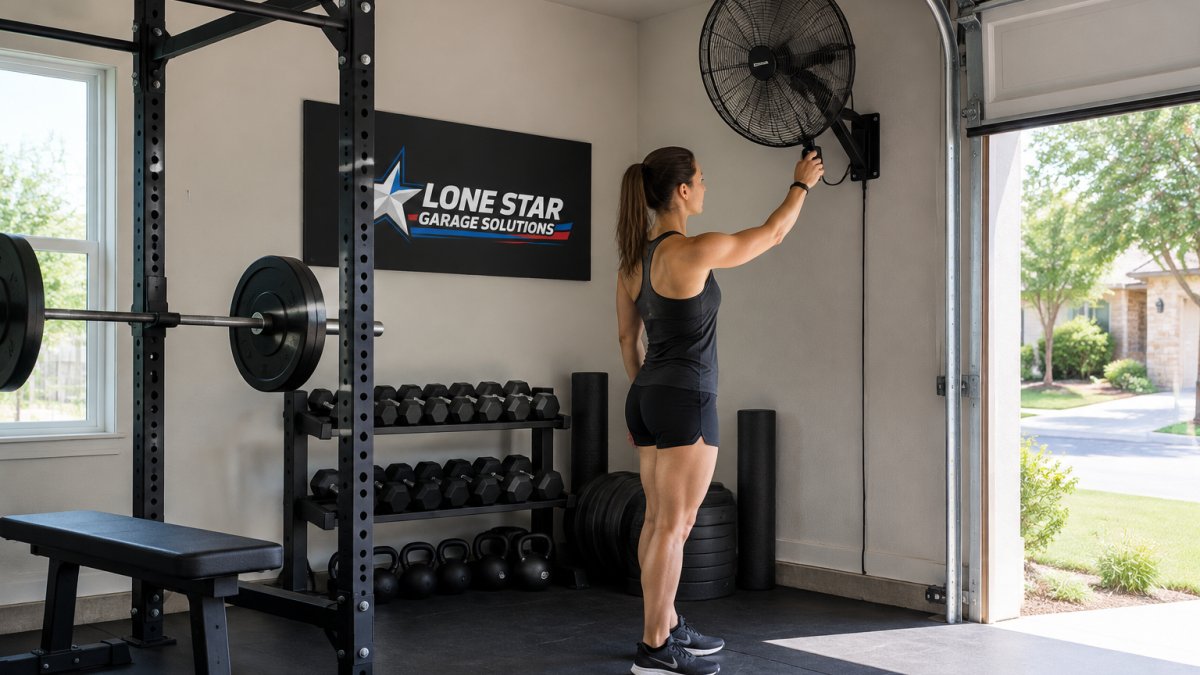
- Wall-mounted oscillating fans keep the floor clear and sweep air across the whole workout area.
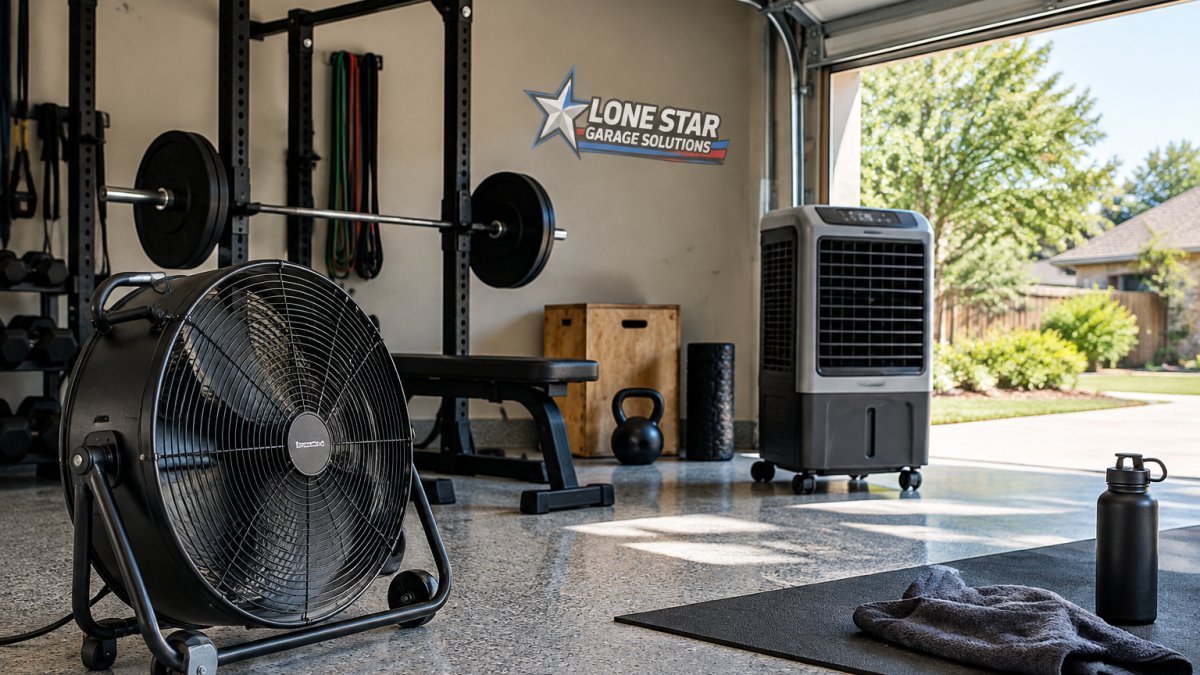
- A high-velocity floor fan aimed at your body during heavy sets makes the biggest difference in perceived comfort.
- A ceiling fan helps mix the hot air near the ceiling with the cooler air at floor level.
- An exhaust or whole-garage fan pulls hot air out and draws fresh air in, which is what actually drops the temperature.
Sizing airflow to your garage. For comfort cooling, aim for roughly 4 to 6 air changes per hour. A single-bay garage of about 240 square feet with a 9-foot ceiling holds about 2,160 cubic feet, so four air changes per hour means moving about 144 CFM and six means about 216 CFM. A typical 20-inch box fan moves roughly 2,000 to 3,000 CFM at full speed, so one good fan is plenty for a single bay, the problem is almost never total CFM, it is placement and short-circuiting. For exhaust, that same garage needs a fan in the 150 to 250 CFM range. Measure length times width times ceiling height before you shop.
Placement matters as much as power. Put intake fans low and exhaust high, because hot air rises.
Noise and dust are real trade-offs. High-velocity floor fans are loud enough to drown out a podcast, so many homeowners run them only during working sets and switch to a quieter wall fan for warm-ups.
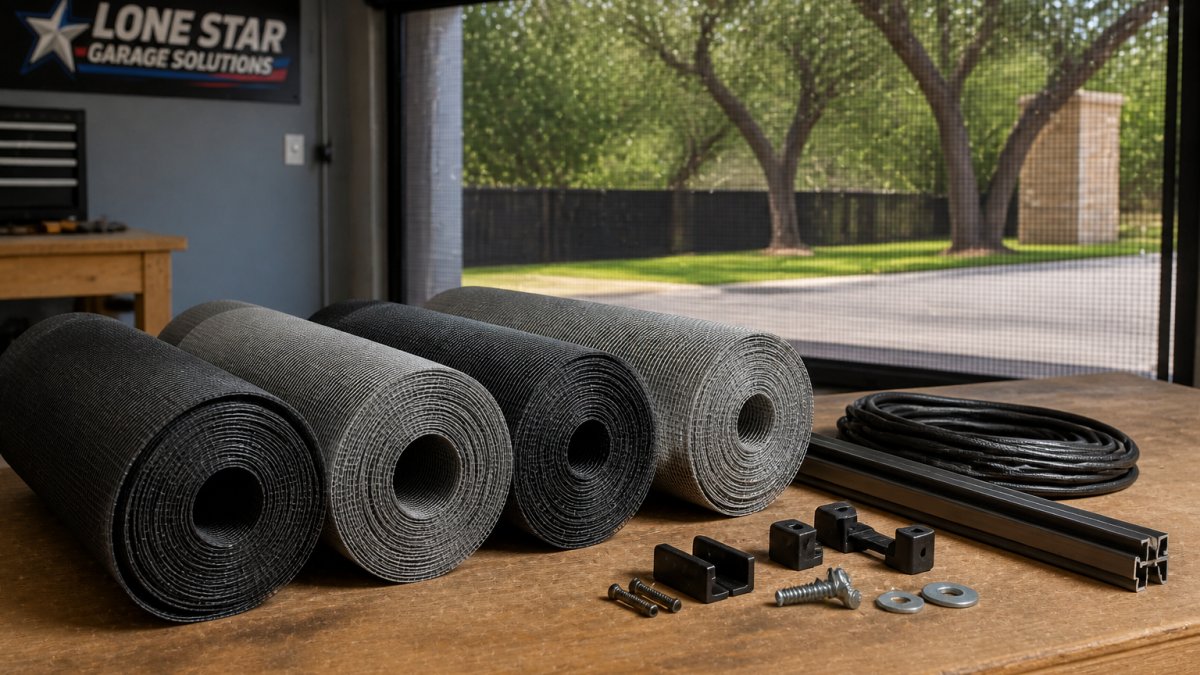
For homeowners who want airflow without leaving the door wide open to bugs, retractable garage screens let air move while keeping pests out.
The man is American.
Home Gym Air Conditioning: Portable Units vs. Mini-Splits
Home gym air conditioning comes down to a simple split: portable and window units you can install yourself, or a ductless mini-split that a professional mounts on the wall.
Portable air conditioners roll where you need them and need only a window or vent for the exhaust hose.
Window air conditioners are cheaper per BTU and more efficient than portables, but only work if your garage already has a window that fits the unit.
Ductless mini-split heat pumps, such as a wall-mounted MRCOOL unit, cool in summer and heat in winter, so your gym works year-round.
Electrical safety is where DIY goes wrong. Garages often have limited circuits, and the panel may already be near capacity.
**Operating cost depends on the unit's rated wattage, your local electric rate, and how many hours you run it.
Watch out: never block the pressure-relief gap at the bottom of the door or seal a garage so tightly that a gas water heater or furnace inside it cannot vent.
If your garage also traps humidity, look at a system that pairs cooling with ventilation. And if the door itself is the heat source, an insulated door or a foam-panel kit makes any AC unit below work less, our guide to garage door insulation kits covers R-value and installation, and how to cool down a hot garage walks through the passive fixes that come before equipment.
DIY Garage Cooling Solutions for Home Gyms You Can Install Yourself
DIY garage cooling solutions for home gyms start with the cheapest, highest-impact fixes: block the heat before it gets in, then move the air you have. You can do most of these in a weekend with basic tools.
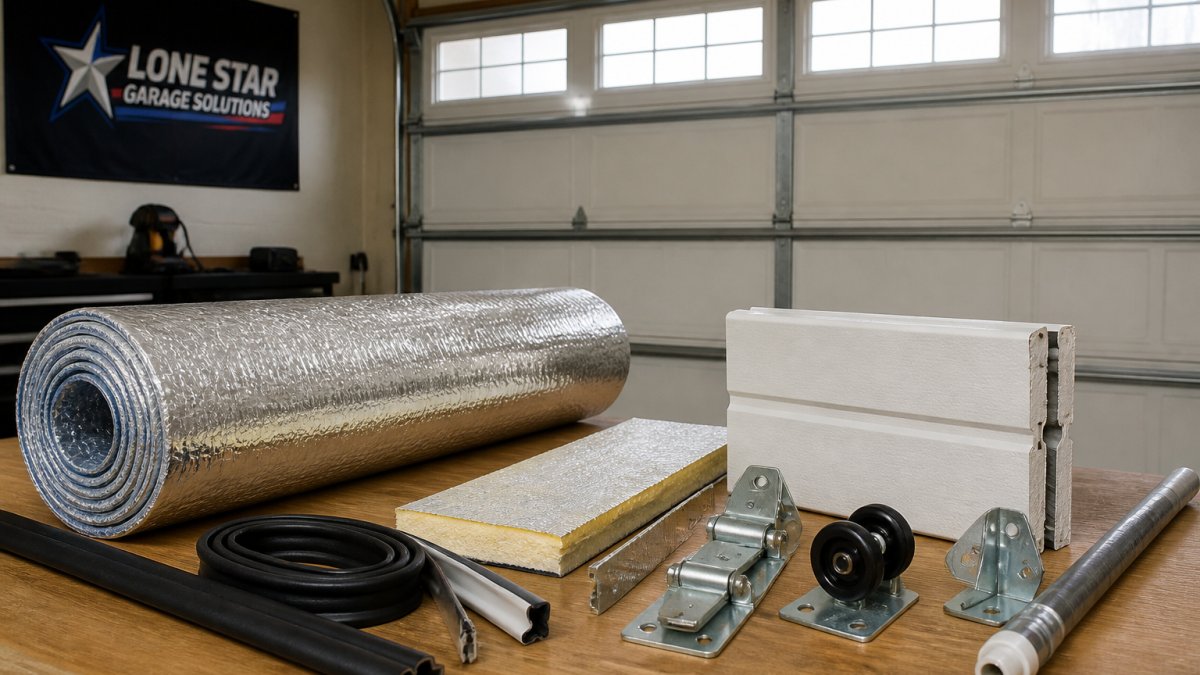
Start with the door. An insulated garage door or a foam-panel insulation kit on the inside of the door is the single best DIY upgrade for a hot garage. Foam panels are cut to fit and pressed into the door's recessed sections. A radiant barrier stapled to the ceiling or laid in the attic above the garage reflects heat before it radiates down.
Then reduce heat gain from the sun:
- Add shade over west- and south-facing windows or the door with an awning, shade sail, or a tree.
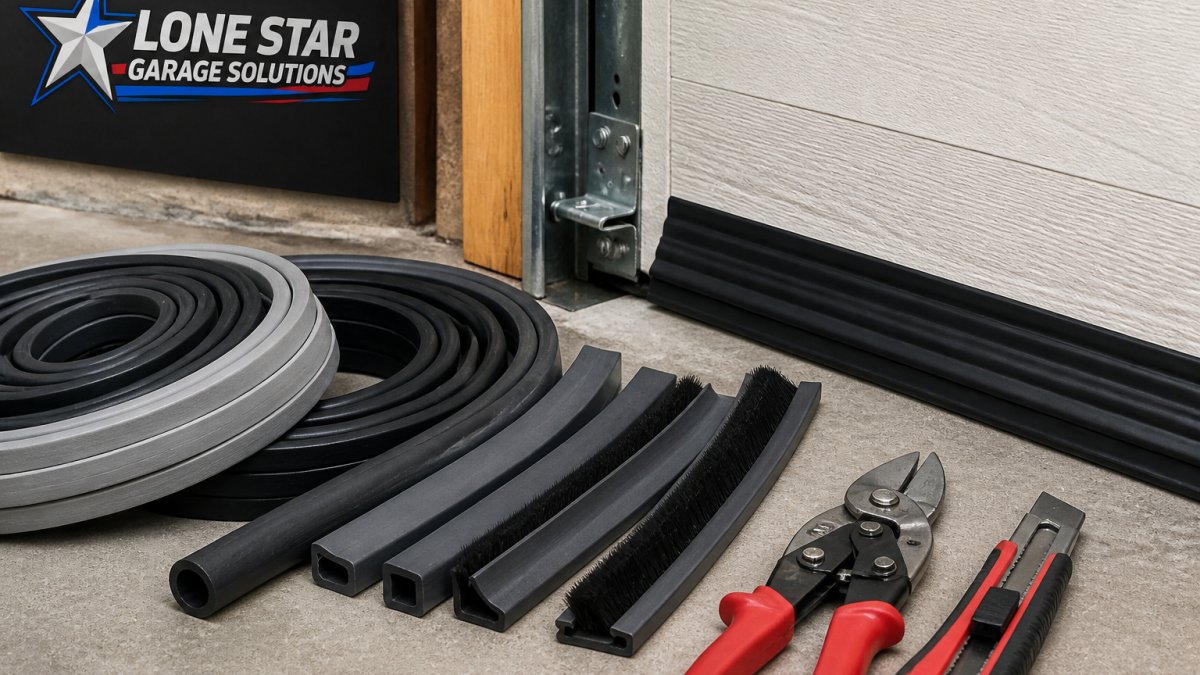
- Seal gaps around the door with weatherstripping so hot outside air stays out.
- Crack the door and run an exhaust fan in the evening to flush the day's heat.
- Set up a box fan or high-velocity fan to pull cool night air through.
For a beginner-friendly walkthrough of insulating the door, our guide to garage door insulation kits covers tools, measurements, R-value, and installation steps. If you want the full playbook of passive cooling methods, see how to cool down a hot garage.
Watch out: never block the pressure-relief gap at the bottom of the door or seal a garage so tightly that a gas water heater or furnace inside it cannot vent. If your garage houses a fuel-burning appliance, leave proper ventilation.
Cheap Garage Cooling Solutions for Home Gyms That Still Deliver
Cheap garage cooling solutions for home gyms focus on timing, airflow, and small habits rather than equipment. You can cut the misery on a budget by working with the heat instead of against it.
- Train early or late. Move your workout to the coolest part of the day and skip the afternoon peak.
- Use a box fan plus a wet towel. A damp towel draped over a fan or around your neck speeds cooling through evaporation.
- Open the door and window together to create cross-ventilation, and run an exhaust fan to pull hot air out.
- Hydrate and pre-chill. Cold water, a chilled towel, and a fan aimed at you make a hot session safer.
- Add shade and seal gaps so the garage starts cooler before you walk in.
- Keep the door closed during the hottest hours to keep the sun from baking the slab, then open it up in the evening.
Evaporative cooling, sometimes called a swamp cooler, works in dry air but adds moisture, so it is a poor fit for humid Texas days. For most homeowners here, a fan plus a screened opening beats a swamp cooler.
Get a Quote on a Garage Setup Built for Texas Heat
The most effective garage gym cooling plan usually starts with the door and the openings, not a bigger AC unit. Insulation, shade, ventilation, and a screened door handle the heat at the source, and any cooling equipment you add afterward works less and lasts longer.
At Lone Star Garage Solutions, we help homeowners turn hot, buggy garages into usable space. We install Lifestyle® retractable garage screens that let air in while keeping pests out, and we offer flexible financing on qualifying projects. We are locally owned, and we aim to give clear, honest recommendations.
For current prices or a quote, contact Lone Star Garage Solutions. When you are ready to talk through repair, screens, or a new door, browse our garage door services and reach out for a quote.
Frequently Asked Questions
How do I keep my garage cool for a home gym?
Start with the cheapest fixes: insulate the garage door with foam panels, seal gaps around the door, and add a high-velocity fan or two to move air. If that is not enough, a portable air conditioner or a ductless mini-split provides real refrigerated cooling. Shade the door and roof from direct sun where you can. Most garage gyms in Central Texas need a combination of insulation, airflow, and a cooling unit rather than one single fix.
Are fans enough to cool a garage gym?
Fans move air across your skin, which helps you feel cooler, but they do not lower the air temperature. In a garage that sits at 95 degrees, a fan still blows 95-degree air. Garage gym fans work well when paired with insulation and shade, and they help a lot during milder mornings. For afternoon workouts in summer, most people need an air conditioner in addition to fans.
Is a mini-split a good choice for a garage gym?
A ductless mini-split is the most effective long-term option for home gym air conditioning. It cools and heats, runs quietly, and handles humidity better than a portable unit. The trade-offs are higher upfront cost and professional installation, plus you need wall space and a clear path for the line set and condensate drain. If you plan to use the garage year-round, a mini-split usually pays off.
Should I insulate my garage before adding air conditioning?
Yes. Insulating the garage door and sealing gaps around it keeps cooled air from escaping and blocks much of the heat gain from the sun. Foam panels on the door and weatherstripping are inexpensive and make any AC unit work less. Skipping insulation means a portable or mini-split system runs longer and costs more to operate, so do the insulation first.
How do I size an air conditioner for a garage gym?
Garage gyms often need more capacity than a similarly sized interior room because garages are less insulated and face direct sun. Check the unit's rated square footage, add capacity for a hot garage, and confirm the electrical circuit can handle the load before buying.
Your garage does not have to be the hottest room in the house. Start with the door and the airflow, and you will feel the difference on your next workout. Get started with Lone Star Garage Solutions and turn your garage into a space you actually want to train in.