 listicle
How to Pick the Best Retractable Screens for Garage Airflow
Last Updated: November 9, 2026
Quick Summary
The best retractable screens for garage airflow balance mesh density against how much of the opening you can leave open, since a tighter weave blocks more insects but cuts airflow. Choose manual for screens used about once a week and motorized for daily use, then measure the opening itself, not the door.
- Measure the inside width and height at three points and record the smallest numbers.
- Manual screens suit openings used about once a week; motorized earns its keep with daily use.
- Mid-weight fiberglass with a PVC coating is the common mesh baseline for garage openings.
- Retract the screen when sustained wind picks up or a storm is forecast.
- Edge binding wear from track misalignment is usually what fails first.
Table of Contents
- What Retractable Screens Do for Garage Airflow
- Manual vs. Motorized Retractable Screens
- How to Measure Your Garage Door Opening for a Retractable Screen
- Garage Screen Durability for Pets
- Garage Ventilation Best Practices
- Long-Term Maintenance and Repair
- Get a Quote on a Retractable Garage Screen
- Frequently Asked Questions
What Retractable Screens Do for Garage Airflow
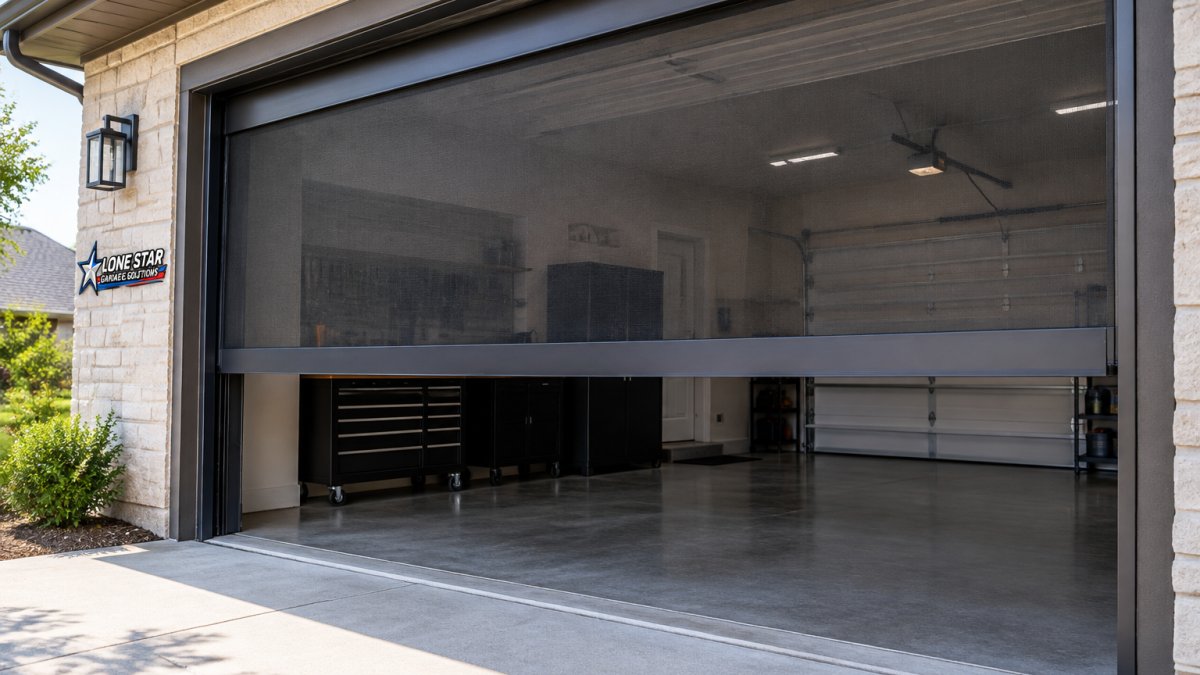
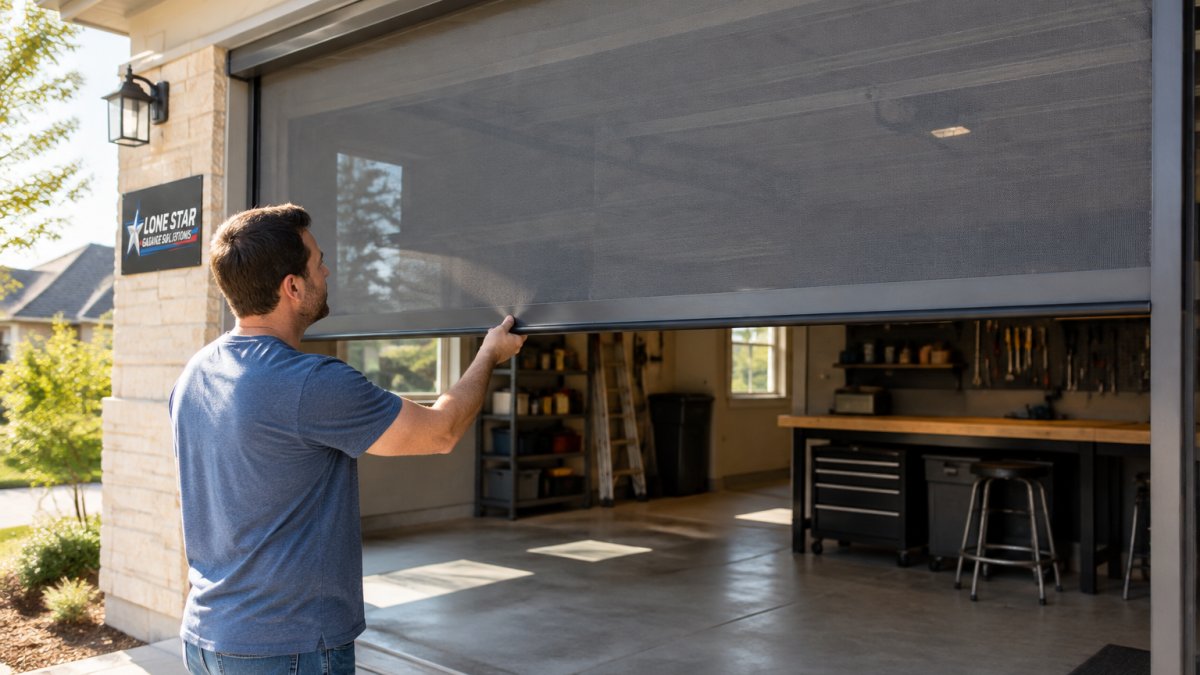
Retractable screens turn a garage from a closed box into a working, breathing space. Lone Star Garage Solutions installs Lifestyle® retractable garage screens for homeowners who want the best retractable screens for garage airflow without losing security or shade. The screen rolls down across the opening, lets air move through the mesh, and keeps insects and debris outside. When you want the door clear again, it rolls up out of the way.
The airflow benefit is the whole point. A garage with the door cracked open pulls hot, humid Texas air across the slab and traps it near the ceiling. A screen changes that. Air moves through the full opening, so cross-ventilation works the way it should. Two things drive the result: mesh density and how much of the opening you can actually leave open.
A tighter weave blocks more insects but cuts airflow. A more open weave breathes better but lets smaller pests through.
Manual vs. Motorized Retractable Screens
Manual screens use a spring-loaded roll-up system on vertical tracks. You pull the screen down by hand, hook it, and release it to retract. Motorized systems do the same job with a button or remote, and some pair with a smart home setup so the screen opens on a schedule.
Which one fits depends on how often you use the space and who uses it.
- Manual: lower upfront cost, no power run needed, simple parts that are easy to service
- Motorized: push-button operation, better for heavy daily use, easier for anyone who struggles with a stiff pull
- Smart integration: motorized units can tie into a hub or app, which matters if you want the screen to open with the door
We tell homeowners this: if the screen goes up and down once a week, manual is fine. If it's daily, or the garage doubles as a gym or hangout, motorized earns its keep. For a closer look at how the two compare on cost and convenience, see our motorized vs manual garage screen cost breakdown.
Here is how the two drive systems compare on the points that decide the choice.
| Option | Best for | Key difference |
|---|---|---|
| Manual | Screens used about once a week | Spring-loaded roll-up on vertical tracks; lower upfront cost, no power run |
| Motorized | Daily use, garages doubling as gym or hangout | Button or remote operation; easier for anyone who struggles with a stiff pull |
| Smart integration | Screens that should open with the door | Motorized units tie into a hub or app |
How to Measure Your Garage Door Opening for a Retractable Screen
Measure the opening, not the door. A retractable screen mounts to the frame around the opening, so you need width and height at the inside edges, plus the depth of the headroom above the opening for the roll-up housing.
Here is the sequence we use:
- Measure the inside width at the top, middle, and bottom of the opening. Record the smallest number.
- Measure the inside height on the left, center, and right. Record the smallest number.
- Measure the headroom from the top of the opening to the ceiling or first obstruction.
- Check that the side jambs are clear and square enough for the vertical tracks.
- Note any weather stripping, trim, or hardware that sits in the mounting path.
Opening dimensions that are out of square are common in older garages. That doesn't kill the project, but it does change how the frame is set. If you want a step-by-step walkthrough with the exact points to mark, our guide on how to measure your garage for retractable screens covers it in detail.
Garage Screen Durability for Pets
Durability questions usually start with pets, but the answer depends on the whole assembly, not just the mesh. A retractable garage screen is a system: mesh, edge binding, vertical tracks, the roll-up housing, and the spring or motor that drives it. The weakest link sets the lifespan, and in most homes that link is either the mesh at the edges or the track alignment.
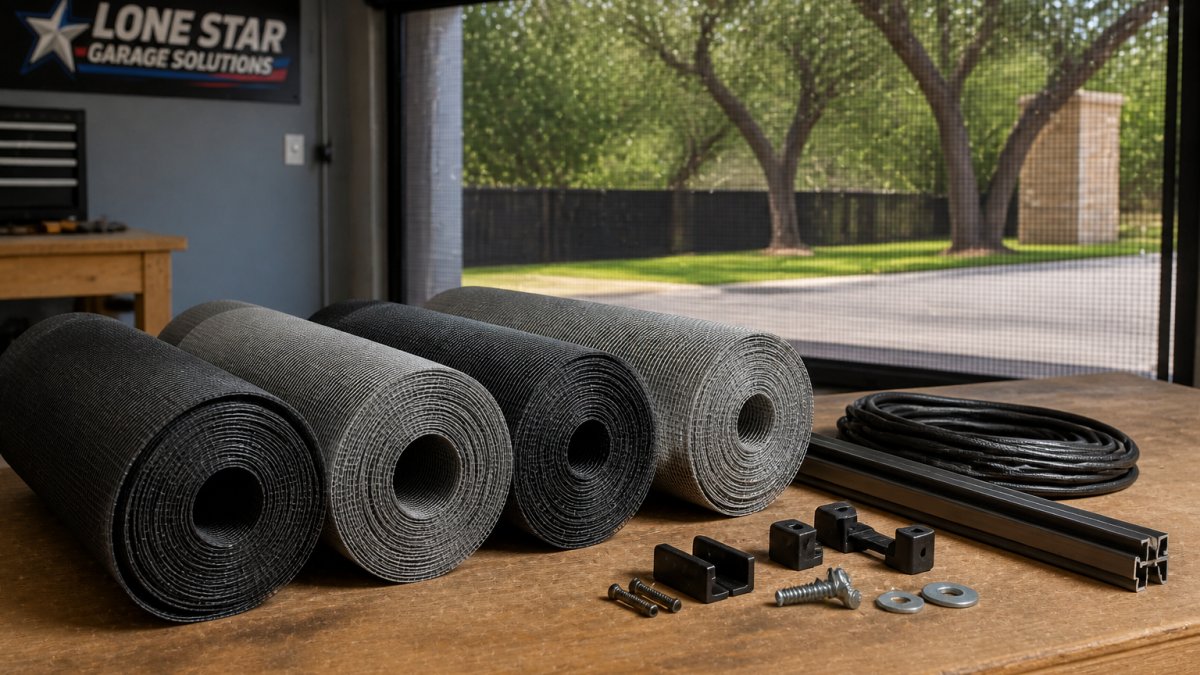
Mesh matters most. Standard insect screening is too light for a garage opening. Mid-weight fiberglass with a PVC coating is the common baseline because it resists UV degradation, holds its weave under repeated rolling, and tolerates the occasional bump. Heavier woven products resist punctures better but block more air, so there is a real trade-off between airflow and tear resistance. If pets are a factor, favor a heavier weave and accept slightly less airflow; if airflow is the priority, a mid-weight mesh with a reinforced edge binding is the better compromise.
Frame and anchoring decide whether the mesh survives. A screen that shifts in its tracks under a dog's weight wears at the edges first. Look for vertical tracks that are fastened into solid framing rather than trim, brackets that are through-bolted where possible, and a housing sized for the opening so the screen does not sag when partially deployed. On older garages with out-of-square openings, the frame has to be shimmed and set plumb, a screen installed into a racked opening will rub on one side and fail early no matter how good the mesh is.
Wind load is the durability test most homeowners underestimate. A garage opening is a large sail. In Central Texas, gusty spring fronts and summer thunderstorm outflow put real pressure on a deployed screen. A screen left fully down in a strong gust can bow the tracks or pull the edge binding loose. Most practitioners recommend retracting the screen when sustained wind picks up or when a storm is forecast, and choosing a system with a tensioned bottom rail and reinforced side channels if the opening faces the prevailing wind. Our comparison of garage screen mesh types for high wind areas breaks down which materials resist gusts and wear best.
Pets: practical habits that stretch screen life.
- Trim claws and give pets a separate door or passage so the screen is not the path in and out.
- Don't let pets push against a partially open screen; the unsupported mesh is the easiest thing to tear.
- Rinse the mesh periodically to clear dust and pollen that abrade the weave as it rolls.
- Check the tracks for grit that grinds the edges every time the screen cycles.
- Keep the bottom rail clear of toys and tools that can bend it.
Watch out: rolling a screen up with grit or a bent bottom rail trapped in the housing will crease the mesh along the roll line, and that crease becomes a tear point within a season or two.
What actually fails first, in order. In most homes the sequence is: edge binding wear from track misalignment, then bottom-rail damage from impact, then mesh punctures, then spring or motor issues. That order matters because it tells you where to spend on upgrades. A heavier mesh on a poorly aligned track will still fail at the edges; a well-aligned track with a mid-weight mesh often outlasts a premium mesh on a sloppy frame.
Garage Ventilation Best Practices
Good garage ventilation is about moving air through the space, not just opening a door. These are the practices that make the biggest difference:
- Open opposite sides when you can. Air in one side and out the other beats a single opening every time.
- Use the screen during mild hours. Early morning and evening let cooler air in without baking the slab.
- Keep the slab and walls clear. Stored boxes against the walls block the airflow path.
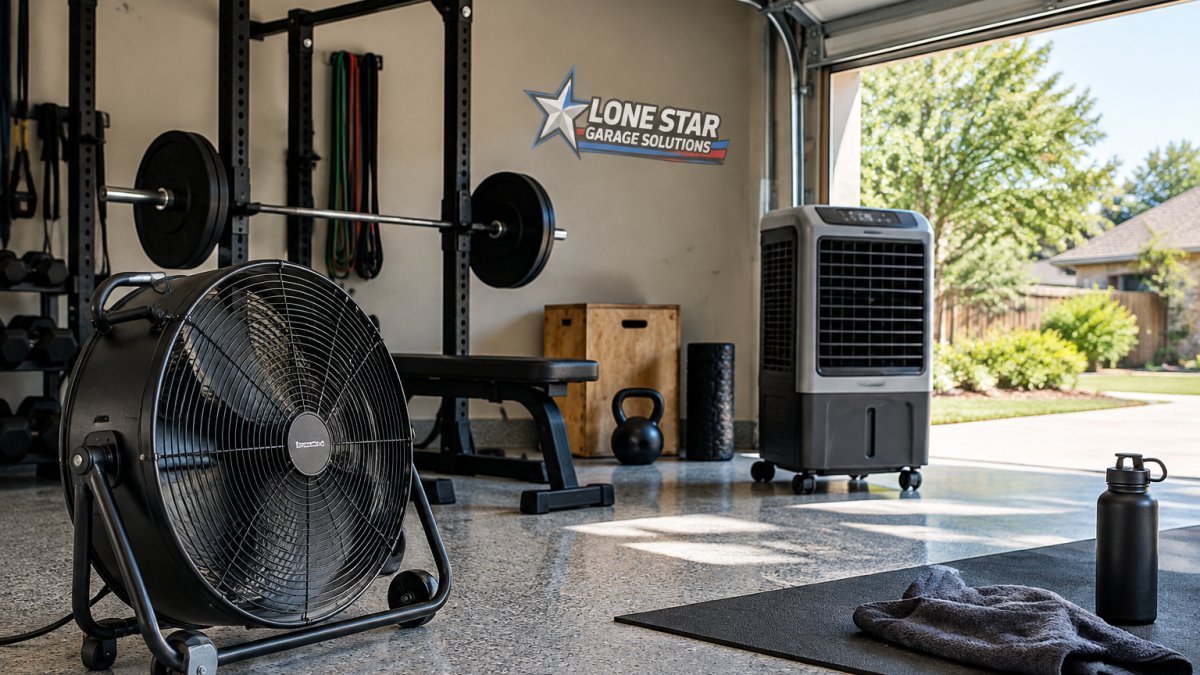
- Run a fan to push air across the ceiling. Hot air collects up high; a fan moves it out.
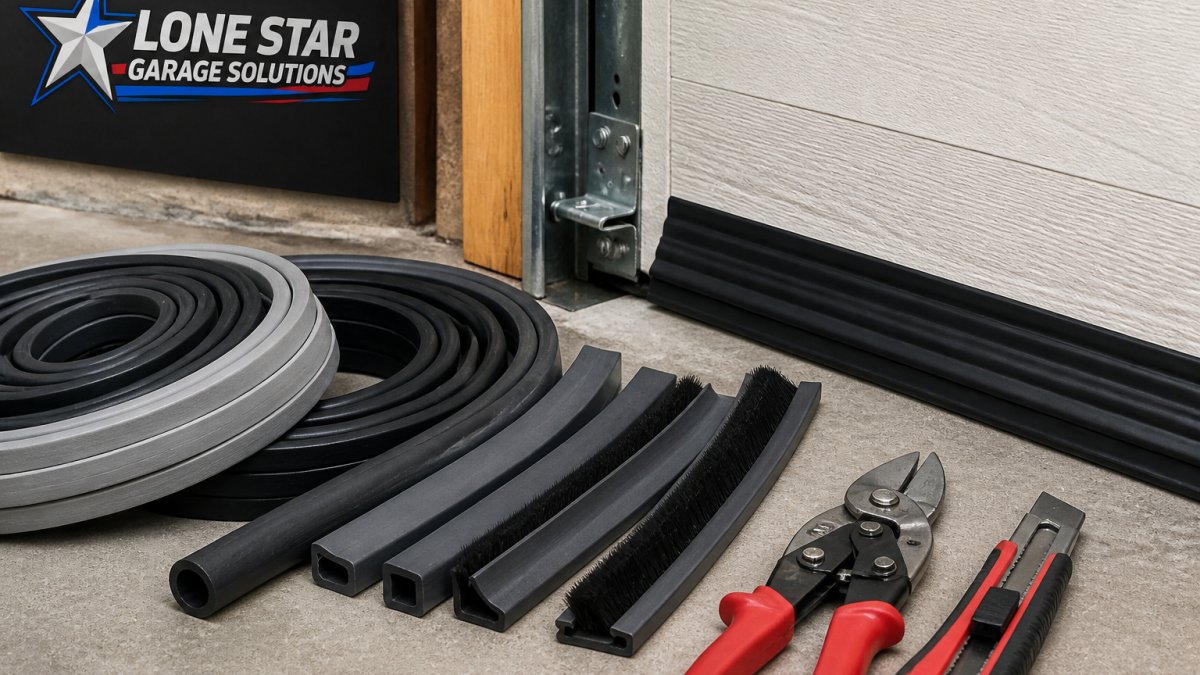
- Seal gaps you don't want. Weather stripping around the door and screen frame keeps hot air and pests from sneaking in where you don't want them.
Temperature regulation in a garage is a moving target in Texas heat. A screen won't cool the space like an air conditioner, but it does let you use the garage without leaving it wide open to bugs and blowing debris.
Long-Term Maintenance and Repair
Most guides stop at purchase. The questions we actually get come two or three years in: the screen is dragging on one side, the mesh has a tear near the bottom rail, or the motorized unit stopped responding. Here is how those problems are diagnosed and handled, because a retractable screen is a serviceable machine, not a disposable one.
Routine care, by season.
- Spring and fall: wash the mesh with mild soap and water, rinse, and let it dry fully before rolling it up.
- Monthly in heavy-use months: wipe the vertical tracks with a damp cloth and check the mounting brackets for looseness.
- Yearly: inspect the spring-loaded mechanism or motor, check the weather stripping, and lubricate moving parts as the manufacturer directs.
Get a Quote on a Retractable Garage Screen
Picking the best retractable screens for garage airflow comes down to your opening, your mesh choice, and how you'll use the space. Get those three right and the screen does its job for years.
We're an authorized Lifestyle® installer of retractable garage screens. If you want to see the product details before you call, our Lifestyle Garage Screens page for New Braunfels lays out the options. For the full rundown on what a screen does for airflow and pest control, our guide to the benefits of retractable garage screens is a good next read.
Flexible financing is available on qualifying projects.
Your garage doesn't have to sit closed up and stifling all summer. Lone Star Garage Solutions installs Lifestyle® retractable garage screens built for the Texas climate, with mesh options that balance airflow and insect protection, frame colors to match your home, and an optional passage door for easy access. We'll measure your opening, recommend the right mesh, and handle the install. Get started with Lone Star Garage Solutions and turn your garage into a space you actually use.
Frequently Asked Questions
Which retractable garage door screen is best for airflow?
The best retractable screens for garage airflow are ones with a mesh dense enough to block insects but open enough to let air pass. Look for fiberglass mesh with a tight weave, a track-mounted roll-up system that seals the edges, and a fit that matches your opening dimensions. A screen that leaves gaps around the frame will let bugs in and cut airflow efficiency. Manual and motorized versions both work well; the choice comes down to how often you open and close it.
Are motorized garage screens worth the investment?
Motorized systems cost more than manual ones, but they earn their keep if you use the screen daily, have a wide two-car garage opening, or have limited mobility. A motorized roll-up system lets you open or close the screen from a remote or wall switch without wrestling a heavy spring-loaded unit. For occasional use, a manual screen is simpler and has fewer parts to service. Ask for a quote to compare both options for your opening size.
Can garage screens help keep pests out while allowing airflow?
Yes. A track-mounted retractable screen with tight fiberglass mesh keeps mosquitoes, flies, and other insects out while still letting air move through the garage. The key is a proper seal along the vertical tracks and header, plus weather stripping where the screen meets the frame. Gaps at the edges are where pests get in. Pairing the screen with good garage ventilation best practices, like opening a side window or walk-through door, keeps air moving.
What should I look for in a durable garage screen?
Check the mesh material, frame strength, and hardware before you buy. Fiberglass mesh resists UV damage and holds up better than cheap plastic mesh. Look for reinforced mounting brackets, sturdy vertical tracks, and a spring-loaded or motorized roll-up system rated for your opening width. If you have pets, ask about heavier mesh and scratch-resistant coatings, since garage screen durability for pets depends on both mesh density and frame rigidity.