 comparison
Torsion vs Extension Springs: Which Garage Door Fits?
Last Updated: October 30, 2026
Quick Summary
Both torsion and extension springs counterbalance your garage door so it lifts easily. A torsion spring twists on a shaft above the opening, while an extension spring stretches along the side tracks. Torsion systems keep lift even across wide doors, and cycle ratings help compare a torsion spring vs extension spring on equal footing.
- Torsion springs mount on a steel shaft above the door and twist to build tension.
- Extension springs run along the side tracks and stretch as the door opens.
- Cycle ratings are lab figures for ideal conditions, not guarantees of real-world life.
- Busy households use springs faster, so divide the cycle rating by daily use to estimate years.
Table of Contents
- Torsion Spring vs Extension Spring: The Core Difference
- How Each Spring Lifts and Balances the Door
- Lifespan and Cycle Ratings Compared
- Smoothness, Noise, and Safety When a Spring Breaks
- Upfront Cost, Replacement Frequency, and Total Ownership
- How to Identify Your Garage Door Spring Type
- Choosing the Right Spring and Scheduling Your Replacement in New Braunfels
- Frequently Asked Questions
Torsion Spring vs Extension Spring: The Core Difference
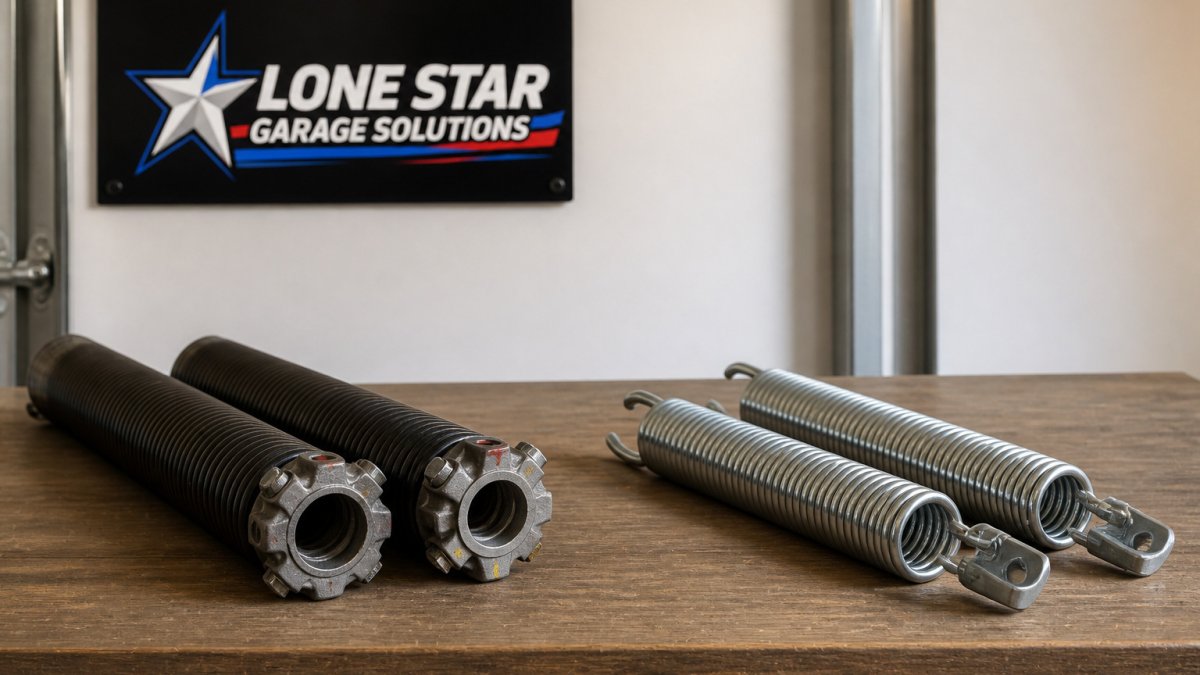
When comparing a torsion spring vs extension spring, both do the same job in different ways. Both counterbalance the weight of your garage door so you can lift it with one hand.
A torsion spring is mounted on a steel shaft above the door opening. It twists to build tension.
A1 Garage Door Service torsion vs. extension spring comparison
Watch out: an extension spring under tension can snap with enough force to cause injury. Never attempt to remove or adjust one yourself.
How Each Spring Lifts and Balances the Door
A torsion spring winds and unwinds around the shaft, turning the cable drums that pull the door up.
Extension springs work along the track. Each spring stretches as the door rises and pulls back as it closes.
If you are replacing a spring yourself, anchor words walks through the safe process for the spring type you have. Spring replacement involves high-tension parts, so many homeowners choose to hire a professional.
Lifespan and Cycle Ratings Compared
Springs are rated in cycles, and one cycle is one full open and close of the door. That number is the single most useful spec on the spring, because it lets you compare a torsion spring and an extension spring on the same footing instead of guessing from appearance or price.
What the cycle rating actually means
A cycle rating is a laboratory figure: the number of open/close cycles a spring is engineered to survive under ideal conditions, correct installation, proper door balance, and normal lubrication. It is not a warranty that the spring will hit that number in your garage. Real-world life depends on how often the door runs, how well it is balanced, and the environment it lives in.
Translating cycles into years of household use
The number of cycles a door sees depends on how a household uses it. Consider how many times your door opens and closes in a typical day. At that rate:
A busy household, a family with multiple drivers, a home business, or a property manager whose tenants come and go, can easily double or triple daily cycles, which cuts those timelines proportionally. A door used ten times a day instead of four burns through a 10,000-cycle spring in under three years. That is why two neighbors with identical springs can see very different service lives.
How torsion and extension springs compare on cycles
A torsion system typically uses two springs sharing the load, so the door can keep working on one spring if the other fails. Extension springs stretch on every cycle, which is one reason they tend to wear out sooner. A properly sized torsion spring is generally expected to outlast a comparable extension spring, which can lower the cost per year of service even when the upfront price is higher.
What shortens spring life in the real world
Headline cycle counts assume ideal conditions. In practice, several factors move the number in either direction:
- Door balance. A door that is out of balance forces the springs to carry more weight than they were sized for, and that extra strain shortens life on either spring type.
- Lubrication. Dry, unlubricated coils and tracks increase friction and wear. A light application of a proper garage-door lubricant on the springs, hinges, and rollers is a low-effort habit that helps.
- Corrosion. Rust pits the steel and creates stress points where cracks start. Coastal humidity, road salt tracked in on vehicles, and damp garages all accelerate corrosion.
For more on why springs fail early, see Why Garage Door Springs Break Often.
The table below sums up the cycle-rating and wear factors covered in this section.
| Factor | Effect on spring life | Note |
|---|---|---|
| Cycle rating | Lab figure: open/close cycles under ideal conditions | Not a guarantee of real-world life |
| Daily cycles | Higher use shortens service life proportionally | Busy households wear springs faster |
| Door balance | Out-of-balance doors overstrain springs | Extra strain shortens life on either type |
| Lubrication | Dry coils and tracks increase wear | Apply proper garage-door lubricant |
| Corrosion | Rust creates stress points where cracks start | Humidity and road salt accelerate it |
| Temperature swings | Extreme heat and cold stress the steel | Cold weather often causes failures |
Smoothness, Noise, and Safety When a Spring Breaks
When a spring breaks, the door can become hard to lift, drop suddenly, or fail to open at all. Some signs your system needs same-day attention are listed in 5 Signs You Need Same-Day Garage Door Repair Service. If your door is off-balance after a break, the cables may also be damaged. Garage Door Cable Replacement in New Braunfels covers that repair.
Do not try to open a door with a broken spring by forcing it. Keep people and vehicles clear of the door until it is secured.
Upfront Cost, Replacement Frequency, and Total Ownership
Pricing depends on door weight, spring size, and labor, so we do not list fixed figures here. Use your installer's written quote to compare options.
Think in terms of total ownership. An option with a lower upfront price may need replacement sooner, which adds labor and downtime.
For current pricing on your door, contact Lone Star Garage Solutions for a quote.
How to Identify Your Garage Door Spring Type
Look at where the spring sits. A torsion spring is a long coil mounted horizontally on a steel bar above the door.
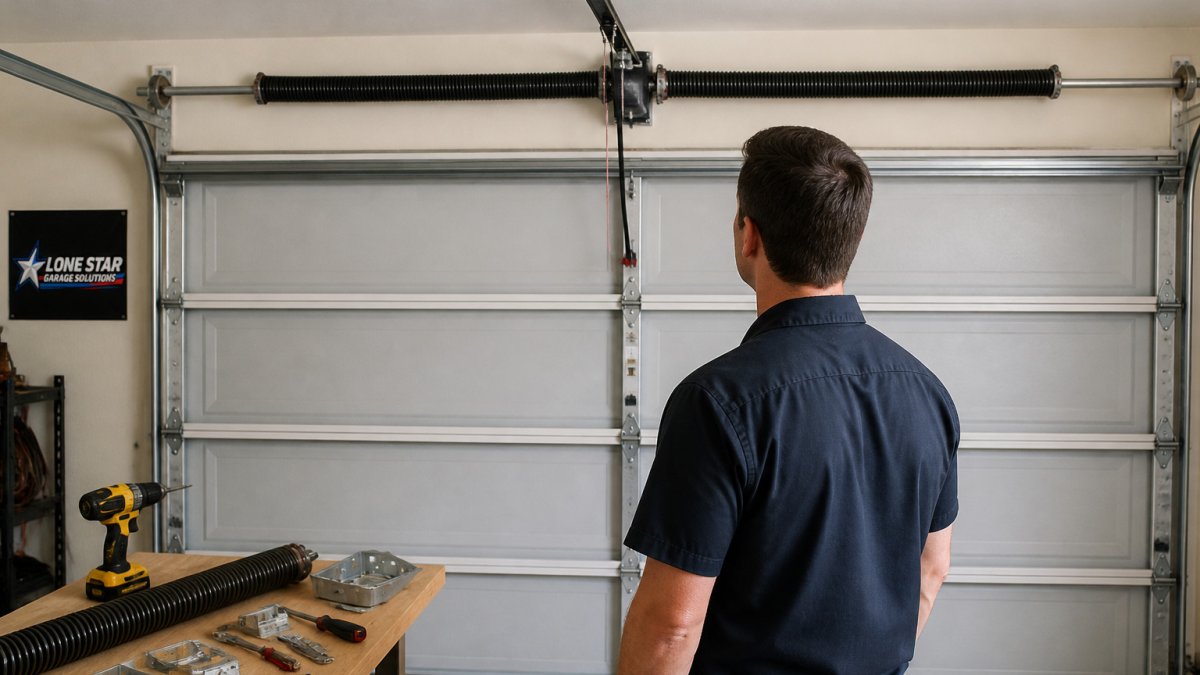
Check the label or count the coils if you need to confirm. For a broader spring replacement overview, see anchor words and our guide on garage door spring replacement.
Choosing the Right Spring and Scheduling Your Replacement in New Braunfels
There is no single "best" spring type. The right choice depends on your door and your garage, and the honest answer is that a qualified technician should confirm it on site. What you can do before that visit is understand the factors that drive the decision, so you can ask better questions and recognize a good recommendation.
A practical decision guide
Work through these questions in order. The first one that clearly applies usually points to the right system:
- What spring type is already installed? If your door has a torsion system and it is working well, replacing like-for-like is usually the simplest path. If it has extension springs, an upgrade may be possible but is not automatic, see the conversion notes below.
- How heavy is the door? Heavier doors, insulated doors, doors with glass panels, oversized or custom doors, often call for a torsion system, which keeps the lift even across the door's width.
- How much headroom is above the door? Torsion springs mount on a shaft above the opening and need room there. A garage with very limited headroom may not accommodate a torsion setup without other changes, which can make an extension system the more practical fit on a lighter door.
- How wide is the door? Wider doors benefit from the centered, balanced lift of a torsion system. Extension springs apply force at the sides, which can feel less even on a wide, heavy door.
- What does the existing hardware support? Track layout, cable drums, and mounting points all factor in. A conversion is a hardware change, not just a spring swap.
- How much does smooth, quiet operation matter? If the garage is under a bedroom or the door is used frequently, the quieter, more controlled motion you want may matter more to you.
Can you convert from extension to torsion springs?
Sometimes, but it depends on the door and track setup, and it should be assessed by a qualified technician rather than decided from a video. A conversion typically involves new hardware, and whether it is feasible depends on the door and track configuration. Treat any quote for a conversion as a hardware-and-labor project, not a spring replacement, and ask the technician to explain what is being added and why.
Safe troubleshooting, and what not to attempt
Springs store enormous energy, and an extension spring under tension can snap with enough force to cause serious injury. That is why the safe role for a homeowner is observation, not adjustment.
Safe to do yourself:
- Listen for a loud bang from the garage and check whether the door still opens.
- Look (from a safe distance, without touching) for a visible gap in a spring, a door that sits crooked, or cables that look slack or frayed.
- Test the door's balance by disconnecting the opener and lifting the door halfway by hand, if it will not stay put, the springs or balance are off.
Do not attempt:
- Winding, unwinding, adjusting, removing, or installing a torsion spring.
- Stretching, cutting, or removing an extension spring or its safety cable.
- Forcing a door open or closed when a spring is broken.
Scheduling your replacement
When you are ready to schedule, contact Lone Star Garage Solutions for a quote, and a technician can review your door and walk you through the options before any work begins. You can also see our garage door repair services in Schertz and nearby areas for spring, opener, and cable work.
Frequently Asked Questions
What are garage door extension springs?
Extension springs are coiled springs mounted on the horizontal tracks on each side of the door, usually running parallel to the tracks above the door. As the door opens, the springs stretch and store energy, which then helps lift the door. They are commonly found on lighter residential doors and on older installations. Because they stretch every time the door moves, they generally wear out sooner than torsion springs. Each spring usually has a safety cable running through it to contain it if it breaks. If you are unsure whether your door uses extension springs, look for coils along the side tracks rather than a single shaft above the door.
Which is safer, a torsion spring or an extension spring?
Both spring types store a large amount of energy, so either can be dangerous when it fails. Extension springs are often considered riskier because a broken spring can snap with force toward the homeowner when the door is operated. Torsion springs break less often, but when they do, the spring and shaft can unwind with considerable force. Safety cables are standard on both types and help contain a broken spring. Homeowners should never attempt to adjust, remove, or replace a spring themselves. Have a qualified technician inspect the system, and do not operate a door with a broken spring.
Can you replace extension springs with torsion springs?
Converting from extension springs to a torsion system is possible but usually involves more than swapping the springs. A torsion conversion typically requires a new torsion shaft, drum and cables, brackets, and a balance check that matches your door's weight and dimensions. Whether it is feasible depends on your door's weight, height, and headroom, as well as the mounting space above the door. Lone Star Garage Solutions can assess your existing hardware and tell you whether a conversion makes sense or whether a like-for-like replacement is the better choice. Request a quote for a site evaluation.
Should I replace both garage door springs at the same time?
In most cases, yes. Springs on a door are matched to share the lifting load, and when one breaks, the remaining spring has usually been under the same wear for the same number of cycles. Replacing both together helps keep the door balanced and reduces the chance of a second failure and another service call. A technician can check the spring condition, cycle rating, and balance before recommending a replacement plan.