 how-to
5 Steps to Replace One Garage Door Spring Safely
Table of Contents
- Can You Replace Just One Garage Door Spring?
- Broken Garage Door Spring Symptoms to Watch For
- Torsion Spring vs Extension Spring: What You Have
- Can You Open a Garage Door With a Broken Spring?
- Why You Should Replace Both Garage Door Springs
- Step-by-Step: How a Single Spring Replacement Works
- Booking a Spring Replacement With Lone Star Garage Solutions
- Frequently Asked Questions
Last Updated: October 30, 2026
Can You Replace Just One Garage Door Spring?
Yes, you can replace one garage door spring, but it is rarely the best long-term choice. Most torsion spring systems use two springs that share the load, so when one breaks, the other is often close to the end of its life.
Many homeowners ask this question after a sudden bang in the garage. Our guide to why springs break explains what causes failure and how to prevent it. The door may still open, or it may stick halfway.
Broken Garage Door Spring Symptoms to Watch For
A broken garage door spring usually gives clear warning signs, but not every symptom points to the spring. Knowing what each sign actually means helps you describe the problem accurately when you call for service and avoid misdiagnosing an opener or cable issue as a spring failure.
Watch for these signs, and note what each one typically indicates:
- A loud bang from the garage, like a gunshot. This is the sound of a torsion spring snapping under tension. It often happens when the door is down and the spring is fully wound, which is why many homeowners hear it at night or first thing in the morning.
- A door that will not lift, or lifts only partway. A torsion spring that has lost tension cannot counterbalance the door's weight. If the opener runs but the door barely moves, the spring is a prime suspect.
- A door that feels much heavier when lifted by hand. A properly balanced door should lift with one hand and stay in place when you let go halfway up. If it feels like dead weight, the spring is no longer carrying its share of the load.
- A gap or visible break in the spring coil. On a torsion spring, look for a clean separation in the coil above the door. On an extension spring, look for a stretched or snapped spring along the side track, and check that the safety cable is intact.
- The door hanging crooked or closing unevenly. A broken spring on one side of a two-spring system lets the door sag on that side. This can also bend tracks and bind rollers if the door is operated.
- An opener that strains, runs, or stops without moving the door. The opener is trying to lift a door the spring can no longer assist. Continued operation can strip the opener's gears or burn out the motor.
How to Tell a Spring Problem From Something Else
Before you assume the spring is broken, run through a short diagnostic sequence. It takes a few minutes and can save you from paying for the wrong repair.
- Check the power and wall control. Confirm the opener has power, the wall button works, and the remotes have fresh batteries. A dead remote is not a spring problem.
- Check the safety sensors. If the door closes partway and reverses, the photo-eye sensors may be misaligned or blocked. Look for a blinking indicator light on the sensor housing.
- Look at the spring itself. With the door down, inspect the torsion spring above the door or the extension springs along the tracks. A visible break confirms the diagnosis.
- Test the door balance by hand. Disconnect the opener using the emergency release cord, then lift the door halfway and let go. A door that drops or feels heavy points to a spring or cable problem. A door that stays put is balanced, and the issue is likely in the opener or its settings.
- Check the cables. Frayed, slack, or off-drum cables can mimic a spring failure. Do not operate the door if a cable is visibly damaged.
If the door is crooked, a cable is loose, or the door will not stay up when you test it by hand, stop. Do not force the door or run the opener. A door that is out of balance can come down suddenly, and a damaged cable can snap under load. Keep people and pets clear and call a professional.
If you see any of these signs, keep people and pets away from the door. Do not try to lift or unwind the spring yourself. A professional can inspect the spring, cables, and opener together and tell you which part actually failed.
Torsion Spring vs Extension Spring: What You Have
Garage doors use two main spring types. Knowing which one you have helps you understand the repair.
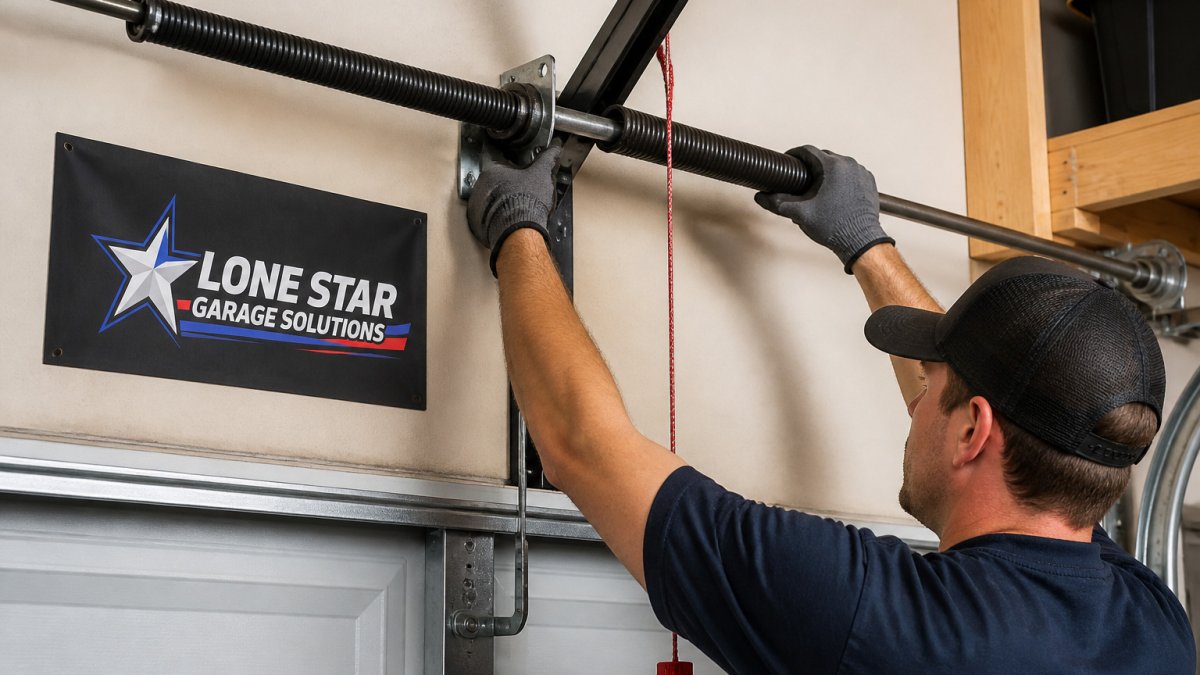
Torsion springs mount on a metal shaft above the door opening. They twist to store energy and are the most common type on modern garage doors.
Extension springs run along the horizontal tracks on each side of the door. They stretch to lift the door.
Look at where the spring is mounted. If it sits on a shaft above the door, you have torsion springs.
Can You Open a Garage Door With a Broken Spring?
Sometimes, but it is not safe to try. A broken spring removes the force that makes the door easy to lift. The door can become very heavy, and it can drop suddenly if the opener or cables fail.
Many people try to lift a door with a broken spring and get hurt. If the door is stuck closed, use the emergency release cord only if you can do so safely, and call a professional to inspect the system before you lift it.
Why You Should Replace Both Garage Door Springs
Springs wear out over time, and they share the same load. When one fails, the other has been working just as hard and is often near the end of its service life. Replacing both at once can save you from another service call and another round of costs in a few months.
The reason springs fail often comes down to cycles, age, and lack of maintenance. Our [page 1] explains why springs break and what you can do to extend their life.
Step-by-Step: How a Single Spring Replacement Works
A professional spring replacement job follows a clear process, and the details matter more than most homeowners realize. The goal is not just to install a new spring but to restore the door's balance so the opener and cables are not overloaded. Here is what the job usually involves, with the checks that separate a lasting repair from a quick swap.
- Secure the door. The technician clamps the door in place so it cannot move, then disconnects the opener using the emergency release. This step protects everyone in the garage if the door shifts.
- Release the tension. The old spring is safely unwound using specialized winding bars. This is the most dangerous part of the job, which is why it is best left to a professional.
- Remove the broken spring. The damaged spring and its hardware are taken off the shaft. On a two-spring system, the technician also inspects the second spring for wear, rust, or a reduced coil gap.
- Match the replacement spring. The new spring must match the door's weight, height, and track radius. Springs are typically identified by wire gauge, inside diameter, and length, and the door's weight is confirmed before winding. A mismatched spring will either leave the door heavy or overdrive it, and either condition shortens the life of the opener and cables.
- Install and wind the new spring. The replacement spring is fitted and wound to the correct tension, which depends on the door height and spring type.
- Test the door balance. With the opener still disconnected, the door is lifted and lowered by hand. A balanced door stays in place at halfway and moves with light effort.
- Reconnect and cycle the opener. The opener is reengaged and the door is run through several full cycles to confirm smooth travel and proper operation.
Why Replacing One Spring on a Two-Spring Door Can Cause Problems
On a two-spring torsion system, the springs are designed to share the load evenly. If you replace only the broken spring, the new spring carries more of the load than the older one, and the door can sit slightly uneven on the shaft.
A common pattern is for the second spring to fail within a short window after the first, which is why the inspection step matters.
What the Technician Checks Before Leaving
A thorough spring replacement ends with a short checklist. Consider asking whether these items were covered:
- Door balance with the opener disconnected
- Cable condition and drum seating on both sides
- Roller and hinge wear
- Opener force and travel-limit settings
- Safety-reverse test with a test object under the door
Broken springs often come with frayed or snapped cables. If your cables are damaged too, our [page 2] covers cable replacement and re-spooling the drums in the same visit.
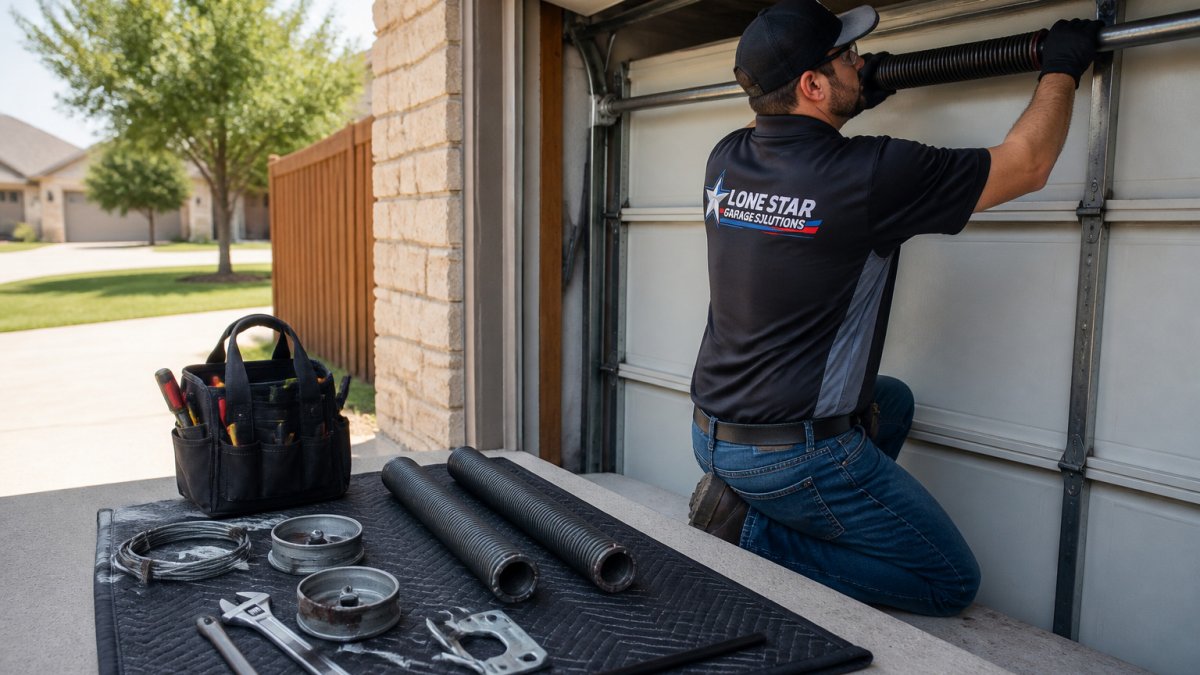
Before the technician arrives, note the spring type, the approximate age of the door, and any noises or problems you have noticed. If you know the opener model number, have it ready. This information helps the technician bring the right spring and confirm the door's weight before winding.
The replacement process follows a clear sequence, and each step has a specific purpose.
| Step | What the technician does | Key point |
|---|---|---|
| 1. Secure the door | Clamps the door and disconnects the opener | Protects everyone if the door shifts |
| 2. Release the tension | Unwinds the old spring with winding bars | The most dangerous part of the job |
| 3. Remove the broken spring | Takes off the damaged spring and hardware | Inspects the second spring for wear |
| 4. Match the replacement | Confirms door weight, height and track radius | A mismatched spring shortens opener life |
| 5. Install and wind | Fits the new spring at the correct tension | Tension depends on door height and spring type |
| 6. Test the balance | Lifts and lowers the door by hand | A balanced door stays put halfway |
| 7. Reconnect and cycle | Reengages the opener and runs several cycles | Confirms smooth travel and operation |
Booking a Spring Replacement With Lone Star Garage Solutions
If your garage door has a broken spring, the safest next step is a professional inspection. Lone Star Garage Solutions can check both springs, the cables, and the opener, then explain your options clearly.
When you are ready to book, you can review our [page 4] to see all the services we offer. If your door is stuck closed and you need service quickly, our [page 5] lists six steps to get fast help.
Contact Lone Star Garage Solutions today for a quote on your spring replacement.
Frequently Asked Questions
Can I replace just one garage door spring?
Replacing only one spring is possible on some doors, but most installers recommend replacing both. Springs on a torsion system are wound to share the lifting load, so a new spring paired with an old one often wears unevenly. The old spring can break soon after, leaving you with a second service call. Replacing both springs at once usually costs less in the long run and keeps the door balanced. A technician can check your spring age and cycle rating before deciding.
Should both garage door springs be replaced at the same time?
In most cases, yes. Torsion springs on a two-spring door are sized and wound to work as a pair, and a broken spring usually means the partner is near the end of its life. Replacing both at once keeps the door balanced, reduces strain on the opener, and avoids a repeat repair within months. If you only replace one, ask the technician to check the cycle rating of the remaining spring so you know what you are getting.
Is it safe to replace a garage door spring yourself?
Garage door springs store a large amount of tension, and mishandling them can cause serious injury. Improper winding, slipping winding bars, or releasing tension at the wrong time are common causes of harm. Because of this risk, we recommend calling a professional for spring replacement. If you are unsure about any part of a repair, stop and contact Lone Star Garage Solutions for a quote and an on-site assessment.
How do I know if my garage door spring is broken?
The most common signs are a loud bang from the garage, a door that will not lift past a few inches, a door that feels unusually heavy, or a visible gap in the spring coil. Sagging cables or an uneven door can also point to a broken spring. Because the door may still look normal from outside, a quick inspection by a technician is the surest way to confirm the problem.