 how-to
How to Fix a Broken Garage Door: 7 Steps to Take Now
Last Updated: November 4, 2026
Quick Summary
To fix a broken garage door, first stop using it, check for obstructions, and secure the door. Then match the symptom to its likely cause, since most failures come from worn springs, cables, or rollers. Do not lift a door with a broken spring by hand; call a professional.
- Stop using the door and keep children and pets away from the opening until it is inspected.
- Do not force a door that is off its track, because forcing it can make the damage worse.
- Springs carry most of the door's weight, so they tend to fail first.
- Pull the red emergency release cord to operate the door manually, but a broken-spring door can still fall fast.
- Test the safety sensors by clearing their lenses and making sure they face each other with nothing between them.
Table of Contents
- Start With Safety: What to Do Right After Your Garage Door Breaks
- Common Causes of a Broken Garage Door
- Garage Door Troubleshooting: Symptom-to-Cause Guide
- How to Open a Garage Door With a Broken Spring
- How to Fix a Broken Garage Door Panel and Check Your Opener
- Garage Door Opener Troubleshooting Steps You Can Try
- Repair or Replace: Deciding What to Do Next With Your Broken Garage Door
- Frequently Asked Questions
Start With Safety: What to Do Right After Your Garage Door Breaks
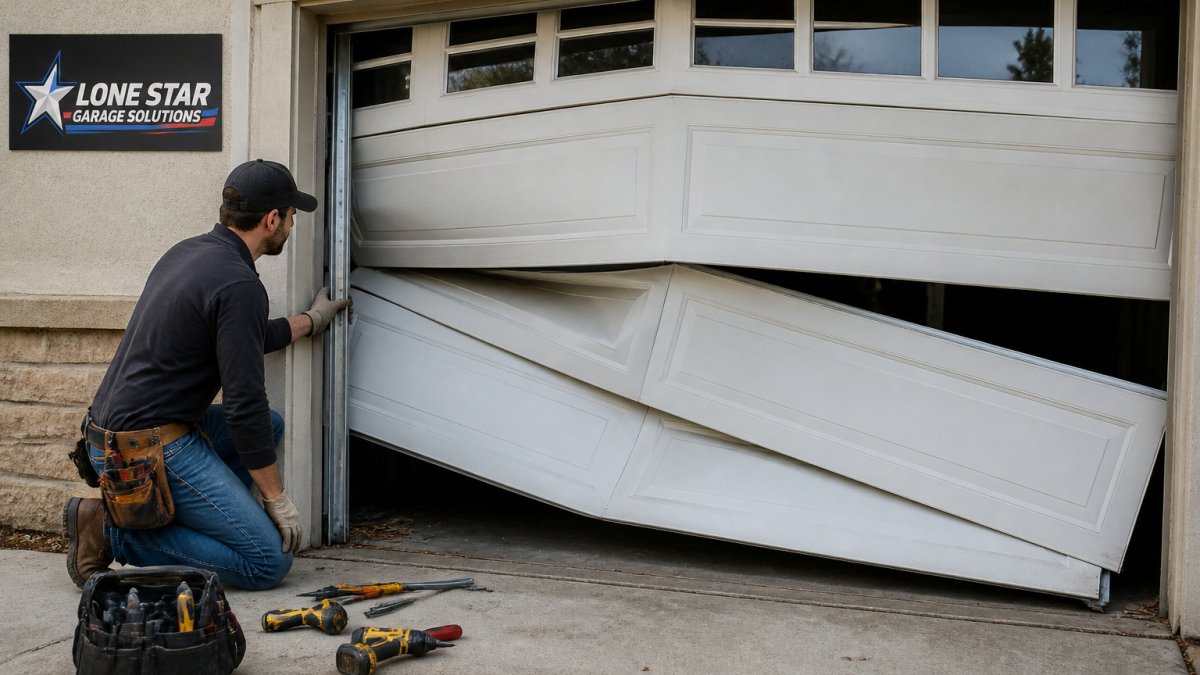
A broken garage door is more than an inconvenience. A door that drops, jams, or hangs crooked can injure someone or damage your car. Your first job is to keep people and property safe.
Stop using the door until it is inspected. Do not try to force it open or closed. Keep children and pets away from the opening.
Check for Obstructions and Stop Using the Door
Look along the tracks and under the door for anything blocking movement. Toys, tools, and debris can cause a door to jam.
- Clear anything that sits in the door path
- Look for bent or pulled-apart track sections
- Check whether the door sits level when partly open
If the door is off its track, leave it alone. Forcing it can make the damage worse.
Secure the Door and Plan Safe Access
A door stuck open is a security risk. Lock the interior door between the garage and your home, and close any side entry.
Plan how you will get in and out until the repair is done. Park outside if the door will not close fully. Use the side door or a secondary entry point while you wait.
Common Causes of a Broken Garage Door
Most garage door failures come from a handful of worn parts. Springs carry most of the door's weight, so they tend to fail first. Cables, rollers, and hinges wear down over time as well.
Springs wear out after thousands of open and close cycles. A broken spring often causes a loud bang and a door that will not lift. Frayed cables can also cause the door to drop unevenly.
Worn rollers stick in the track or grind as they roll. Bent tracks happen after a hard impact or after a roller pops out. Loose or missing hardware lets the door shift out of line.
Garage Door Troubleshooting: Symptom-to-Cause Guide
Matching what you see to a likely cause helps you know what to do next. Use this guide as a starting point.
- Door will not open or close: Often a broken spring, a tripped opener, or an obstruction
- Door opens crooked or unevenly: Usually a frayed cable or a damaged spring
- Door is heavy or hard to lift: Commonly a worn or broken spring
- Loud bang, then the door will not move: Likely a broken torsion or extension spring
- Door shakes or rattles while moving: Often worn rollers or loose hardware
- Opener runs but the door does not move: Frequently a disconnected trolley or a broken cable
Some problems look alike. A bad opener can mimic a broken spring, so test carefully before buying parts.
The table below pairs each symptom with its most likely cause and a recommended next step.
| Symptom | Likely cause | Next step |
|---|---|---|
| Door will not open or close | Broken spring, tripped opener, or obstruction | Check for obstructions first |
| Door opens crooked or unevenly | Frayed cable or damaged spring | Stop use and have it inspected |
| Door is heavy or hard to lift | Worn or broken spring | Have a professional inspect springs |
| Loud bang, then door will not move | Broken torsion or extension spring | Do not lift by hand; call a professional |
| Door shakes or rattles while moving | Worn rollers or loose hardware | Check and tighten hardware |
| Opener runs but door does not move | Disconnected trolley or broken cable | Test the emergency release |
How to Open a Garage Door With a Broken Spring
If a spring has snapped, the door may be too heavy for the opener to lift. Do not lift a heavy door by hand unless you are sure it is safe.
Disconnect the opener first by pulling the emergency release cord, which is usually a red rope hanging from the trolley. This lets you operate the door manually.
Lifting a broken-spring door is still risky. The door can fall fast if it is unbalanced. Many homeowners find that calling a professional is the safest choice here.
Spring replacement also involves high tension. Springs store a lot of energy and can cause serious injury if handled wrong. Do not attempt spring work unless you have the right training and tools. You can learn whether one spring can be swapped alone in our guide to replace one garage door spring safely.
How to Fix a Broken Garage Door Panel and Check Your Opener
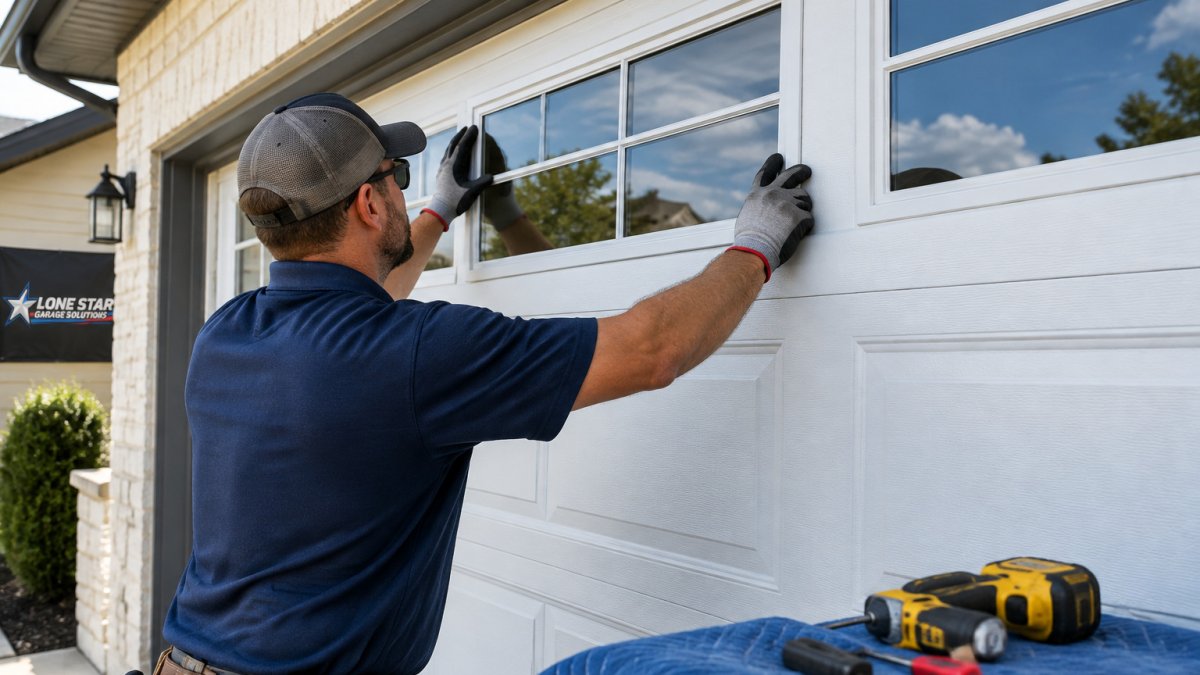
A damaged door panel can often be replaced one section at a time. Look for dents, cracks, or panels that have pulled away from the frame.
Panels are fitted to the door's hinges and rollers, so a panel repair may also need a check of the hardware. Tighten loose bolts and replace any bent hinges you can reach safely.
Then check the opener. Confirm the opener has power and that the remote and wall button both work. Test the safety sensors, which are the small eyes near the bottom of the door. Clean the lenses and make sure the sensors face each other with no obstruction between them.
Garage Door Opener Troubleshooting Steps You Can Try
Most opener problems fall into a few buckets: no power, a safety-sensor fault, a logic lockout, a force or travel limit that needs resetting, or a mechanical disconnect between the opener and the door. Work through these checks in order so you do not replace a part that was never the problem.
- Confirm power at the outlet, not just the opener. Plug a lamp into the same outlet the opener uses. If the lamp works but the opener is dead, the problem is in the opener or its wiring. Many openers also have a small indicator light on the motor head that stays lit when the unit has power.
- Check the wall control before the remote. Press the wall button. If the wall button works but the remote does not, the issue is the remote, its battery, or the radio receiver, not the door. If neither works, move on.
- Replace remote batteries and re-pair the remote. A weak battery can transmit intermittently. After a battery change, most openers require you to re-press the learn button on the motor head and then press the remote within about 30 seconds.
- Look at the safety sensors. The two small eyes near the bottom of the tracks must face each other and both should show a steady light. A blinking or dark sensor light usually means misalignment, a sun glare problem, a spider web, or a damaged wire. Wipe the lenses, straighten the brackets, and check that nothing, a broom, a recycling bin, a parked car, sits in the beam.
- Check for a lock or vacation mode. Many wall consoles have a lock button that disables the remotes. If the wall button works but remotes are ignored, press and hold the lock button for a few seconds to release it.
- Listen to the motor. A humming opener that does not move the door usually points to a stripped gear, a failed capacitor, or a trolley that has been disconnected. A clicking opener that resets itself often points to the force limit or travel limit.
- Test the emergency release. Pull the red cord to disengage the trolley, then lift the door by hand. A door that lifts easily and stays put is balanced; a door that feels heavy or drops is a spring or cable problem, not an opener problem.
Watch out: do not keep pressing the button on a door that reverses or stops halfway. Repeated cycles on a binding door can burn out the opener motor or strip the drive gear, turning a smaller repair into a full opener replacement.
If the door still will not run after these steps, the opener, the wiring, or the door hardware needs a professional inspection. Contact Lone Star Garage Solutions for a quote on opener, spring, and cable problems.
Repair or Replace: Deciding What to Do Next With Your Broken Garage Door
Repair is usually the right call when one component has failed and the rest of the system is sound. Replacement makes more sense when the door, the hardware, and the opener are all near the end of their service life at the same time. The trick is judging which situation you are in.
Lean toward repair when:
- A single spring, cable, roller, hinge, or sensor has failed and the door otherwise moves smoothly.
- The door panels are straight and the tracks are not bent.
- The opener is functioning and the door balances when you test it by hand.
- The door is a standard size and the panel style is still available, so a damaged section can be matched.
Lean toward replacement when:
- The door is showing rust-through, delamination, or multiple cracked panels.
- Several parts are failing within a short window, a spring this year, a cable next year, an opener the year after.
- The tracks are bent beyond adjustment or the door has come off the track more than once.
- The opener is an older chain-drive unit with a stripped gear and the door is also due for hardware.
- You want a quieter, better-insulated door, or a style change that fits an updated exterior.
A quick balance test you can do safely. Disconnect the opener with the emergency release, lift the door by hand to about waist height, and let go. A balanced door should stay roughly where you left it.
After a repair, test before you trust it. Run the door through a full open and close cycle. Confirm the safety sensors stop and reverse the door when you pass an object through the beam.
Lone Star Garage Solutions is a locally owned company serving New Braunfels and nearby Central Texas communities. Contact Lone Star Garage Solutions for a quote to discuss your options.
Frequently Asked Questions
What should I do if my garage door breaks?
Stop using the door right away and keep people and pets clear of the opening. Check for visible obstructions, and do not try to force the door open or closed. Disconnect the opener if you can do so safely, then use the manual release only if the door is still balanced. If the door is stuck open or closed, secure it and call a qualified technician. Contact Lone Star Garage Solutions for a quote on repair or replacement.
How can I tell if my garage door spring is broken?
A broken torsion spring often shows up as a loud bang, a door that will not lift, or a gap of visible space in the spring coil above the door. Extension springs may hang loose along the track. If the door feels unusually heavy or sits crooked, the spring is a likely cause. Because a broken spring stores dangerous tension, do not try to remove or replace it yourself. Have a professional inspect the door before you use it again.
Is it safe to open a garage door with a broken spring?
Opening a garage door with a broken spring is risky. Pulling the emergency release on a door with a broken spring can let the door drop suddenly, and the door may slam down on a person or vehicle. If you need access, use the side door or an alternate entrance instead. Avoid lifting the door by hand. A professional can repair the spring and restore safe operation.
Can I fix a broken garage door panel myself?
Minor panel damage can sometimes be addressed with a replacement section, but a panel that is buckled, cracked, or separated from the hinges usually needs professional attention. Panels carry weight and interact with springs and tracks, so damage can affect the whole door system. A technician can check the panel alongside the hinges, rollers, and track before recommending a repair or replacement. Contact Lone Star Garage Solutions for a quote on your specific door.