 comparison
Are Carriage House Garage Doors Durable?
Last Updated: October 27, 2026
Quick Summary
Carriage house garage doors are durable when the panels, frame, springs, rollers, and hinges are all well built and maintained together. Steel resists rot and needs little upkeep, while real wood needs regular sealing and staining. Most of the wear comes from springs and moving parts rather than the panels.
- Check the panel material, frame, and hardware together, since a weak part can fail early.
- Steel resists rot and needs little maintenance, but chipped paint invites rust.
- Real wood carriage house doors should be sealed or stained every one to three years.
- Springs are usually the first major wear item and are rated in cycles.
- Ask installers for the steel gauge, composite core material, and finish warranty in writing.
Table of Contents
- What Makes a Carriage House Garage Door Durable?
- Carriage House Garage Door Materials Compared
- Carriage House Garage Door Lifespan and Repair Expectations
- Wood Carriage House Garage Door Maintenance
- Climate Performance: Heat, Humidity, and Texas Weather
- Carriage House Garage Door Pros and Cons
- Booking a Carriage House Garage Door Consultation With Lone Star Garage Solutions
- Frequently Asked Questions
What Makes a Carriage House Garage Door Durable?
Carriage house garage doors are durable when their materials, construction, and upkeep work together. The panel material matters, but so do the frame, the hinges, the rollers, and the springs.
A carriage house door's durability depends on its panel, frame, and hardware. A door that looks identical from the street but uses light parts can start sticking or sagging sooner.
Most of the durability question comes down to four factors:
- Panel material: Steel, wood, and composite each handle sun, moisture, and impact differently.
- Construction: Layered panels and reinforced frames resist warping better than single thin sheets.
- Hardware: Springs, cables, and rollers carry the real load, and their quality sets the door's working life.
- Maintenance: Routine care prevents small problems from becoming full repairs.
Understanding these factors helps you judge whether a carriage house door will last in your specific home and climate.
Carriage House Garage Door Materials Compared
Carriage house doors come in steel, wood, and composite, and the durability question is really a comparison question. Lone Star Garage Solutions installs carriage-style doors in New Braunfels in insulated and custom styles. Instead of describing each material in isolation, it helps to line them up against the failures that actually happen: rot, rust, denting, fading, warping, and weather exposure. The table below summarizes how the common options typically behave.
| Failure mode | Steel (insulated or non-insulated) | Natural wood | Composite / faux wood |
|---|---|---|---|
| Rot | Not susceptible | High risk without sealing | Resists moisture; depends on core |
| Rust | Risk where paint chips or scratches | Not applicable | Low; depends on metal core and coating |
| Denting | Dents from impact; heavier gauge resists better | Dents and gouges | Moderate; overlay can crack on hard impact |
| Fading | Finish can fade in strong sun | Finish fades and dries | Finish generally holds color well |
| Warping | Low risk when frame is sound | High risk with humidity swings | Low to moderate; core matters |
| Weather exposure | Handles heat and humidity well with intact finish | Needs regular sealing and staining | Designed for moisture and sun |
Steel Carriage House Garage Doors
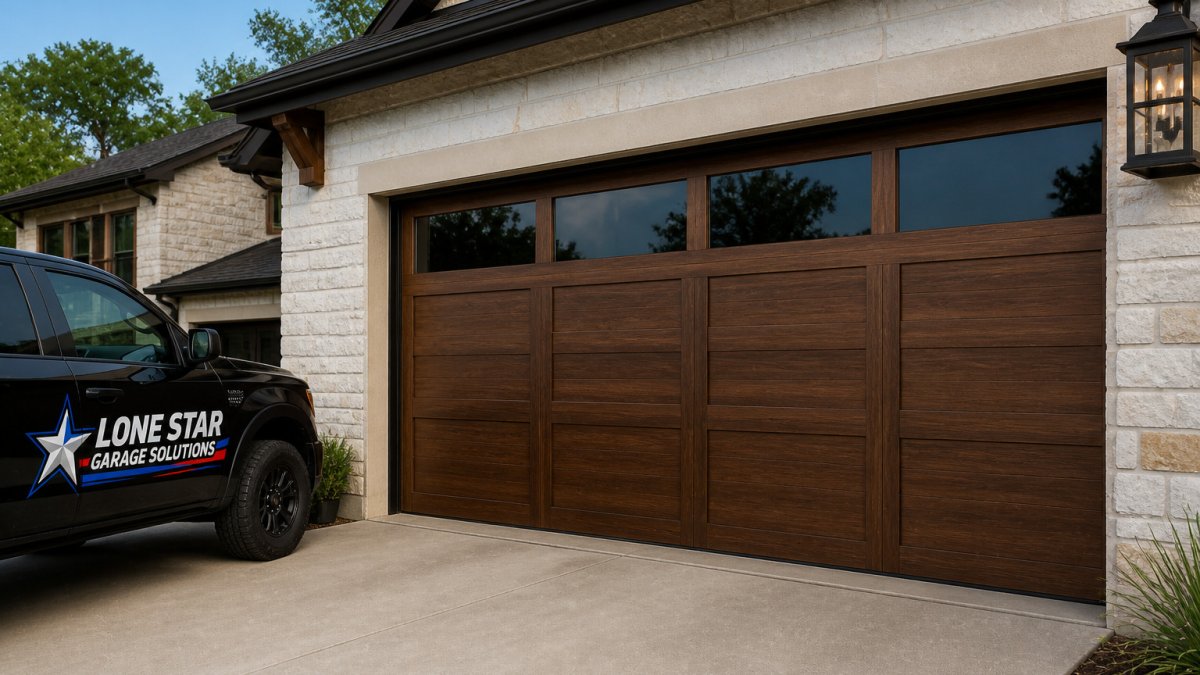
Steel is the most common choice for durability. It resists dents better than most wood, does not rot, and needs little maintenance. Insulated steel versions add a foam core that helps with temperature control and gives the door more rigidity.
Steel handles heat well when it has a quality paint or finish, but the finish is the first thing to check. Chipped paint invites rust, so touch-up care matters over time. Heavier-gauge steel resists denting better than thin panels, and the gauge is one of the few specs worth asking about directly.
Wood and Composite Carriage House Garage Doors
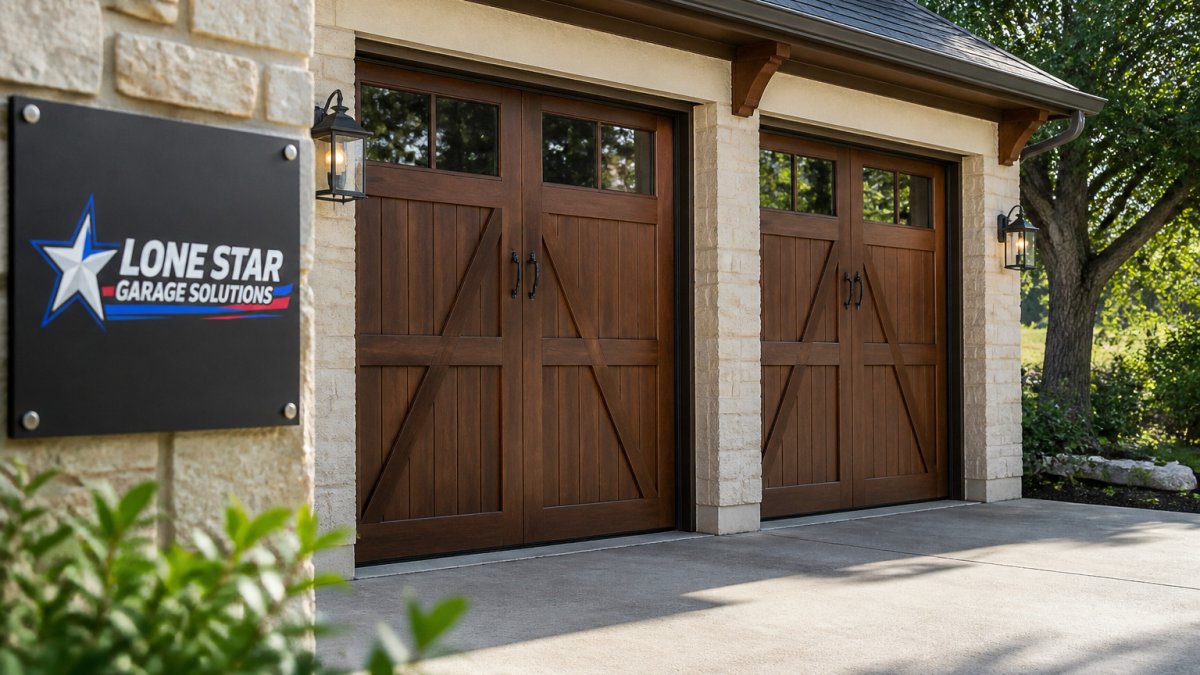
Real wood carriage house doors offer warmth and character that few other materials match. They also need the most attention. Wood expands and contracts with humidity and sun, and it can crack, warp, or rot without regular sealing and staining.
Composite and faux wood doors use engineered materials designed to look like wood while resisting moisture and insects. They cost more upfront than basic steel but typically need less upkeep than real timber. Ask any installer whether the composite overlay is bonded to a steel or wood core, since that construction affects long-term stability.
Matching Material to Exposure
Where the door faces matters as much as the material. A door on a west- or south-facing wall takes far more sun and heat than one under a deep porch or on a shaded elevation. In those high-exposure spots, steel with a quality finish or a composite over a steel core usually asks less of the owner than natural wood. On a shaded, protected elevation, real wood is more forgiving and can be maintained on a reasonable schedule.
If you are unsure which material fits your home and exposure, contact Lone Star Garage Solutions for a quote.
Carriage House Garage Door Lifespan and Repair Expectations
A well-built carriage house garage door can last many years, but lifespan depends on the material, the hardware, and how often the door cycles. Many homeowners expect the panels to outlast the moving parts, and that is often true. The more useful way to think about it is by component, because the door is a system and the weakest part sets the practical service life.
Lifespan by Component
Most practitioners find that the panels outlast the moving parts by a wide margin. The ranges below are typical expectations, not guarantees, climate, use frequency, installation quality, and maintenance all move them.
- Panels: Steel and composite panels commonly last decades when the finish is maintained. Natural wood panels can last as long but only with consistent sealing and staining; neglected wood can fail much sooner.
- Torsion and extension springs: Usually the first major wear item. Springs are rated in cycles, and a door used several times a day reaches that rating far sooner than a door used once or twice.
- Cables, rollers, and hinges: Wear items that typically need attention before the panels do. Rollers and hinges are small jobs; cables are more involved.
- Tracks and frame: Generally long-lived, but can bend or loosen from impact, poor installation, or a door that has been running out of adjustment.
- Seals and weather stripping: Consumables. They degrade from sun and temperature swings and are inexpensive to replace compared with the door itself.
- Opener: Has its own service life and is often replaced separately from the door.
What Shortens Service Life
A few factors consistently shorten how long a carriage house door lasts:
- High cycle counts. A door used many times a day wears springs and hardware faster than one used twice a day.
- Poor installation. A door hung out of square or with the wrong spring tension puts extra load on every moving part.
- Deferred maintenance. Dry or dirty rollers, loose hinges, and worn seals turn small problems into bigger ones.
- Climate exposure. Intense sun, humidity, and temperature swings stress finishes and wood, and can cause metal to expand enough to bind in its tracks.
- Heavier doors. Carriage-style doors with decorative hardware and layered panels weigh more, which puts more load on springs and the opener.
Repair Expectations
Repair scope varies widely based on what breaks. Our New Braunfels garage door repair homeowner guide explains common repair needs and what to expect. A worn roller or hinge is a small job. A cable replacement is larger. A spring replacement is a common repair and one of the more important ones to have done correctly, because the springs carry the door's weight.
Because scope, parts, and door type all affect the work, contact Lone Star Garage Solutions for a quote on your specific door rather than guessing from a general range.
Whole-System Reliability
A carriage house door that looks sturdy can still fail early if one component is weak. When you evaluate durability, look past the panels to the springs, cables, hinges, rollers, seals, and opener. A door with quality panels and matched hardware, installed correctly and maintained on schedule, is the combination that actually delivers a long service life. If your door sticks, sags, or makes new noise, it may involve a wear item or need a larger repair.
Wood Carriage House Garage Door Maintenance
Wood carriage house doors reward owners who stay on top of maintenance. The routine is straightforward but has to be consistent.
Plan on a few regular tasks:
- Inspect twice a year for cracks, soft spots, gaps, and peeling finish.
- Seal or stain every one to three years, depending on sun exposure and the product used.
- Keep the bottom seal and weather stripping in good shape to limit moisture entry.
- Clean gently with mild soap and water, and avoid pressure washing that forces water into the grain.
- Check the hardware for loose bolts, hinge wear, and roller condition.
Sun-facing sides of the house wear finish faster, especially in Texas summers. Keeping up with sealing on those sides prevents most of the warping and rot homeowners find later. If you notice swelling near the bottom panel or a door that suddenly rubs the frame, the issue may need attention.
Climate Performance: Heat, Humidity, and Texas Weather
Texas weather puts real stress on garage doors.
Heat expands metal and wood. If your door sticks in summer, our guide on why garage doors stick in Texas heat explains the causes and fixes.
Insulated doors help regulate temperature in the garage and can reduce stress on the moving parts, though they do not eliminate expansion.
If your door sticks in the heat, do not assume it is a simple adjustment. Repeated sticking can have several possible causes.
Carriage House Garage Door Pros and Cons
Every carriage house door involves trade-offs. Weighing them against your home and budget will point you toward the right choice.
Pros:
- Traditional curb appeal that complements many architectural styles
- Wide range of materials, finishes, and hardware options
- Steel versions offer strong durability with low maintenance
- Insulated models help with temperature control in the garage
- Can add real value to the look of the home
Cons:
- Real wood requires regular sealing and staining
- Premium materials and insulated builds cost more upfront
- Decorative hardware and panel detail can make repairs more involved
- Heavier doors put more load on springs and openers
- Non-insulated steel does less for energy efficiency
For most homeowners, the best fit is a steel or composite carriage house door with a quality finish and insulation if the garage is used as living or workspace. Homes with strong sun exposure benefit from a durable finish and a regular maintenance schedule.
Booking a Carriage House Garage Door Consultation With Lone Star Garage Solutions
If you are weighing a carriage house door for your home, or dealing with a door that sticks, sags, or makes noise, contact Lone Star Garage Solutions for a quote. Lone Star Garage Solutions is locally owned and serves New Braunfels and the surrounding Central Texas communities.
Reach out to Lone Star Garage Solutions to request a quote for your garage door. We also offer garage door repair in San Marcos, TX with scheduling from New Braunfels.
Frequently Asked Questions
Are carriage house garage doors durable?
Yes, when the right materials and construction are chosen. Durability still depends on whether the door is insulated, how well the frame and hardware are maintained, and how the door handles heat and humidity. Wood versions need more regular upkeep than steel or composite, so the material you pick matters as much as the style.
How long do carriage house garage doors last?
Lifespan depends on material, construction, climate exposure, and maintenance. Steel models are generally described as long-lasting and low-maintenance. Wood doors can last for many years with consistent sealing, staining, and inspection, but they are more sensitive to moisture and sun. Springs, cables, and openers wear out over time regardless of the door panel, so expect periodic repairs and plan for them.
Do wood carriage house garage doors need more maintenance?
Yes. Wood carriage house garage doors typically need periodic sanding, staining or sealing, and checks for rot, cracks, and loose hardware. Maintenance frequency depends on sun and rain exposure. Steel and composite options generally require less upkeep, which is one reason many homeowners in hot, humid areas choose them.
Can carriage house garage doors handle Texas heat and humidity?
They can, but performance depends on the material and construction. Insulated steel and composite doors tend to hold up better in heat and humidity than untreated wood. Proper finishing, good weatherstripping, and regular inspection of the door and hardware help prevent warping, finish failure, and sticking. Issues may need attention before they become more costly repairs.