
 how-to
Emergency Garage Door Repair: What to Do First
Table of Contents
- Is a Broken Garage Door Really an Emergency?
- Emergency Garage Door Repair: Safety Triage Before You Touch Anything
- How to Manually Open a Garage Door During a Malfunction
- Broken Garage Door Spring Repair: Why This Is Never a DIY Job
- What Emergency Garage Door Repair Costs and What Affects the Price
- Garage Door Safety Inspection Checklist for After the Fix
- Frequently Asked Questions
Last Updated: September 18, 2026
Is a Broken Garage Door Really an Emergency?
A garage door that won't close is an emergency when it leaves your home unsecured, traps your car, or involves a broken spring, snapped cable, or door hanging off its tracks. A single noisy roller or a remote that needs new batteries is not. Knowing the difference saves you a service call and keeps you out of harm's way.
Emergency Garage Door Repair: Safety Triage Before You Touch Anything
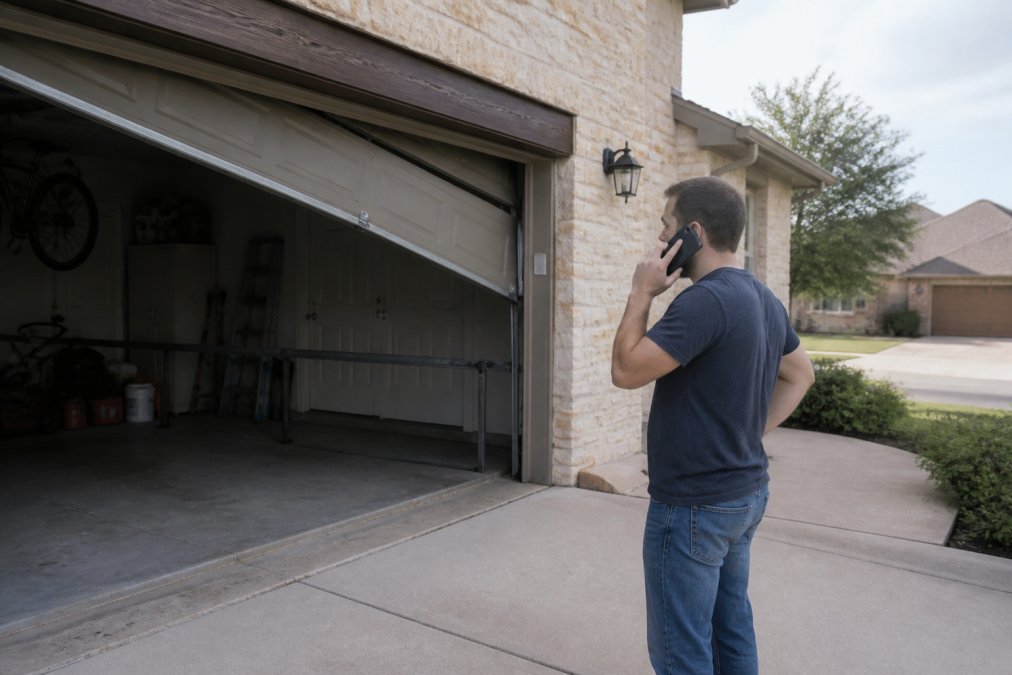
Emergency garage door repair starts with a 60-second assessment, not a wrench. Before you call anyone or grab a tool, answer three questions: Is the door fully closed or stuck open? Is anything visibly broken, like a snapped cable or a bent track? Is anyone or anything underneath it?
Run this quick triage:
- Door stuck open → your home is exposed. Treat it as urgent.
- Door stuck closed with your car inside → inconvenient, but rarely dangerous. Book same-day service.
- Snapped cable, broken spring, or door off-track → stop. Do not run the opener.
- Grinding, jerking, or a door that reverses for no reason → likely a sensor, roller, or opener issue. Diagnose before you call.
When to Stop and Call a Pro Immediately
Stop and call a professional the moment you see a snapped cable, a spring with a visible gap, a door sagging on one side, or panels that have come off the tracks. These are the failures that cause injuries.
How to Manually Open a Garage Door During a Malfunction
You can manually open most garage doors during a power outage or opener failure by pulling the emergency release cord and lifting the door by hand. This works only if the springs and cables are intact. If either is broken, do not attempt it, a door with a failed spring can weigh several hundred pounds and will come down hard.
First, Decide Whether You Should Even Try
Before you touch the release cord, run this 30-second check:
- Look at the springs above the door. A torsion spring with a visible gap in the coil, or an extension spring that's stretched and hanging, means the door is no longer counterbalanced. Stop here and call a pro.
- Look at the cables on both sides. A cable off its drum, frayed, or lying slack on the floor means the door can drop without warning. Stop here.
- Look at the tracks. If the door is off-track or a roller has popped out, forcing it by hand can bend panels and turn a repair into a replacement. Stop here.
- If springs, cables, and tracks all look intact, the door is likely just disconnected from the opener or dealing with a dead opener. Manual operation is reasonable.
The Safe Manual-Open Sequence
- Make sure no one is standing under or near the door.
- Close the door fully first if it's partway up. The release cord should only be pulled when the door is down.
- Pull the red emergency release cord hanging from the opener rail. This disconnects the door from the opener trolley.
- Grip the bottom handle or a sturdy section and lift slowly with both hands. A properly balanced door should rise with steady, even effort.
- If the door feels extremely heavy or drops suddenly, stop. That's a sign of a spring or balance problem, not a lifting problem.
- Prop the door open with a sturdy object if you need to move a car, and never leave it unattended.
If you're coming from a home where the door always felt light, expect a manual lift to feel heavier than you remember. That's normal. What isn't normal is a door that won't budge or slams down. For more on this, the UL 325 safety standard for garage door operators covers the safety features built into modern openers, including the emergency release.
Reconnecting the Door to the Opener
Once power is restored or the opener is repaired, you'll need to re-engage the door. With the door fully closed, pull the release cord toward the opener rail until the trolley clicks back into the carriage. Then run the opener once and watch the full travel cycle. If the door jerks, reverses, or stops short, don't keep cycling it, that's a sign the opener or a safety sensor needs attention.
Broken Garage Door Spring Repair: Why This Is Never a DIY Job
Broken garage door spring repair is not a homeowner task. Torsion and extension springs store enough energy to cause severe injury, and the tools and knowledge required to replace them safely aren't in a typical toolbox.
What Emergency Garage Door Repair Costs and What Affects the Price
Emergency garage door repair pricing depends on the failed part, the door's condition, and whether the work happens during a standard service window. There's no single flat rate, and any company quoting you a number before looking at the door is guessing. What we can do is show you how the number gets built, so you can compare quotes apples to apples instead of chasing the lowest line item.
How an Emergency Quote Is Built
Every legitimate quote breaks into four buckets. Ask any company to itemize these, and you'll instantly see whether a low bid is real or just missing pieces:
- Parts, the spring, cable, roller, hinge, or opener component being replaced.
- Labor, time on site, which scales with door height and how much disassembly is needed.
- Safety and balance check, the post-repair step that confirms the door travels evenly and the opener isn't fighting the springs.
- Disposal and cleanup, hauling away the failed part and any debris.
Emergency vs. Standard Service Windows
Most companies price emergency and after-hours calls differently from standard weekday appointments. The premium reflects scheduling pressure, not a different repair. If your door is stuck closed with your car inside and no one is trapped, waiting for a standard window is often the smarter financial call. If the door is stuck open and your home is exposed, that's when the emergency premium is worth paying.
What Actually Moves the Number
| Factor | What It Means | Why It Changes Cost |
|---|---|---|
| Part that failed | Spring, cable, roller, or opener | Parts vary widely in cost |
| Door type and size | Single, double, or custom | Larger doors need heavier hardware |
| Number of springs | One or two torsion springs | More parts, more labor |
| Track and panel damage | Bent tracks, cracked panels | Repairs add time and materials |
| Access and height | Standard or high-lift setup | Higher doors need more setup |
| Time of call | Standard window vs. emergency | Scheduling premium applies |
Questions to Ask Before You Approve Any Quote
- Is the price for the part only, or parts and labor?
- Does it include a balance and safety check after the repair?
- Is there a warranty on the part, the labor, or both?
- Will the technician show you the failed part before replacing it?
- Is the quote itemized in writing before work starts?
A common mistake is choosing a quote based only on the lowest number. A cheap spring replacement that skips the balance check often turns into a second service call within weeks. Ask what's included: parts, labor, a safety inspection, and any warranty on the work.
Garage Door Safety Inspection Checklist for After the Fix
- Test the auto-reverse: place a roll of paper towels under the door and close it. The door should reverse on contact.
- Check the safety sensors: confirm both lenses are aligned and the indicator lights are steady, not blinking.
- Look at the cables: check for fraying, kinks, or slack on both sides.
- Inspect the springs: look for gaps, rust, or a stretched appearance.
- Check the tracks: make sure they're straight, clean, and free of debris.
- Test the balance: lift the door halfway by hand. It should stay put, not drift down.
- Lubricate moving parts: rollers, hinges, and the opener rail.
- Clear the pathway: remove anything stored near the door's travel.
Run the auto-reverse test with a light object, then repeat it with your hand near the bottom edge (without touching it). If the door doesn't reverse, stop using the opener until a technician checks the sensors and opener settings.
If any item fails, that's your signal to book a professional inspection. The National Safety Council home and garage safety resources recommends treating the garage as a high-traffic zone and keeping the door's safety features in working order year-round.
Frequently Asked Questions
Is a broken garage door considered an emergency?
It depends on what broke. A snapped cable, a door stuck halfway, or a door that will not close leaves your home open and is a security emergency. A single noisy roller or a slow opener is inconvenient but can usually wait for a scheduled visit. If the door is off its tracks or a torsion spring has snapped, treat it as an emergency garage door repair and keep people away from the door until a technician arrives.
What should I do if my garage door gets stuck halfway?
Stop pressing the opener button, because repeated attempts can burn out the motor or snap a cable. Check whether anything blocks the safety sensors near the floor, then pull the emergency release cord only if the door is fully down. If it is stuck partway up, do not force it. Call a garage door company and describe the position of the door so the technician arrives with the right tools.
Why is it dangerous to attempt DIY repairs on garage door torsion springs?
Torsion springs hold the full weight of the door under extreme tension. Without the correct winding bars and training, releasing that tension can cause serious injury in a fraction of a second. Broken garage door spring repair should always be handled by a certified technician who can match the spring to your door's weight and reset the door balance safely. This is one repair where the risk clearly outweighs any savings.
How can I safely manually operate a garage door during a malfunction?
First, make sure no one is standing under the door. If the door is fully closed, pull the emergency release cord to disconnect the opener, then lift with a steady, even pull. A door in good balance should lift with one hand. If it feels heavy or binds, lower it carefully and stop. Never manually open a door with a snapped cable or a broken spring, because it can crash down without warning.