
 how-to
Book Same Day Garage Repair: 6 Steps to Fast Service
Table of Contents
- What You'll Need Before You Book Same Day Garage Repair
- Step 1: Confirm It's Safe to Wait for a Same-Day Visit
- Step 2: Run a Quick Garage Door Opener Troubleshooting Check
- Step 3: Call and Ask These Questions Before You Book
- Step 4: Know What Broken Garage Door Spring Repair Involves
- Step 5: How to Choose a Local Garage Door Repair Company
- Step 6: Prepare for the Visit and Prevent Repeat Calls
- Conclusion: Getting Your Door Fixed Today
- Frequently Asked Questions
Last Updated: September 21, 2026
What You'll Need Before You Book Same Day Garage Repair
A garage door that won't open turns your morning into a scramble. When you need to book same day garage repair, the difference between a quick fix and a week of driveway parking comes down to how prepared you are before you dial. This guide from Lone Star Garage Solutions walks through six steps, from confirming the door is safe to leave alone to prepping for the technician's arrival.
Have these ready before you call:
- Your address and gate or access codes
- The door's brand and approximate age
- What the door does when you press the button (nothing, jerks, reverses, grinds)
- Whether the door is stuck open, stuck closed, or off its track
- A photo of the springs, cables, and opener unit if you can safely take one
- Your availability window for the visit
Step 1: Confirm It's Safe to Wait for a Same-Day Visit
Before anything else, decide whether the door can sit untouched until the technician arrives. Usually it can, but a few conditions mean you should stop using the door immediately, even while waiting on a same-day appointment.
Signs You Should Stop Using the Door Right Now
- A loud bang followed by a door that won't lift. That's the classic sound of a broken torsion spring. The door may feel impossibly heavy or not move at all.
- A visibly snapped or frayed cable. Loose cable strands can whip with serious force if the door cycles again.
- The door is off its track or hanging unevenly. Running the opener can bend panels, damage the track, and turn a repair into a replacement.
- The door reverses immediately or won't stay closed. This points to a sensor alignment or travel-limit issue, and a door that won't close leaves your home unsecured.
- Grinding, scraping, or a burning smell from the opener. Stop pressing the button and unplug the unit.
If you see any of these, don't "test it one more time." Each cycle adds stress to already-failing hardware, and the repair bill grows with it.
Step 2: Run a Quick Garage Door Opener Troubleshooting Check
A surprising number of "dead door" calls turn out to be a tripped breaker, a dead remote battery, or misaligned safety sensors. A two-minute garage door opener troubleshooting pass can save you a service call entirely, or at least tell the dispatcher exactly what's wrong.
- Check the power at the outlet, not just the plug. Confirm the opener is plugged in and the outlet works. Look for a tripped GFCI outlet (common in garages) or a flipped breaker. If the opener's light doesn't come on when you press the wall button, power is the first suspect.
- Test the wall switch against the remote. If the wall button works but the remote doesn't, the problem is the remote or its battery. If neither works, the issue is upstream, power, logic board, or safety circuit.
- Inspect the safety sensors. Wipe the small eyes near the floor on each side of the door, check that both indicator lights are on, and confirm nothing blocks the beam. A cobweb, a shifted bracket, or direct sunlight can cause the door to reverse or refuse to close.
- Look at the manual release. If the red cord was pulled, the opener won't engage until the release is reconnected and the trolley re-engages the carriage.
- Listen to the opener. A hum with no movement suggests a gear, capacitor, or drive issue. Silence points to power or logic board trouble. A single click often means the safety circuit is open.
- Check the travel limits and force settings. If the door stops partway or reverses mid-travel, the limit switches or force adjustment may have drifted, common after a power surge or temperature swing.
When Troubleshooting Ends and a Same-Day Call Begins
Some symptoms are safe to investigate. Others are not. If your check turns up any of the following, stop and book the visit:
- The opener runs but the door doesn't move at all (possible broken spring, stripped gear, or snapped cable).
- You hear a loud bang from above the door (broken torsion spring, do not cycle the door again).
- The door is visibly off its track or hanging unevenly.
- You smell burning from the opener housing.
- The door closes on its own or opens without a command (logic board or remote interference).
Step 3: Call and Ask These Questions Before You Book
The right questions separate a smooth same-day visit from a frustrating one. Ask them before you commit.
- Can you actually get someone out today, and what's the arrival window? A company that offers same-day service should be able to give you a real window, not "sometime this afternoon."
- What does the service call fee cover? Know whether it includes the diagnostic and whether it's applied to the repair.
- What information do you need from me? A good dispatcher will ask about the door's symptoms, age, and brand.
- What's the warranty on parts and labor? Ask specifically about the parts and labor warranty, not just a vague "we stand behind our work."
- Do you carry common parts on the van? Springs, cables, rollers, and openers should be standard stock for a repair-focused company.
Step 4: Know What Broken Garage Door Spring Repair Involves
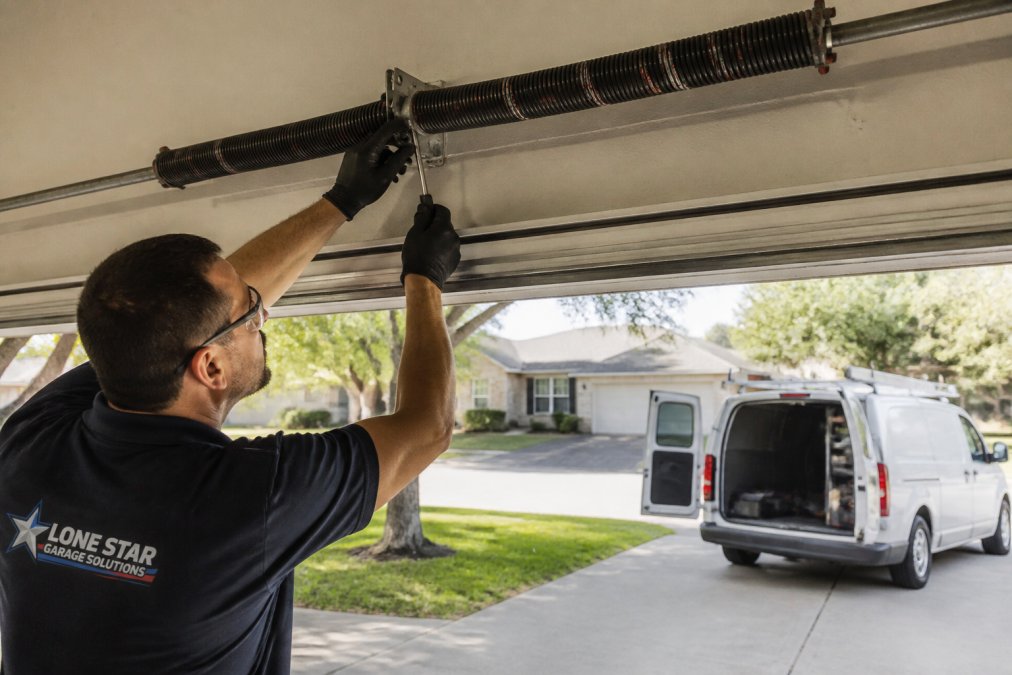
Broken garage door spring repair is the most common same-day call, and the one homeowners most often underestimate. Torsion springs sit on a shaft above the door and do the heavy lifting; extension springs run along the sides. When either fails, the opener is suddenly trying to lift far more weight than it was designed to move.
Why Springs and Cables Are Not a DIY Job
Torsion springs and cables are under extreme tension at all times. The tools required to wind and release a spring safely aren't sold at a hardware store, and a slip can cause severe injury. This is the one part of garage door work where the honest answer is: don't. A licensed technician has the winding bars, the training, and the insurance to do it safely.
Step 5: How to Choose a Local Garage Door Repair Company
Choosing a local garage door repair company comes down to a few signals you can check in a five-minute call. Local matters: a company based in your area can reach you faster, stocks parts for the door brands common in your region, and has a reputation to protect in the community.
Look for these markers:
- A real local address and phone number. Not a call center that routes to whoever is available.
- Clear answers about fees and warranties. Vague pricing is a red flag.
- Technicians who diagnose before they sell. A good tech explains what failed and why, and offers options rather than a single take-it-or-leave-it quote.
- Financing options on larger projects. Useful when a repair turns into a replacement.
- Reviews that mention follow-up. How a company handles a problem after the job says more than the job itself.
Step 6: Prepare for the Visit and Prevent Repeat Calls
A little prep makes the visit faster and often cheaper. Clear the area under and around the door, move vehicles out of the driveway, and secure pets. Set out the opener's manual if you have it, and have your symptom list ready, what happened, when it started, and whether anything changed recently (a power outage, a storm, a new remote).
A Maintenance Routine That Actually Prevents Breakdowns
Most same-day repair calls trace back to something that was wearing out for weeks or months before it failed. These habits extend door life, require no special tools, and take about fifteen minutes twice a year.
- Lubricate rollers, hinges, and tracks twice a year with a garage-door-specific lubricant, not WD-40. WD-40 is a solvent, not a lubricant, and it can strip the factory grease from bearings. A white lithium or silicone-based garage door lubricant is the right choice.
- Test the auto-reverse function monthly (Safety Commission Publishes Final Rules For Automatic Garage Door Openers). Place a block of wood in the door's path and confirm the door reverses on contact. If it doesn't, the safety system needs attention before someone gets hurt.
- Test the photo-eye sensors monthly. Wave an object through the beam while the door is closing. The door should reverse immediately.
- Tighten hardware seasonally. Vibration loosens bolts on hinges, brackets, and the track. A quick pass with a wrench twice a year prevents most rattles and misalignments.
- Balance the door once a year. Disconnect the opener (pull the manual release) and lift the door halfway. A balanced door stays put. A door that drifts down or shoots up is out of balance and is putting extra strain on the opener.
- Watch for early warning signs: slow response, jerky movement, new noises, or a door that no longer closes flush. These are the signals that precede most spring, cable, and opener failures.
- Schedule a professional safety inspection every year or two, especially on doors over ten years old. A technician can measure spring tension, check cable wear, and inspect the opener's force settings, things that aren't visible from the driveway.
Why Prevention Pays Off
A torsion spring is rated for a specific number of cycles, and every open-and-close counts. A door that's out of balance or running on dry rollers burns through that rating faster. Keeping the door balanced, lubricated, and adjusted doesn't just reduce noise, it stretches the life of the most expensive parts.
Conclusion: Getting Your Door Fixed Today
A broken garage door is stressful, but it doesn't have to be slow. Confirm the door is safe to leave alone, run a quick troubleshooting check, ask the right questions when you call, and let a qualified technician handle the springs and cables. That sequence gets you from "it won't open" to "it's fixed" in a single day.
Frequently Asked Questions
What information should I have ready when booking a garage door repair?
Have your address, the door's brand and approximate age, and a short description of the problem ready. Note whether the door is stuck open or closed, if you heard a loud bang, and whether the opener light comes on. Photos of broken springs, frayed cables, or a bent track help the technician bring the right parts, which reduces the chance of a second visit and speeds up same day garage repair.
How can I troubleshoot a garage door that won't open before calling a pro?
Start with garage door opener troubleshooting: check that the wall outlet has power, confirm the wall switch is not locked, and test the remote with fresh batteries. Look at the safety sensors near the floor and wipe the lenses clean, since misalignment stops the door from closing. If the motor hums but the door does not move, stop and call a professional. A humming motor often points to a broken spring or stripped gear that needs a trained technician.
Are there safety risks with DIY garage door spring repair?
Yes. Torsion and extension springs store enough energy to cause serious injury if they release unexpectedly. Many springs require specific winding bars and a precise number of turns, and a mistake can send hardware flying. Most manufacturers and repair companies recommend leaving spring and cable work to trained technicians who use the right tools and set the door safely. If you suspect a broken garage door spring repair is needed, keep the door closed and call a pro.
How do I choose a local garage door repair company I can trust?
Look for a locally owned company with a physical address, clear service area, and verifiable reviews from nearby homeowners. Ask whether technicians are trained, whether parts and labor are backed by a warranty, and whether the company provides a written estimate before work begins. A good company explains what failed, shows you the worn part, and will not pressure you into a full replacement when a repair will do.