 comparison
How Much Does Professional Garage Door Spring Repair Cost in 2026?
Last Updated: November 1, 2026
Quick Summary
Professional garage door spring repair typically costs between $150 and $350, with national averages around $250 according to Angi. The final price depends on spring type, door size, and whether one or both springs need replacing. A local, on-site estimate gives the most accurate spring repair cost.
- Torsion springs and extension springs price differently, so confirm your spring type before comparing quotes.
- Springs wear at similar rates, so replacing both together usually makes sense.
- Compare cycle ratings, since a 10,000-cycle spring and a 20,000-cycle spring are not the same job.
- Ask for an itemized quote that separates parts, labor, and any service or disposal fees.
- Do not attempt DIY spring work, because springs under tension can release with serious force.
Table of Contents
- What a Professional Garage Door Spring Repair Typically Includes
- Torsion vs. Extension Springs: How Spring Type Changes the Bill
- Garage Door Spring Replacement Cost: Single vs. Double Spring Jobs
- Garage Door Spring Lifespan and Cycle Ratings That Affect Value
- Garage Door Repair Estimate: Hidden Fees and What to Ask For
- Garage Door Spring Repair Safety: Why DIY Carries Real Risk
- Getting an Accurate Spring Repair Quote in New Braunfels
- Frequently Asked Questions
What a Professional Garage Door Spring Repair Typically Includes
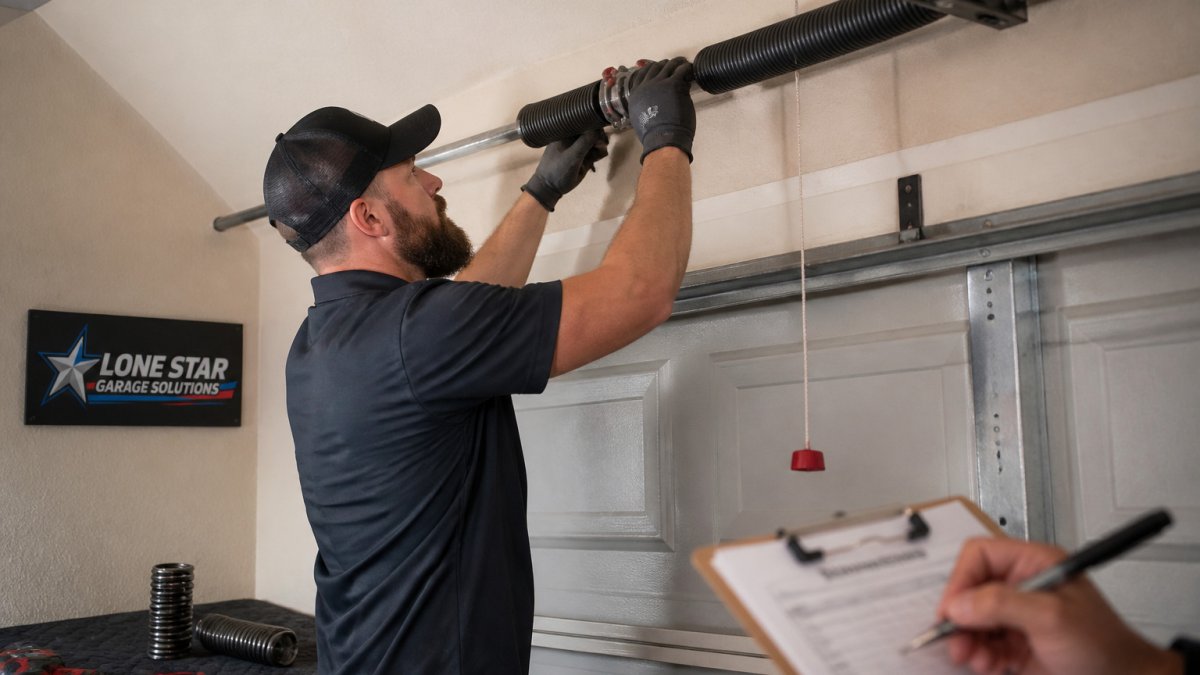
Most homeowners searching for spring repair cost want one number. The honest answer is a range, because the final bill depends on what the technician has to replace. A spring repair usually covers the spring itself, the cable and drum hardware it works with, and the labor to safely rewind and reinstall the system.
Ask any quote to list each of these separately. A line that says only "spring repair" tells you very little.
- The replacement spring, sized to your door's weight and cycle rating
- Safety cables, which should be inspected or replaced with the spring
- Drum, bracket, and bearing plate checks
- Labor for tensioning, testing, and balancing the door
Torsion vs. Extension Springs: How Spring Type Changes the Bill
Spring type is one of the biggest drivers of cost. Torsion springs mount above the door and handle most modern residential doors. Extension springs run along the horizontal tracks and are common on older or lighter doors.
If you are not sure which type you have, look above the door. A long bar with cones at each end is torsion. Two long springs running along the tracks are extension. Your technician will confirm this before quoting.
Garage Door Spring Replacement Cost: Single vs. Double Spring Jobs
Most residential doors use either one torsion spring or a pair of them, and that count is the single biggest swing factor in a spring repair quote after spring type. A one-spring job is a smaller parts order and a shorter labor window. A two-spring job doubles the parts line and adds time for winding, balancing, and testing both sides.
Where the money actually goes
A spring repair bill splits into two buckets, and asking a technician to separate them is the fastest way to judge whether a quote is fair.
- Parts. The spring itself is the main component, priced by wire gauge, inside diameter, and length. Safety cables, drums, and bearing plates are usually small line items but should be listed.
- Labor. Winding torsion springs requires two winding bars, a steady hand, and a careful count of quarter-turns, it is not a quick swap.
A quote that lumps everything into one number hides which bucket is driving the price. A quote that itemizes lets you compare apples to apples across companies.
Why replacing both springs usually makes sense
Springs on the same door are installed together and cycle together, so they wear at nearly the same rate. When one snaps, the other is typically close behind. Replacing only the failed spring leaves the door unbalanced, one side pulls harder than the other, and often leads to a second service call within months.
Ask the technician directly: if one spring has failed, how much life is left in the other? A honest answer will usually point toward replacing the pair.
How cycle ratings change the quote
Two springs that look identical can differ in cycle rating. A standard residential spring is commonly rated around 10,000 cycles, where one cycle is one full open and close. Higher-cycle springs, 20,000 or more, use thicker wire or different metallurgy and cost more up front but last proportionally longer.
For a household that opens the door four times a day, 10,000 cycles works out to roughly seven years of use. A 20,000-cycle spring roughly doubles that.
Single vs. double at a glance
| Job type | Parts | Labor | Typical quote shape |
|---|---|---|---|
| One torsion spring | One spring, cables, small hardware | One winding and balance session | Lower end of the range |
| Two torsion springs | Two springs, cables, small hardware | Two winding sessions plus balance | Roughly double the parts line |
| Extension pair | Two extension springs, safety cables | Track and cable inspection | Often lower than torsion |
Use the table as a shape, not a price list, your door's weight and the spring's cycle rating move the numbers.
Ask for a quote that lists the spring count, the cycle rating, and the labor separately so you can see exactly what you are approving before any work begins.
Garage Door Spring Lifespan and Cycle Ratings That Affect Value
Spring cost should be weighed against how long the spring lasts. Springs are rated in cycles, where one cycle is one full open and close. Standard residential springs are commonly rated for around 10,000 cycles, while higher-cycle springs cost more up front and last longer.
Ask your technician for the cycle rating of the spring they propose and how many cycles your household uses in a typical week.
Garage Door Repair Estimate: Hidden Fees and What to Ask For
Most spring repair quotes are honest, but the gap between the number on the phone and the number on the invoice usually comes from a handful of add-on charges. Knowing what they are, and which ones are legitimate, is the difference between a fair bill and a surprise.
The add-ons that show up most often
- Service call or diagnostic fee. Some companies charge a flat trip fee that is separate from the repair. Ask whether it is waived if you approve the work.
- Disposal fee. Old springs, cables, and drums have to go somewhere. A small disposal charge is normal; an outsized one is worth questioning.
- Hardware upgrades. Technicians often find worn drums, frayed cables, or a failing bearing plate while the door is apart. These are real safety items, but they should be quoted before installation, not added silently.
- After-hours or weekend premium. If you call outside normal business hours, some companies add a premium. Confirm the rate before scheduling.
- Permit or inspection fees. Rare for a spring swap, but some jurisdictions require them for structural work. Ask if any apply to your job.
What a fair estimate should list
A written estimate should separate parts from labor and name each component. At minimum, it should state:
- The spring type, wire gauge, and cycle rating being installed
- Whether one or both springs are included
- Whether safety cables are replaced with the spring
- The labor charge and whether it covers winding, balancing, and testing
- Any service call, disposal, or hardware charges
- The warranty on the spring and on the labor, and the length of each
If any of those lines is missing, ask for it before approving work. A company that cannot itemize its quote is a company you cannot compare against another.
Warranty: the line most homeowners forget to ask about
Spring warranties vary widely. Some manufacturers warrant the spring itself for a set number of cycles or years; labor warranties are usually shorter and set by the installer. Ask two questions: what does the spring warranty cover, and for how long? and is labor covered if the spring fails inside the warranty window? The answers tell you how much confidence the company has in its own work.
A quick pre-approval checklist
Before you say yes to any spring repair quote, confirm:
- The quote is written, not verbal.
- Parts and labor are listed separately.
- The cycle rating is stated.
- Add-on fees are disclosed up front.
- The warranty terms are in writing.
A written estimate should list each component and disclose any add-on charges before work starts, so the invoice matches the quote.
Garage Door Spring Repair Safety: Why DIY Carries Real Risk
Garage door springs store a large amount of tension, and a spring under tension can cause serious injury when it releases. For that reason, DIY spring work is not recommended. Homeowners who attempt it often lack the proper winding bars and safety equipment, and a mistake can cause a spring to snap back with force.
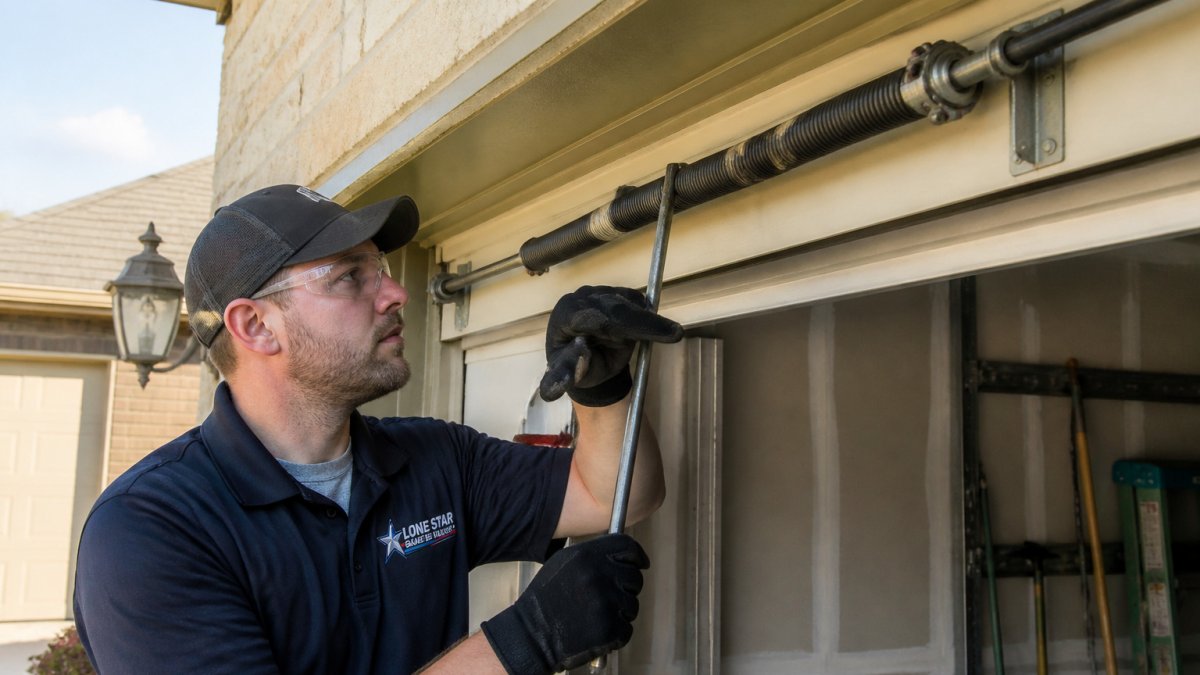
Professional repair also protects your warranty and your door's balance. A trained technician can test the system, set the tension correctly, and confirm the door operates safely before handing it back to you.
Getting an Accurate Spring Repair Quote in New Braunfels
Costs vary with your door's size, spring type, and the parts involved, so the most useful step is a local, on-site estimate. Lone Star Garage Solutions serves New Braunfels and nearby Central Texas communities. Contact us for a quote, and we can help you weigh a repair against a full replacement.
Ready to start? Request a quote for your garage door repair.
Frequently Asked Questions
Can you fix a garage door spring by yourself?
Technically, some homeowners try, but garage door springs store a large amount of tension, and a slipped winding bar can cause serious injury. Torsion springs in particular should be handled by a trained technician who has the right tools and knows how to release tension safely. If you are unsure, schedule a professional repair rather than risking an injury or further damage to the door. A professional visit also lets the technician check cables, rollers, and hinges at the same time.
What is the average lifespan of a garage door torsion spring?
Torsion springs are rated by cycle life, meaning the number of full open-and-close cycles they are designed to handle. Many standard springs are rated for roughly 10,000 cycles, while heavier-duty options can be rated higher. A household that uses the door several times a day may reach that number within several years. Choosing a higher-cycle spring often costs more up front but can reduce how often you need a repair.
Does a garage door spring repair quote include labor and parts?
It depends on the provider, so ask before you agree to the work. A complete quote should itemize the spring, the labor, any required hardware such as cables or bearings, and any service call fee. Some quotes list only the spring price, which can leave out the labor and other charges that add to the final bill. Asking for a written estimate makes it easier to compare options fairly.
Should both garage door springs be replaced at the same time?
In many cases, yes. Springs on a double door are usually installed as a pair and tend to wear at similar rates, so replacing only the broken one can leave the other close to failure. Replacing both at once can save you from a second service call and helps keep the door balanced. Ask your technician to check the remaining spring's age and cycle rating before deciding.