
 listicle
Top 5 Garage Storage Solutions for Vertical Space
Table of Contents
- Why Vertical Garage Storage Solutions Matter
- Quick Comparison: Top 5 Garage Storage Solutions
- 1. Wall-Mounted Slatwall Systems
- 2. Overhead Ceiling Storage Racks
- 3. Heavy-Duty Vertical Shelving Units
- 4. Modular Storage Cabinets and Tool Towers
- 5. Corner and Pegboard Storage Systems
- Garage Organization Best Practices for Installation
- Frequently Asked Questions
Last Updated: September 30, 2026
Why Vertical Garage Storage Solutions Matter
Garages fill up fast, tools, seasonal gear, sports equipment, and boxes pile onto the floor until you can barely park your car. The real problem: you're storing it all horizontally when garage storage solutions vertical space sit unused on your walls and ceiling.
Garage storage solutions vertical space transform an unusable garage into an organized, functional area. When you move storage up instead of out, you reclaim floor space for what it's actually meant for: parking, working, and moving around safely. This matters more in Central Texas, where humidity and temperature swings can damage items stored directly on concrete floors, and where space is often at a premium in growing communities like New Braunfels and the Hill Country.
The right storage system organizes your space, protects your belongings, makes everything accessible, and transforms your garage from a storage dump into a place you actually want to spend time. When you're ready to install, Lone Star Garage Solutions can help you plan the right system for your space and handle professional installation if you'd rather not DIY. We understand Central Texas garages, the humidity, the heat, the age of many homes in the area, and we'll recommend solutions that actually hold up and are installed safely.
Quick Comparison: Top 5 Garage Storage Solutions
| Solution | Best For | Weight Capacity | Installation | Cost Range |
|---|---|---|---|---|
| Slatwall Systems | Tool organization, customization | 50-100 lbs per section | Moderate | $100-$300 |
| Overhead Ceiling Racks | Seasonal items, bulky gear | 200-600 lbs | Moderate to complex | $200-$1,200 |
| Vertical Shelving Units | Heavy tools, parts, supplies | 300-800 lbs per shelf | Easy | $80-$401 |
| Modular Storage Cabinets | Secure tool storage, locking | 100-300 lbs per unit | Easy | $60-$401 |
| Corner & Pegboard Systems | Small tools, accessories | 25-75 lbs per board | Easy | $50-$150 |
1. Wall-Mounted Slatwall Systems
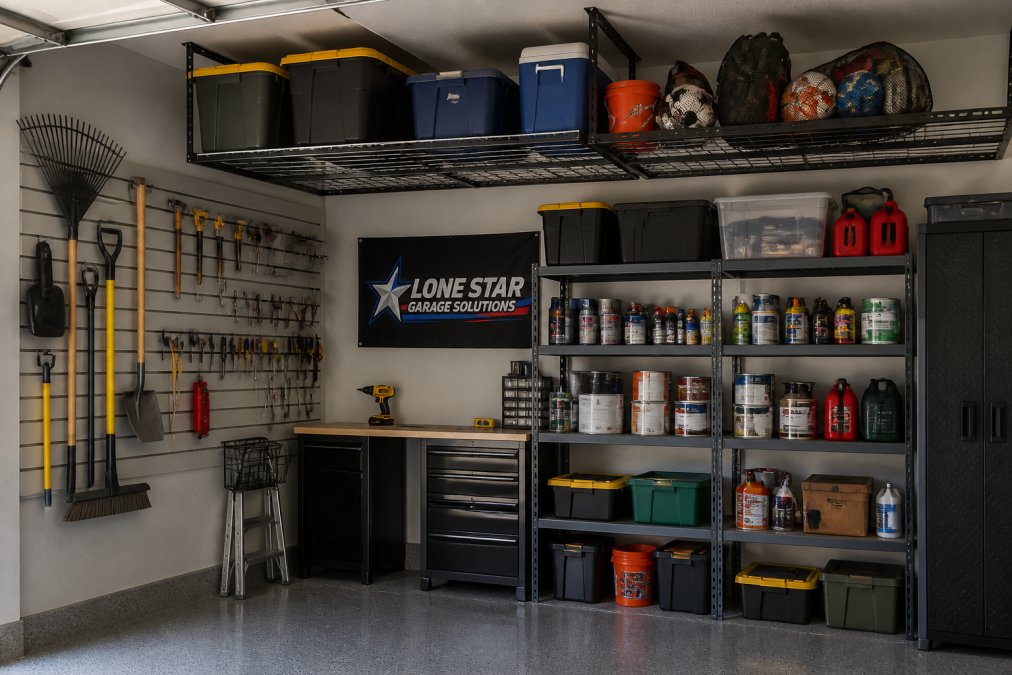
Slatwall panels mount directly to wall studs and accept hooks, shelves, and baskets in any configuration. You adjust the layout whenever your needs change, no tools required.
A slatwall system lets you hang everything from power drills to paint cans to garden hoses without pre-drilling holes. Heavy-duty PVC or metal construction resists humidity and temperature swings, critical in Texas garages.
What works: Slatwall handles moderate loads well (50-100 lbs per section when properly installed into studs). It looks clean and organized. You can cover an entire wall or just a section.
Where it falls short: Installation requires finding studs and drilling into drywall or masonry. Slatwall works best for tools and smaller items, not large, bulky seasonal gear like holiday decorations or camping equipment.
Installation tip: Use a stud finder and locate at least two studs behind each panel section. In older Central Texas homes with plaster or older drywall, consider having a professional handle installation to avoid wall damage.
2. Overhead Ceiling Storage Racks
Overhead ceiling racks mount directly to ceiling joists and let you store items 8-10 feet up, completely clearing your floor, space many homeowners don't realize they have.
You reclaim 100% of your floor footprint for seasonal items, holiday decorations, and camping gear. Heavy-duty steel construction holds 200-600 lbs, and adjustable drop-down mechanisms let you lower items without climbing a ladder each time.
What works: These racks maximize overhead storage better than any other solution. Installation is straightforward if your garage has exposed joists or if you're willing to cut drywall to access them. Once mounted, they're rock-solid.
Where it falls short: Installation requires ceiling access and finding solid joist support. Low ceilings or finished drywall with hidden joists make installation complex and may require professional help.
Pro tip: Before buying, measure your ceiling height and confirm joist spacing. Most residential garages have 16-inch or 24-inch joist spacing. Verify this before ordering, it determines which racks will fit.
3. Heavy-Duty Vertical Shelving Units
Free-standing metal shelving units are the workhorse of garage organization. These open-frame systems stack multiple shelves vertically with 300-800 lbs capacity per shelf and need no installation, just assemble and place.
Popular wire racks are affordable, adjustable, and durable. Wire construction lets air circulate, preventing moisture buildup on stored items, important in humid Texas garages.
What works: These units are genuinely heavy-duty. A five-shelf unit can hold paint, tools, automotive supplies, and heavy equipment without sagging. Assembly is tool-free on most models. They're the most flexible option if you move frequently or like to reorganize.
Where it falls short: They consume floor space, defeating the purpose if you're maximizing vertical space for parking. Open wire shelves expose items to dust and humidity.
Real-world note: If your garage floor is uneven (common in older homes), use the adjustable feet levelers included with quality units. Uneven shelving shifts weight unevenly and reduces safe capacity.
4. Modular Storage Cabinets and Tool Towers
Modular cabinets combine enclosed storage security with vertical flexibility. Lockable doors protect tools and valuables. Adjustable shelves customize heights, and casters let you move units around your workspace.
Quality modular cabinets feature welded steel frames and modular designs that let you stack multiple units. They keep dust and humidity off stored items.
What works: Enclosed storage protects tools and equipment. Modular design means you can start small and expand. High-quality units feel industrial and built to last. Locking doors add security for valuable tools.
Where it falls short: They consume floor space. If you access tools frequently, opening and closing doors is slower than grabbing from open racks.
Best for: Homeowners who want organized, protected storage and don't mind the floor-space tradeoff. Contractors and property managers who need security and durability.
5. Corner and Pegboard Storage Systems
Corners are dead space in most garages. Corner shelving units and pegboards fit into 90-degree angles and use wall space that would otherwise go unused. Pegboards let you hang hooks, baskets, and shelves in any pattern.
Pegboard works best for hand tools, small parts, and accessories. Corner shelving units fit perfectly into corners and hold light to moderate loads (25-75 lbs depending on materials).
What works: Pegboards are affordable and incredibly customizable. You see everything at a glance. Corner units maximize wasted space without eating into your floor area. Both options are easy to install with basic fasteners.
Where it falls short: Pegboards aren't suitable for heavy items. Corner units have limited shelf surface area compared to full-wall systems.
Installation consideration: Pegboards and corner shelves need to mount into wall studs for safety, especially if storing heavy items. In drywall-only areas, use heavy-duty anchors rated for your load, or have a professional install them.
Garage Organization Best Practices for Installation
Before you buy any storage system, understand your garage's structural limits and storage needs. Most DIY projects fail because installation doesn't match the wall or ceiling it's mounted to.
Drywall-only walls cannot safely hold heavy storage. Standard drywall anchors hold about 25-50 lbs. For 200+ lbs, you must mount into studs, the vertical 2×4 or 2×6 lumber behind drywall, spaced 16 or 24 inches apart. One stud holds 100+ lbs; two studs hold 200+ lbs; three or more hold 400+ lbs, depending on fasteners and load distribution.
How to locate studs and assess your walls. Use a stud finder (magnetic or electronic, $15-$40). Mark stud locations with a pencil. In older Central Texas homes, stud spacing is sometimes irregular, check multiple locations to confirm spacing. Once you've located studs, count how many are available in the wall section where you want to mount storage. If you have only one stud in a 4-foot span, that wall is not suitable for heavy shelving without additional support. If you have two or more studs, you can mount moderate-load systems. If you have three or more studs within your planned storage area, you can mount heavy-duty systems.
Masonry walls (concrete block, brick, or poured concrete) require different fasteners. Concrete anchors, lag bolts, and masonry screws work where wood studs don't. Concrete anchors come in several types: expansion anchors (wedge-style), drop-in anchors, and epoxy anchors. For garage storage, expansion anchors rated for 50-100 lbs per anchor are common. Masonry screws (like Tapcon screws) are easier to install and hold 50-75 lbs per screw. If your garage has a concrete block or brick wall, do not use standard drywall anchors. Do not use wood screws.
Frequently Asked Questions
What is the best way to organize a garage with limited floor space?
Focus on vertical storage solutions that use wall and ceiling space. Wall-mounted slatwall systems, overhead racks, and tall shelving units keep items accessible while freeing floor space for vehicles or work areas. Start by assessing what you store most frequently, tools, seasonal items, or sports equipment, then choose systems that match those needs. Combine multiple solutions (wall-mounted hooks, overhead racks, and corner shelves) for maximum efficiency in smaller garages.
Are overhead garage storage racks safe for heavy items?
Yes, when properly installed. Overhead storage racks must be mounted directly to ceiling joists, not drywall alone, to handle heavy loads safely. Most quality overhead racks support 300-800 lbs depending on the system. Calculate your load carefully and verify joist spacing and strength before installation. If you're uncertain about structural capacity, professional garage storage installation services can assess your ceiling and recommend safe weight limits for your specific setup.
How do I know if my garage walls can support wall-mounted storage?
The answer depends on your wall construction. Drywall alone supports lighter items (under 50 lbs per anchor), but masonry and stud-mounted systems handle much heavier loads. Use stud finders to locate wall studs, which can safely hold 100+ lbs per anchor. For slatwall or pegboard systems, mount directly into studs whenever possible. If you have concrete block or brick walls, use masonry anchors rated for your load. When in doubt, consult a professional installer to verify wall integrity and load capacity.
What's the difference between wire shelving and enclosed storage cabinets?
Wire shelving offers open, adjustable storage with excellent visibility and quick access, ideal for frequently used items. However, it exposes contents to dust and garage air. Enclosed cabinets protect tools and equipment from dust and moisture, keeping items cleaner longer, but take up more floor space and limit quick access. For garages in humid climates like Central Texas, enclosed cabinets help prevent rust and corrosion. Many homeowners use both: wire racks for everyday tools and cabinets for seasonal or delicate items.