
 listicle
Alternatives to Standard Garage Door Openers
Table of Contents
- Why Homeowners Look Beyond Standard Garage Door Openers
- Smart Garage Door Controller Installation: Adding Wi-Fi to What You Have
- Wall Mount Garage Door Opener Pros and Cons
- Belt Drive vs Chain Drive Garage Door Opener: Which Performs Better
- Built-In Smart Openers: Security and Convenience Combined
- Choosing the Right Alternative for Your Garage
- Professional Installation vs. DIY: Why It Matters
- Frequently Asked Questions
Last Updated: October 2, 2026
Why Homeowners Look Beyond Standard Garage Door Openers
Standard chain drive openers are affordable and reliable, but homeowners in the Texas heat face unique challenges: noise echoing through living spaces, vibration traveling through walls, limited ceiling space in retrofits, and the desire for smart home integration, which is why alternatives to standard garage door openers have become increasingly popular.
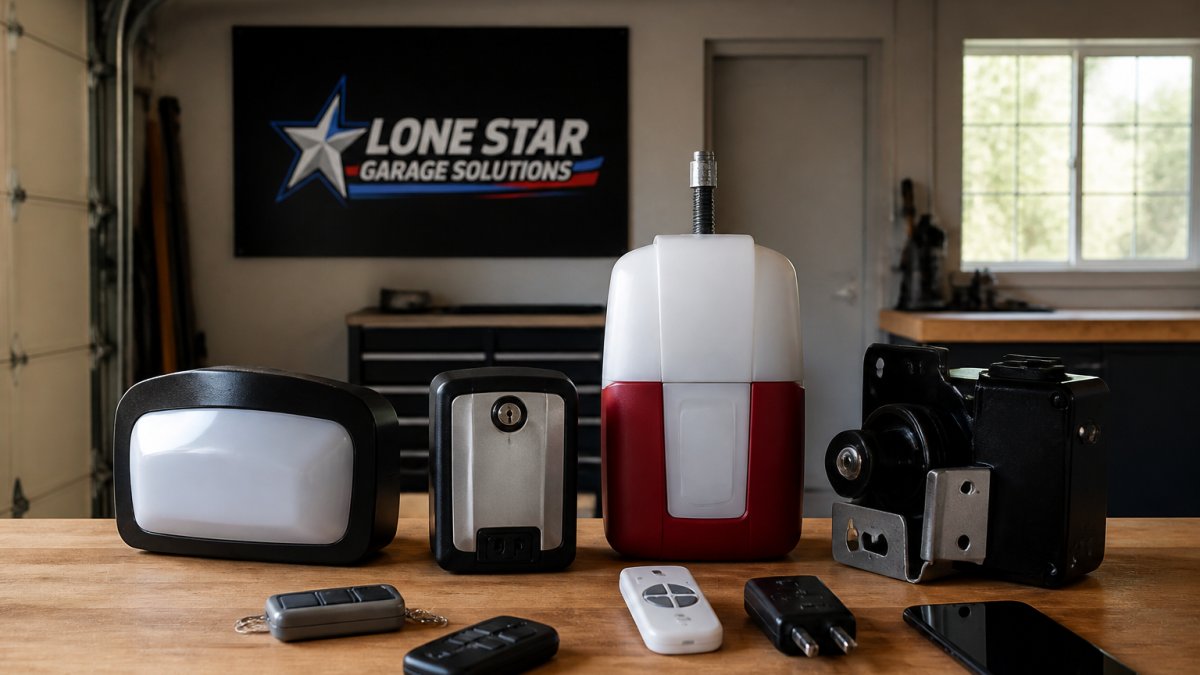
Alternatives to standard garage door openers now include belt drives for quiet operation, wall-mounted jackshaft systems for tight spaces, retrofit smart controllers for existing openers, and fully integrated smart openers with cameras and battery backup.
This guide walks through real alternatives to standard openers, their trade-offs, and how to choose the right one for your home.
Smart Garage Door Controller Installation: Adding Wi-Fi to What You Have
If your current opener works fine mechanically but lacks smart features, a retrofit controller adds smartphone control and remote monitoring without replacing the entire unit.
Retrofit Controllers: Genie Aladdin Connect and Meross
Genie Aladdin Connect pairs with your existing opener via Wi-Fi for smartphone control, real-time alerts, and remote access for family or service providers. Installation takes 30-60 minutes with basic wiring knowledge.
Genie's smart home integration guide outlines compatibility with most major opener brands, though you'll want to verify your specific model before purchasing.
Meross Smart Garage Door Opener integrates with Alexa and Google Assistant for voice control and logs all door activity. It's typically more affordable than Aladdin Connect and works well in Amazon or Google ecosystems.
Both systems depend on stable Wi-Fi; weak connectivity means delayed commands.
Wall Mount Garage Door Opener Pros and Cons
When ceiling space is limited, common in older homes, additions, or garages with low-hanging ductwork and beams, a wall-mounted jackshaft opener becomes attractive. These systems mount on the wall beside the door rather than overhead, freeing up valuable garage ceiling space that standard openers consume.
How Jackshaft Openers Work
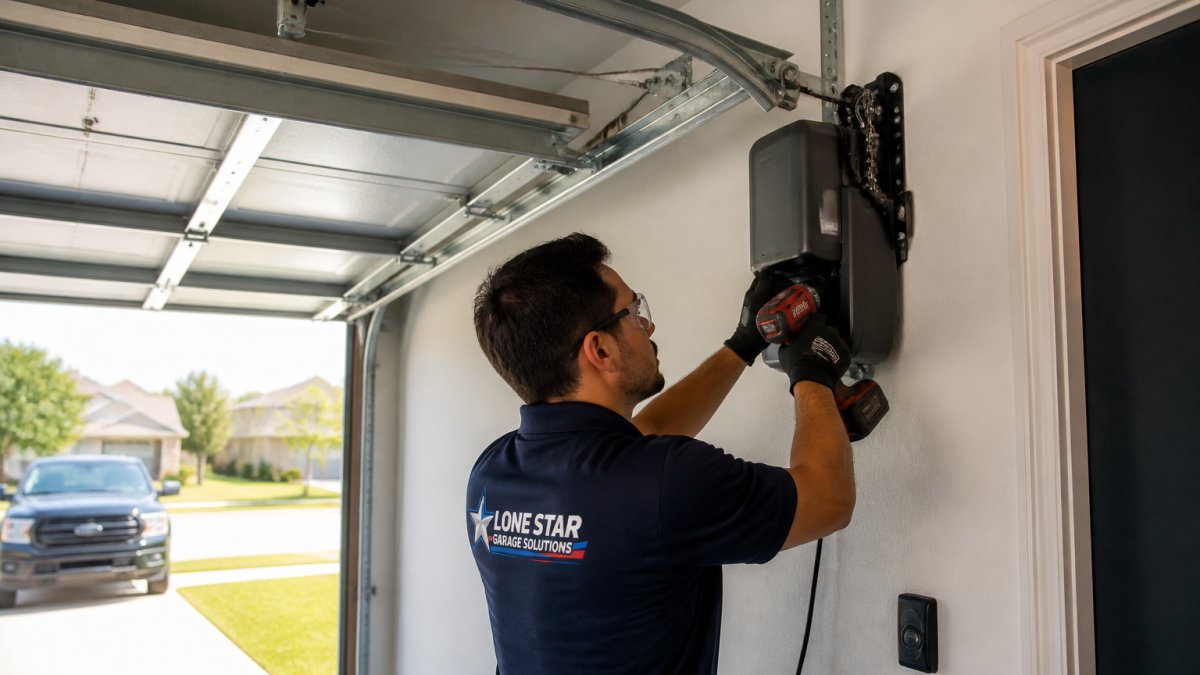
Jackshaft openers mount a motor on the wall beside the door, with a rotating shaft running through the torsion spring assembly. The compact motor (12-18 inches wide) occupies minimal space and works with both torsion and extension springs.
Space and Clearance Advantages
Standard overhead openers need 12-18 inches of clearance above the door frame plus rail and motor space. Jackshaft systems eliminate this constraint; the motor sits on the wall with only the shaft running through the spring, a footprint measured in inches, not feet.
Noise, Vibration, and Operating Characteristics
Jackshaft openers operate quietly with minimal vibration since the wall-mounted motor doesn't transmit vibration through the garage structure into living spaces.
Spring Compatibility and Safety Considerations
Torsion springs are under extreme tension (200-400 pounds). A jackshaft system must match your door's weight precisely; wrong springs or miscalibration cause the door to open too fast, close too hard, or fail to stay open.
Installation Complexity and Professional Requirements
Jackshaft installation requires removing the old opener, assessing springs, mounting the motor with vibration isolation, aligning the shaft (±1/4 inch tolerance), calibrating force and travel limits, testing safety sensors, and ensuring proper balance. Each step requires specialized tools and knowledge.
Cost and Long-Term Performance
Jackshaft openers often last 15-20 years with minimal maintenance. Longevity in the Texas climate depends on proper installation and seasonal maintenance.
Belt Drive vs Chain Drive Garage Door Opener: Which Performs Better
The choice between belt and chain drive comes down to noise, maintenance, and budget.
Noise and Vibration Differences
Chain drive openers use a metal chain to lift the door and are loud; the chain rattles and vibration transmits through the garage structure. Belt drive openers replace the chain with a reinforced rubber belt, operating 20-30 decibels quieter.
Maintenance and Durability
Chain drives require regular lubrication and typically last 10-15 years; heat and humidity accelerate wear. Belt drives require less maintenance and last 15-20 years.
| Feature | Chain Drive | Belt Drive |
|---|---|---|
| Noise Level | Loud (70-80 dB) | Quiet (50-60 dB) |
| Initial Cost | Lower | Higher |
| Maintenance | Regular lubrication | Minimal |
| Lifespan | 10-15 years | 15-20 years |
| Vibration | Significant | Minimal |
Built-In Smart Openers: Security and Convenience Combined
Built-in smart openers eliminate the retrofit step, with Wi-Fi, app control, and additional features integrated from the factory.
Camera-Equipped Models
Chamberlain B4603T includes a 1080p camera in the motor unit for real-time streaming to your phone. You can see who's approaching, receive alerts, verify the door is closed when away, and have evidence if someone tampers with your door.
Battery Backup and Emergency Operation
Smart openers with battery backup keep functioning during power outages, letting you open or close the door via app or wall button if your car is trapped in the garage. Built-in smart openers integrate with Apple HomeKit, Google Home, and Amazon Alexa for automation routines.
Choosing the Right Alternative for Your Garage
Selecting the right opener depends on three factors: your garage's physical constraints, the Texas climate, and your priorities.
Space and Overhead Clearance Considerations
Measure your ceiling height to the lowest obstruction. Standard overhead openers need at least 12-18 inches of clearance above the door frame. If you have less, a jackshaft wall-mount system is necessary. Many older homes have space constraints that make wall-mount systems the only practical choice.
Climate Factors in the Texas Heat
Texas heat accelerates wear on motors, lubricants, and springs. Belt drives handle heat better than chain drives. Smart openers with battery backup are worth considering because summer thunderstorms can knock out power; you need a way to open the door if trapped.
Professional Installation vs. DIY: Why It Matters
Installing a garage door opener involves high-tension springs that can cause serious injury, precise weight calculations, electrical wiring, safety sensor alignment, and building code compliance. Understanding what homeowners can safely DIY versus what requires a professional is critical.
Spring Tension and Injury Risk
Garage door springs are under extreme tension (200-400 pounds). Torsion springs mounted above the door can unwind violently if broken or improperly installed, causing lacerations, broken bones, or eye injuries. Extension springs mounted on either side can snap suddenly, sending springs and cables across the garage.
Weight Calculation and Door Balance
An opener must match your door's weight; miscalculation causes uneven operation, premature wear, or safety hazards. Professional installers weigh the door or calculate its weight based on material and dimensions, then select an opener with the correct horsepower and force rating.
Electrical Wiring and Safety Sensors
Garage door openers require a dedicated 120-volt circuit, proper grounding, and correct wiring to safety sensors. Misaligned sensors or improper wiring can cause the door to close on a child, pet, or vehicle, a serious safety hazard. Building codes require professional installation and testing.
Building Code and HOA Compliance
Professional installation provides documentation that the opener was installed to code, important if you're selling your home. A DIY installation can complicate a sale or trigger expensive reinspection.
What Homeowners Can Safely DIY
Not all garage door work is dangerous. Retrofit smart controllers, like Genie Aladdin Connect or Meross, are genuinely safe for homeowners to install. These systems mount on the wall and connect wirelessly to your existing opener. No springs, no high-voltage wiring, no weight calculations.
Professional Installation: What to Expect
A professional garage door opener installation typically includes:
- Assessment of the door's weight, condition, and track alignment
- Selection of an opener matched to the door's specifications
- Safe removal of the old opener (if replacing)
- Installation of the new motor, rail, and trolley system
- Spring inspection and adjustment (or replacement if necessary)
- Electrical wiring and circuit installation to code
- Safety sensor installation and alignment
- Testing of all safety features, including auto-reverse and manual operation
- Documentation and warranty
A professional installer will also identify problems you might not notice: a bent track, a worn spring, misaligned sensors, or inadequate electrical service. Catching these issues during installation prevents costly repairs later.
Frequently Asked Questions
Can I replace my garage door opener with a different brand?
Yes, in most cases you can replace your opener with a different brand. Compatibility depends on your torsion spring setup, door weight, and existing hardware. Belt-drive, chain-drive, and screw-drive openers all work with standard residential doors, but wall-mount jackshaft systems require a specific spring configuration. Professional installation ensures proper safety sensor alignment and weight capacity. Contact Lone Star Garage Solutions for a compatibility assessment before purchasing.
What are the benefits of choosing a belt-drive over a chain-drive garage door opener?
Belt-drive openers operate significantly quieter than chain-drive models because the rubber belt absorbs vibration and noise. They also provide smoother, quieter door movement, which matters if your garage is attached to living space. Belt systems require less maintenance than chain drives. For Texas homeowners with attached garages, the noise reduction often justifies the investment.
Can I use a smart home hub to control my garage door instead of a standard remote?
Yes. Retrofit smart controllers like Genie Aladdin Connect and Meross Smart Garage Door Opener add Wi-Fi connectivity to existing openers, letting you control your door via smartphone app and voice assistants. Alternatively, newer openers like the Chamberlain B4603T come with built-in smart features. Both approaches work with popular platforms like Alexa and Google Assistant. Installation is straightforward for retrofit kits, though professional help ensures proper setup and security.
Are wall-mount openers a better alternative to ceiling-mounted units?
Wall-mount jackshaft openers excel in garages with limited overhead clearance or where you want to preserve ceiling space for storage. They operate quietly and reduce vibration compared to chain drives. The downside is they require a specific torsion spring setup and aren't compatible with all door types. Wall-mount systems work well for retrofits and custom installations, but professional assessment is essential to confirm compatibility with your existing door.
What should I consider when choosing an alternative garage door opener?
Evaluate your garage's overhead clearance, door weight, and spring configuration first. Consider noise levels if the garage is attached to your home. Think about whether smart connectivity matters to you and which platforms you use. Climate is important in Texas, ensure the opener handles heat and humidity well. Budget for installation costs, as most alternatives require professional setup for safety and warranty compliance. Lone Star Garage Solutions can help assess your specific situation and recommend the best fit for your needs.